THE MOON IN THE GUTTER ARCHIVES

I AM CURRENTLY WORKING ON EXPANDING AND REVISING SOME OF THE BEST PIECES FROM MOON IN THE GUTTER AT MY OFFICIAL SITE, NOSTALGIA KINKY. THIS NEW PROJECT CAN BE ACCESSED BY CLICKING THE PICTURE BELOW.

THE MOON IN THE GUTTER ARCHIVES

Recent Posts from my Official Site

Monday, June 9, 2008

Who You Are and What You Are: Walter Hill's Johnny Handsome (1989)


Lean, extremely mean, and all around brilliant, Walter Hill’s 1989 feature Johnny Handsome stands as one of the best crime films of the eighties although it has still never gotten its total due for the truly great work it is.

Starting out life as a 1972 John Godey novel entitled The Three Worlds of Johnny Handsome; Hill’s thrilling modern noir went through a lot of players’ hands before it ended up at his door in the late eighties.
Al Pacino had been attached to the project for quite awhile, along with director Harold Becker but the two couldn’t accept that at heart it was essentially just a hard-boiled thriller. Pacino would recall to Lawrence Grobal in 2005 that “Harold and I were trying to find the third act, and we couldn't. The first half of that movie is great.” Pacino would also regretfully say, “That was my favorite role ever in movies” which marks Johnny Handsome as one of the biggest what if’s in the actor’s legendary career.
Pacino and Becker, who would make Sea of Love in 1989 instead of Johnny Handsome, finally gave up on the project and it ended up with director Walter Hill who immediately saw greatness in the material.
Scripted by Heart like a Wheel screenwriter Ken Friedman and shot with icy cool precision by cinematographer Matthew F. Leonetti, Johnny Handsome is one of Walter Hill’s greatest works and it fits in well with what is an impressive if often undervalued filmography.

Born in Long Beach, California a few years before the end of World War Two, Walter Hill started out his career after college not in films but in construction. A lifelong movie fan, Hill entered into the world of American film in 1968 as second assistant director on not one but two classic films, Norman Jewison’s The Thomas Crown Affair and Peter Yates’ Bullitt. You can clearly see the influence both of these well paced and tightly cut films had on Hill all the way up to his current last feature film, 2002’s Undisputed. The calculated ferociousness of Bullitt can especially be felt in all of the best Hill’s features with Johnny Handsome being no exception.

Hill banged around Hollywood for awhile in the early seventies mostly working as screenwriter before he landed his first gig as a director with 1975’s Hard Times (which he also scripted). This brutal and tough as nails film pairing Charles Bronson and James Coburn would garner Hill some acclaim and marked him as a director who seemed acutely aware of the underlying violence in the classic male persona and it is this idea that has haunted many of his key works.

Hard Times would be followed up with the brutal one-two knockout punch of The Driver (1978) and The Warriors (1979). Both showed Hill as an absolute master of modern action films with a flair for crafting great car chases and pulling great performances out of his actors. The Warriors especially made Hill into something of a legend even though neither it nor The Driver got the credit they deserved at the time of their release, a problem that has plagued Hill’s career since the beginning.

Hill had slipped by the mid-eighties after the mega-hit 48 Hours (1982) and the cult film Streets of Fire (1984) although his films from this period (1985’s Brewster’s Millions, 1986’s Crossroads, 1987’s Extreme Prejudice and 1988’s Red Heat) are all worth another look. Johnny Handsome would return him to the kind of filmmaking that had made a film like The Warriors so special and it would be marked by one of the great performances by the actor who took over for Al Pacino, Mickey Rourke.

Rourke has admitted that he had all but lost interest in making movies by the time Johnny Handsome came around, but you can’t tell as he delivers one of his most finely crafted and haunting performances as the horribly disfigured criminal bent on revenge who gets a second chance on life with a new identity and a new face. Rourke’s work here for Hill is beautifully realized and ranks with the actor’s best. It is arguably the last really great starring role from Rourke (although an argument can be made for Cimino’s The Desperate Hours remake from a year later) until his welcome comeback that began in the late nineties.


Joining the powerful Rourke is an incredible cast made up of some of the finest actors in America, including Morgan Freeman, Forest Whitaker, Ellen Barkin, Lance Henrikson and Elizabeth McGovern. With the exception of McGovern (who I typically love in films but she seems miscast here) all give superlative performances, especially Freeman in one of his grittiest roles and the sizzling Barkin, who was being reunited with Rourke here seven years after Diner (and who would ironically appear in Sea Of Love with Pacino also in 1989).

The term ‘modern-noir’ is thrown around a lot but Walter Hill’s Johnny Handsome really fits the bill. It’s a tough and classic story of double crossings and revenge filled with over the brutal bad-guys, crooked cops, a sexy femme fatale and a tragic anti-hero who we know is doomed from the get go. Pacino mistakenly wanted to elevate Johnny Handsome into something perhaps more profound, but the great thing about the film is that is an unapologetic genre piece and Hill inherently realized that and let it play to the conventions instead of against them.

The film, clocking in at less than ninety minutes not counting the credits, is a winner from the lonely first frame to the final photograph that closes it. Helped by a typically memorable and brooding score by Ry Cooder with the aforementioned photography by Leonetti giving it a real timeless look, Johnny Handsome feels remarkably un-eighties like. While some of the fashions have dated, Hill’s film still feels fresh and it probably would have been a much bigger success post Pulp Fiction as it has much more in common with the crime films of the late nineties than the time it was shot in.

Hill’s razor sharp direction moves the film along at a lightning pace and it is one of the most intelligently shot movies he ever made. Hill’s constant framing Rourke behind bars of some sort makes the film work thematically as a tragic tale of a man who has no chance of succeeding at a new life because he literally can’t escape his old one. Johnny Handsome might not transcend the genre in which it places itself but that shouldn’t take away from just how smart of a film this is.

Johnny Handsome opened up to a mixed critical reaction (although almost everyone praised Rourke’s bravura performance) and mostly empty theaters in September of 1989. The shot on location in New Orleans film would rank in just over seven million dollars in its brief theatrical run, less than Sea of Love would make in its record breaking opening weekend the same month. It fared better on home video but has strangely slipped out of print in the United States.

The atrocious Artisan DVD from 2002 was a real insult to the film and looked like it had been transferred directly from the old full frame VHS marking it as one of the worst looking DVD’s released from a major company this decade. The in-print Region 2import DVD is an improvement but is still not a worthy edition to a film that is screaming for a special edition release. A Blu-ray was finally released in 2010 and, while it's not perfect, it is absolutely the best-release this film has had on home video.

Pacino admitted in 2005 that he still “loved the role” although he still hated the final act. He also tipped his hat to Rourke and said he “did a great job in it.” Roger Ebert wrote a terrific defense of the film in his near four star review and praised it as “ a movie in the true tradition of film noir - which someone who didn't write a dictionary once described as a movie where an ordinary guy indulges the weak side of his character, and hell opens up beneath his feet.”

The failure of Johnny Handsome to find its audience back in 1989 was frustrating to say the least (I still remember seeing it opening day in a near empty theater) but thankfully the Blu-ray will hopefully help more people discover it.

For more Johnny Handsome, please visit my friend LaShane's always awesome and essential Mickey Rourke Walls.

Wednesday, April 30, 2008

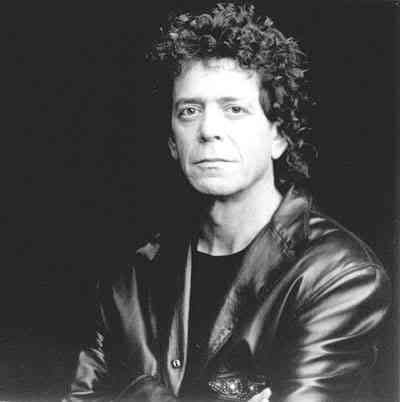
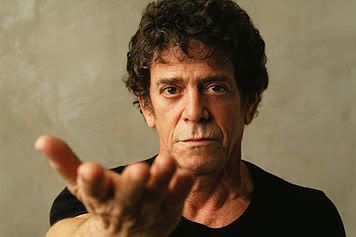
Lou The Obscure: 25 Often Overlooked Lou Reed Songs and Performances

I was hoping to use this week to celebrate all things Lou Reed in anticipation of seeing him again live on Friday night, at Nashville’s Ryman Auditorium. This week just happens to be the final week of classes this semester though which has made writing here near impossible. Still, I can’t let the opportunity of honoring my favorite songwriter slip by so I hope to at least offer a couple of posts, as well as a look at Friday’s show after I see it.
Every truly great rock artist from Elvis Presley to Bob Dylan to David Bowie has a mountain of lost in the groove tracks buried on their albums between the bona-fide classics everyone knows, and Lou Reed is no different. I thought it would be fun to go through his albums with The Velvets and his solo work and mention some of my favorite more ‘hidden’ and less talked about tracks that are just as powerful as the ones everyone knows like "Sweet Jane" and "Walk On The Wild Side". This isn’t a list of my favorite Lou Reed songs per say, although many of these would fall into that category, but instead a look at some often ignored classics that are among the man’s best.

1. “Run Run Run”: The Velvet Underground and Nico. This delightfully crunchy track off the Velvet’s first album has long been a favorite and I actually prefer it to some of the more celebrated material on the legendary album. The great idea of highlighting a different character in each verse is inspired and pre-dates the similar notion that "Walk On The Wild Side" would perfect a few years down the road.

2. “Here She Comes Now”: White Light White Heat. Amidst one of the noisiest rock albums in history is this inspired and lovely sounding tale of a girl “made out of wood” who can never quite reach the perhaps sexual spot she is continually trying to reach.

3. “Jesus”: The Velvet Underground. Among the most surprising tracks in all of Lou’s catalogue, this stunner is remarkable in just how un-ironic it sounds. I would have loved to have heard Elvis sing this haunting and spiritually yearning track.

4. “Oh! Sweet Nuthin”: Loaded. Just about my favorite Velvets track…I would give anything to hear Lou revisit this rarely played number live. Intense, powerful and oh so sublime, this long track features some of Lou’s greatest characters and the guitar interplay between him and Sterling is absolutely unforgettable.

5. “Berlin”: Lou Reed. Everyone knows the album Berlin, but I am often surprised by how many people haven’t heard the longer original song that inspired it. The centerpiece of the first solo album features members of Yes playing with Lou, some extended lyrics and a coda nowhere to be found on the shorter Berlin version. This version would of course later be revisited live quite often with the Take No Prisoner’s take perhaps being the best.

6. “Hangin’ Round”: Transformer. Sandwiched in a typically throwaway position on Side One, this rocking and hilarious song features some of the most surreal lyrics Lou has ever written, with the inspired “Harry was a rich young man who would become a priest. He dug up his dear father who was recently deceased.” being among the best.

7. “Lady Day”: Berlin. One of the most majestic tracks Lou has ever layed down but often overlooked as one of the album’s finest moments. Outside of being incredibly haunting, I love this track because it offers up one of the oddest connecting points to Sinatra’s Watertown, as that concept album on divorce was originally planned to close with a song called “Lady Day”.

8. “Ennui”: Sally Can’t Dance. Drugged out and downright classic ode to disintegrating, sparked by one of the creepiest monotone vocals in rock history. The line “Pick up the pieces that make up your life, maybe someday you’ll have a wife…and then alimony” stands as one of the most simultaneously devastating and hilarious in Lou's entire canon. Has falling apart ever sounded quite so delightfully dull?

9. “A Gift” Coney Island Baby. The lead off two Side Two of one of Lou’s most personal and greatest albums. This light tongue in cheek tale of a man who is an admitted “Gift to the women of the world” is sparked by some wonderfully warm and evocative guitar playing by Lou (who was returning to the instrument here for the first time in several years).


10. “Ladies Pay”: Rock N Roll Heart. A monumental song with one of the most devastating guitar solos he has ever layed down, "Ladies Pay" is an absolute masterpiece and, like the album it graces, has never gotten its due (even among some of Lou’s most dedicated fans). Another one I would love to see him pull out for a newer live reworking.

11. “Dirt”: Street Hassle. Outside of being one of the most vicious put down songs ever placed on vinyl, this track simply sounds like nothing else out there. The moment when he starts singing a slowed down, and unbelievably menacing, portion of Bobby Fuller’s “I Fought The Law” is one of the great moments in seventies rock.

12. “Coney Island Baby” Take No Prisoners. I am making an exception to ignoring live albums here to make mention of this unbelievably powerful take of one of Lou’s signature songs. Frantic, intense and oh so moving, this is one of the great Lou Reed moments and should be more readily available.

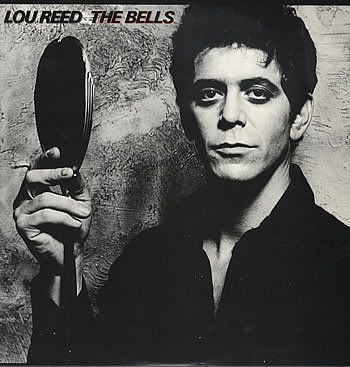
13. “Families” The Bells. Although he has denied it, I suspect that this extraordinary song off my favorite Lou Reed album is one of his most personal. Featuring some of the most painfully honest and knowing lyrics of his career, this song is guaranteed to send chills down the neck of anyone whose ever felt spiritually disconnected from the place they come from…a real favorite.

14. “Standing on Ceremony” Growing Up In Public: Anyone who doubts Lou Reed’s astonishing abilities as a great rock vocalist is advised to check out this frenzied tribute to non-conformity. Growing Up In Public is one of Lou’s most underrated works and this song is among his best.

15. “The Heroine” The Blue Mask. Lovely and haunting track off one of the key albums in Lou’s canon, and one of the most subtle. Listening to this track always reminds me of that great thing Patti Smith said about Lou around ten years ago…something along the lines of “the poet in him won out”…

16. “Rooftop Garden” Legendary Hearts. Although he rarely gets credit for it, Lou Reed is capable of writing some truly transcendent love songs with this being one of the greatest. Anyone who has ever known the rush of a new love will smile at the lines “Let’s not see any letters, let’s not answer the phone. Let’s just pretend that there’s no one at home.”

17. “Heroin” Live In Italy. Once again I am making an exception to the live record rule to include this searing take of Lou’s most legendary track. Marked by the face melting guitar dueling of Reed and the great late Robert Quine, this charging version of “Heroin” has to be heard to be believed.

18. “Doin The Things We Want”: New Sensations. Bob Dylan himself sang the praises of this great tribute to Martin Scorsese and Sam Shepherd back in the eighties and I totally agree with him…”Here’s to Travis Bickle and here’s to Johnny Boy”…wow.

19. “Tell It To Your Heart” Mistrial. Another gorgeous love song that had the misfortune to be on Lou’s worst album (which by the way you still need to have)…thankfully rescued from oblivion a few years back when he surprisingly started performing it live again.

20. “Endless Cycle” New York. Often overlooked as one of the best moments one one of Lou’s greatest albums, this song is one of the most devastating and honest looks at the cycle of abuse ever recorded…not just a great rock song, but shockingly great literature.

21. “Hello It’s Me”. Songs For Drella. The closing song to Lou and John’s moving memorial to Andy Warhol features some of the most forthcoming and emotive lyrics of Lou’s career…just so damn moving on so many different levels.

22. “Sword Of Damocles”: Magic and Loss. Featuring an unexpected and poignant string section and some of the most emotional lyrics of his career, this is simply put one of the great moments in Lou Reed’s catalogue.

23. “Finish Line”: Set The Twilight Reeling. Racing and charging with some incredible guitar work, this song closes with the ferociously brilliant lines “First came fire, the came light…then came feeling, the came sight.”

24. “Big Sky”: Ecstasy. The anthem like closing to another one of Lou’s key works is a thrilling listen. While lyrically not among the stronger moments on the record, musically this is one of the most breathtaking songs from the last decade.

25. “Fire Music” The Raven: Insane revisit to Metal Machine Music is a potent reminder that no one can make more of a sublime racket than Lou Reed when he tries…would be perfectly at home on one of Sonic Youth’s more experimental records…a wordless triumph.

More Lou Reed posts to come…I hope this proved interesting to already devoted fans or perhaps to anyone who just knows Lou from “Walk On The Wild Side”.

Moon in the Gutter (Month By Month)

BLOG CREATED, EDITED and WRITTEN BY JEREMY RICHEY: Began in DEC 2006. The written content of all posts (excepting quotes from reviews, books, other publications) COPYRIGHT JEREMY RICHEY.