I have been tagged by both Cinema Viewfinder and Film for the Soul in the following Meme.
Here are the rules:
1. Pick one film to represent each letter of the alphabet.
2. The letter "A" and the word "The" do not count as the beginning of a film's title, unless the film is simply titled A or The, and I don't know of any films with those titles.
3. Return of the Jedi belongs under "R," not "S" as in Star Wars Episode IV: Return of the Jedi. This rule applies to all films in the original Star Wars trilogy; all that followed start with "S." Similarly, Raiders of the Lost Ark belongs under "R," not "I" as in Indiana Jones and the Raiders of the Lost Ark. Conversely, all films in the LOTR series belong under "L" and all films in the Chronicles of Narnia series belong under "C," as that's what those filmmakers called their films from the start. In other words, movies are stuck with the titles their owners gave them at the time of their theatrical release. Use your better judgement to apply the above rule to any series/films not mentioned.
4. Films that start with a number are filed under the first letter of their number's word. 12 Monkeys would be filed under "T."
5. Link back to Blog Cabins in your post so that I can eventually type "alphabet meme" into Google and come up #1, then make a post where I declare that I am the King of Google.
6. If you're selected, you have to then select 5 more people.
I decided I would choose a film I dig for each letter that I haven't covered in-depth here previously. This isn't really any kind of all time favorite list (although some of these rank among my favorite films), just some titles I admire that will hopefully feature sometime here in the future.
A. The April Fools (Stuart Rosenberg)
B. Bodies, Rest and Motion (Michael Steinberg)
C. Ciao Manhattan (John Palmer and David Weisman)
D. Discrete Charm of the Bourgeoisie (Luis Bunuel)
E. Exhibition (Jean-Francois Davy)
F. Fabulous Baker Boys (Steve Kloves)
G. Go (Doug Liman)
H. Happiness (Todd Solondz)
I. If It’s Tuesday It Must Be Belgium (Mel Stuart)
J. Jennifer Eight (Bruce Robinson)
K. Killing Zoe (Roger Avery)
L. Lord Love a Duck (George Axelrod)
M. Mr. Jealously (Noah Baumbach)
N. New Rose Hotel (Abel Ferrara)
O. Out of the Blue (Dennis Hopper)
P. Panic (Henry Bromell)
Q. Queen’s Logic (Steve Rash)
R. Racing with the Moon (Richard Benjamin)
S. Sharky’s Machine (Burt Reynolds)
T. The Tenant (Roman Polanski)
U. Umbrellas of Cherbourg (Jacques Demy)
V. Virgin Among the Living Dead (Jess Franco)
W. Waterdance (Neal Jimenez)
X. X: Man with the X-Ray Eyes (Roger Corman)
Y. You’ve Got Mail (Nora Ephron)
Z. Zoolander (Ben Stiller)
I am tagging:
Keith at Sugar and Spice
Steve at Last Picture Show
Mr. Peel at Mr. Peel's Sardine Liqueur
Ed Howard at Only The Cinema
Kimberly Lindbergs at Cinebeats
My apologies to any of them that have already been tagged...
THE MOON IN THE GUTTER ARCHIVES

Friday, November 14, 2008


Wednesday, October 29, 2008
Down Those Deserted Hallways Again.
Rick Rosenthal’s Halloween II commits the cardinal sin for a suspense film, in that it just attempts to explain too damn much. This mistake is one of the main problems that have plagued so many sequels and remakes throughout screen history. Why is ambiguity such a problem for mainstream American filmgoers? Why do so many feel like unanswered questions are such a bad thing?
Despite it’s many faults and failings, and there are plenty of them, Halloween II has survived and has had an effect. Michael Myers’ role as not only Laurie Strode’s lost brother but also as some sort of ‘lord of the dead’ comes directly from Rosenthal’s frustrating follow up to John Carpenter’s delightfully minimal and mysterious first film. Of course, one can’t blame Rosenthal completely as Halloween II was indeed penned by both Carpenter and producer Debra Hill. One can see the effect of the film in not only its sequels (particularly 4, 5 and 6 that took the ‘Samhain’ idea to finally ridiculous extremes) but also in Rob Zombie’s remake that unfortunately embraced the whole ‘Laurie as a lost sister’ concept.
The many missteps in the film’s script are especially unfortunate when one considers the fact that there are moments in Halloween II that are actually quite effective. Why more horror films haven’t been shot in seemingly abandoned hospitals in the dead of night is a mystery, because Rosenthal uses its empty and long hallways to great effect. At its best, Halloween II manages to build not a small amount of suspense, despite its script that seems to want to spoil all the mysteries the first film had created so terrifyingly.
Rosenthal’s film also benefits greatly from the work of returning cinematographer Dean Cundey, who lights and photographs the film with an eerie clarity. The film is indeed the only one of the sequels that manages to recreate at least partially the look of the stunning original, even though the larger budget actually seems to take away much of the freshness Carpenter and Cundey had come up with originally.
It is, of course, unfair to hold Halloween II up to its legendary predecessor. Perhaps it is more fitting to compare it to the other dozens upon dozens of slasher flicks that were populating American screens in the early eighties. In this respect it carries itself quite well. With Jamie Lee Curtis, Donald Pleasance and a couple of other key players back on board, Halloween II is one of the best cast slashers of the period. The new additions redeem themselves quite nicely as well, especially Pamela Susan Shoop and Gloria Gifford. Compared to many of the Slasher films of the period, Halloween II is actually pretty top notch, although finally it cannot be considered among the best.
Personally speaking, I have a lot of memories tied up in Rick Rosenthal’s Halloween II, and despite its problems I find myself watching it each year. I’m especially drawn towards the television version, with the alternate ending, that seemed to play endlessly throughout my teenage years. While it is mostly just nostalgia that keeps pulling me towards it, I have always suspected that somewhere down those stretched and shadowy hospital hallways that a great film could have emerged. When asked my opinion on the film, I typically just reply, “It has its moments” and perhaps that is all that should have been expected from it…but I have the feeling it could have been so much more.
Monday, October 27, 2008


Thursday, August 14, 2008


Saturday, July 26, 2008
The X-Files: I Want To Believe (An Ambitious and Personal Final Chapter)
***Some Minor Spoilers Follow***
Chris Carter’s The X-Files: I Want to Believe is one of the most personal American films of the decade; a flawed but ambitious work that is surprisingly poignant and haunting in several unexpected ways. It is also a film that dares to not be what many long time fans of the show will want or expect. I Want to Believe is clearly the film Chris Carter wanted to make, a cold and somber work that bravely risks alienating fans of the show who were wanting another fun creature filled ride into the unknown.
Coming over five years after the series finale of The X-Files, I Want to Believe is remarkably chilly production that finds its iconic lead characters Fox Mulder and Dana Scully in an iced over snowy winter investigating the disappearance of a missing FBI agent. Carter’s film trades in the show’s celebrated paranormal aspects for a subtle and very human mystery centering on ideas of stem cell research and black-market organ donations. The film isn’t entirely missing elements of the supernatural as there is a visionary psychic helping on the case, but Carter is more interested here in the idea of faith and the nature of science’s place in spiritual issues rather than things that just go bump in the night.
Considering the film is a relatively low budget affair, I Want to Believe is an exceptionally striking looking production thanks to cinematographer Bill Roe, a man who shot dozens upon dozens of the original show throughout the later seasons. The snow and ice covered plains are shot beautifully by Roe and Carter handles filming the landscapes equally well, bringing an intelligent sense of how to fill his often wide-open frames in nearly every shot of the film. Direction wise, I Want To Believe is an obviously well-thought and lovingly compiled film and visually it is nothing short of exceptional. The legendary main theme by Mark Snow is also used to great effect for the most part in the film and his new score as whole works exceedingly well. Kudos to both Carter and Snow though for knowing when to supply the film with just the right amount of silence though, a smart move that allows the score to become even more effective than perhaps it would have been.
Cast wise, Duchovny and Anderson both shine in the roles they both made so famous. Duchovny is especially moving in essaying the transition from the bearded and frozen over Mulder at the beginning of the film to the rejuvenated and believing figure at the end. It’s probably the swan song to one of the great characters of the past couple of decades and Duchovny gives a beautifully wearied and poetic performance that ranks along with the best work he has ever done. The always reliable Anderson is just as good, especially in a moving scene between her and the fallen priest that is as chilling as it is profound.
New to Carter’s world are an excellent Amanda Peet as the younger FBI agent Whitney who calls Mulder back to the bureau and a disappointingly one-dimensional Xzibit as her partner, who is one of the film’s weakest links. Peet and Duchovny share a couple of extremely effective scenes and she delivers her most confident and assured work since her undervalued turn in Igby Goes Down several years back. The best co-starring performance of the film though is given by Billy Connolly as the pedophile priest Crissman. Connolly is frankly astonishing in the part and his performance is among the most effective and eerie of the decade as he projects a damaged and at times sinister vulnerability that is hard to shake.
While Carter indeed doesn’t deliver the film many of the show’s fans have been asking for he does at least fill it with affectionate nods to the series, including a number of quick cameos and visual references. He also adds a late period appearance by one of the show’s most notable characters that allows for probably the film’s most emotional moment.
I Want to Believe isn’t a perfect film by any means. At times the main mystery seems a bit too telegraphed and tired and it’s debatable as to whether a side plot involving one of Scully’s patient is necessary as it is underwritten and at times uninvolving. Carter also missteps a couple of times in his attempts to lighten the mood, especially in a what could have been a clever scene involving photos of George W. Bush and J. Edgar Hoover, a moment spoiled by an unnecessary music queue. The film also fails to hit some of the expected emotional notes it goes for involving the relationship between Mulder and Scully, as though Carter had trouble knowing exactly where to take them as a couple. I actually found Carter’s often maligned direction here to be more effective than his usually more celebrated screenwriting. The co-written with Frank Spotnitz screenplay finally just feels a little under-developed and it hurts the film.
Still, problems aside I Want to Believe is a successful production that works as both a fine finale to the series and a hopeful attempt at restarting it. It is perhaps not what many of the show’s original series fans will want but it is what its creator wanted to deliver, marking it is as one of the most surprising and bravest films of the decade even though it isn’t always completely successful.
Even though everyone involved wants to continue the series with more films, Fox has effectively killed it. Releasing it with a zero ad campaign a week after one of the most successful films of all time, I Want to Believe barely scraped the five million mark on its opening day. Ironically the little cult series with a small but dedicated audience that became an international phenomenon is now back to where it started, which is perhaps the way it should be but for those of us who wanted many more of these it is a bitter disappointment.
Chris Carter marks himself as an exceptionally brave and personal filmmaker with The X-Files: I Want to Believe. It would have been easy for him to have made the fantastical monster movie that many fans expected but instead with I Want to Believe he delivers a heavily symbolic film ripe with religious imagery that suggests the ideas of faith and belief at the core of The X-Files were much deeper than just accepting the possibility of aliens and the paranormal.
I have seen several message boards postings lately asking that Carter apologize for not delivering the film many fans of the show wanted, I would say that for making a brave film obviously very close to the heart, Chris Carter and the cast and crew of I Want to Believe have absolutely nothing to apologize for.
Chris Carter’s The X-Files: I Want to Believe is one of the most personal American films of the decade; a flawed but ambitious work that is surprisingly poignant and haunting in several unexpected ways. It is also a film that dares to not be what many long time fans of the show will want or expect. I Want to Believe is clearly the film Chris Carter wanted to make, a cold and somber work that bravely risks alienating fans of the show who were wanting another fun creature filled ride into the unknown.
Coming over five years after the series finale of The X-Files, I Want to Believe is remarkably chilly production that finds its iconic lead characters Fox Mulder and Dana Scully in an iced over snowy winter investigating the disappearance of a missing FBI agent. Carter’s film trades in the show’s celebrated paranormal aspects for a subtle and very human mystery centering on ideas of stem cell research and black-market organ donations. The film isn’t entirely missing elements of the supernatural as there is a visionary psychic helping on the case, but Carter is more interested here in the idea of faith and the nature of science’s place in spiritual issues rather than things that just go bump in the night.
Considering the film is a relatively low budget affair, I Want to Believe is an exceptionally striking looking production thanks to cinematographer Bill Roe, a man who shot dozens upon dozens of the original show throughout the later seasons. The snow and ice covered plains are shot beautifully by Roe and Carter handles filming the landscapes equally well, bringing an intelligent sense of how to fill his often wide-open frames in nearly every shot of the film. Direction wise, I Want To Believe is an obviously well-thought and lovingly compiled film and visually it is nothing short of exceptional. The legendary main theme by Mark Snow is also used to great effect for the most part in the film and his new score as whole works exceedingly well. Kudos to both Carter and Snow though for knowing when to supply the film with just the right amount of silence though, a smart move that allows the score to become even more effective than perhaps it would have been.
Cast wise, Duchovny and Anderson both shine in the roles they both made so famous. Duchovny is especially moving in essaying the transition from the bearded and frozen over Mulder at the beginning of the film to the rejuvenated and believing figure at the end. It’s probably the swan song to one of the great characters of the past couple of decades and Duchovny gives a beautifully wearied and poetic performance that ranks along with the best work he has ever done. The always reliable Anderson is just as good, especially in a moving scene between her and the fallen priest that is as chilling as it is profound.
New to Carter’s world are an excellent Amanda Peet as the younger FBI agent Whitney who calls Mulder back to the bureau and a disappointingly one-dimensional Xzibit as her partner, who is one of the film’s weakest links. Peet and Duchovny share a couple of extremely effective scenes and she delivers her most confident and assured work since her undervalued turn in Igby Goes Down several years back. The best co-starring performance of the film though is given by Billy Connolly as the pedophile priest Crissman. Connolly is frankly astonishing in the part and his performance is among the most effective and eerie of the decade as he projects a damaged and at times sinister vulnerability that is hard to shake.
While Carter indeed doesn’t deliver the film many of the show’s fans have been asking for he does at least fill it with affectionate nods to the series, including a number of quick cameos and visual references. He also adds a late period appearance by one of the show’s most notable characters that allows for probably the film’s most emotional moment.
I Want to Believe isn’t a perfect film by any means. At times the main mystery seems a bit too telegraphed and tired and it’s debatable as to whether a side plot involving one of Scully’s patient is necessary as it is underwritten and at times uninvolving. Carter also missteps a couple of times in his attempts to lighten the mood, especially in a what could have been a clever scene involving photos of George W. Bush and J. Edgar Hoover, a moment spoiled by an unnecessary music queue. The film also fails to hit some of the expected emotional notes it goes for involving the relationship between Mulder and Scully, as though Carter had trouble knowing exactly where to take them as a couple. I actually found Carter’s often maligned direction here to be more effective than his usually more celebrated screenwriting. The co-written with Frank Spotnitz screenplay finally just feels a little under-developed and it hurts the film.
Still, problems aside I Want to Believe is a successful production that works as both a fine finale to the series and a hopeful attempt at restarting it. It is perhaps not what many of the show’s original series fans will want but it is what its creator wanted to deliver, marking it is as one of the most surprising and bravest films of the decade even though it isn’t always completely successful.
Even though everyone involved wants to continue the series with more films, Fox has effectively killed it. Releasing it with a zero ad campaign a week after one of the most successful films of all time, I Want to Believe barely scraped the five million mark on its opening day. Ironically the little cult series with a small but dedicated audience that became an international phenomenon is now back to where it started, which is perhaps the way it should be but for those of us who wanted many more of these it is a bitter disappointment.
Chris Carter marks himself as an exceptionally brave and personal filmmaker with The X-Files: I Want to Believe. It would have been easy for him to have made the fantastical monster movie that many fans expected but instead with I Want to Believe he delivers a heavily symbolic film ripe with religious imagery that suggests the ideas of faith and belief at the core of The X-Files were much deeper than just accepting the possibility of aliens and the paranormal.
I have seen several message boards postings lately asking that Carter apologize for not delivering the film many fans of the show wanted, I would say that for making a brave film obviously very close to the heart, Chris Carter and the cast and crew of I Want to Believe have absolutely nothing to apologize for.
Sunday, July 20, 2008
A Natalie Wood Birthday Celebration
****The Wallpapers are located to the right at the Cult Film Wallpapers Link***
One of my favorite actors would have turned seventy years old today and I wanted to offer up a small, but sincere, celebration for her. I was hoping to create wallpapers from the likes of Sex and The Single Girl, Love With The Proper Stranger, Inside Daisy Clover and Penelope but unfortunately these films (along with many other Natalie Wood classics) are still missing in action on DVD. The rumored box-set marking Natalie's seventieth is still in the works apparently and should hopefully hit stores by late this year. I hope the set serves as an introduction to the remarkable and special talent this woman possessed for an entire new generation.
Here are a few wallpapers I have made to celebrate Natalie's birthday. I hope they prove an enjoyable tribute to one of American Cinema's most enduring icons.
One of my favorite actors would have turned seventy years old today and I wanted to offer up a small, but sincere, celebration for her. I was hoping to create wallpapers from the likes of Sex and The Single Girl, Love With The Proper Stranger, Inside Daisy Clover and Penelope but unfortunately these films (along with many other Natalie Wood classics) are still missing in action on DVD. The rumored box-set marking Natalie's seventieth is still in the works apparently and should hopefully hit stores by late this year. I hope the set serves as an introduction to the remarkable and special talent this woman possessed for an entire new generation.
Here are a few wallpapers I have made to celebrate Natalie's birthday. I hope they prove an enjoyable tribute to one of American Cinema's most enduring icons.
Sunday, June 22, 2008
A Youth Nabbed As Sniper At Harry Moseby Confidential
***My visits at Harry Moseby Confidential doubled this past week due to my tribute to Sergio Martino's Torso. Thanks for all that visited. I had to go out of town this weekend so I was unable to deliver all I wanted on the film but I hope what I did proved interesting...I will be finishing it up in the morning.***
I realize this would be the perfect time to pay tribute to Blondie's landmark 1978 album Parallel Lines at Harry Moseby Confidential. After all, this week marks the arrival of the special edition of the album and I will also be having the pleasure of witnessing the band perform it live in just a couple of days.
I decided to pay tribute instead to the often forgotten powerhouse of an L.P. that proceeded Blondie's Parallel Lines, 1977's Plastic Letters. Featuring some of their greatest songs and most spirited playing, Plastic Letters remains one of the seminal New York Punk albums of the seventies...a savagely infectious comic book for the ears performed by a band and singer on the brink of stardom.
I will be paying tribute to Blondie's Plastic Letters all this week at Harry Moseby Confidential and will be offering up a review to their concert Tuesday night in Louisville as well. Thanks to Jimmy Destri, Clem Burke, Chris Stein and especially Debbie Harry for continuing to provide me so much inspiration after so many years.
I realize this would be the perfect time to pay tribute to Blondie's landmark 1978 album Parallel Lines at Harry Moseby Confidential. After all, this week marks the arrival of the special edition of the album and I will also be having the pleasure of witnessing the band perform it live in just a couple of days.
I decided to pay tribute instead to the often forgotten powerhouse of an L.P. that proceeded Blondie's Parallel Lines, 1977's Plastic Letters. Featuring some of their greatest songs and most spirited playing, Plastic Letters remains one of the seminal New York Punk albums of the seventies...a savagely infectious comic book for the ears performed by a band and singer on the brink of stardom.
I will be paying tribute to Blondie's Plastic Letters all this week at Harry Moseby Confidential and will be offering up a review to their concert Tuesday night in Louisville as well. Thanks to Jimmy Destri, Clem Burke, Chris Stein and especially Debbie Harry for continuing to provide me so much inspiration after so many years.
Sunday, June 15, 2008
Overlooked Classics: The Stepford Wives (1975)
Originally appeared as part of The Stepford Wives Tribute Week at my Harry Moseby Confidential.
Scripted with a fierce intelligence by author William Goldman and directed with an equal amount of astuteness by British born filmmaker Bryan Forbes, 1975’s The Stepford Wives is one of the most chilling and important horror films of the seventies and one of the best.
The film started out as an acclaimed and popular novel by Rosemary’s Baby author Ira Levin. Levin’s original story was a much more ambiguous work than the film version it spawned but the two share the same austere chilliness and sharp satirical mindset, making them a remarkably unique pair in the history of novel to film adaptations.
Director Forbes was born in Stratford in the summer of 1926 and he actually broke into film not as a writer and director but as an actor in the 1949 Powell-Pressburger film The Small Back Room. After working throughout the fifties as a performer and sometimes screenwriter, Forbes made his directorial debut with the fantastic BAFTA nomintated Whistle Down The Wind, which gave young Hayley Mills one of her finest roles.
After his successful first venture as a filmmaker, Forbes continued to show himself as one of the most promising young British filmmakers of the sixties with films like The L-Shaped Room (1962) and Séance On A Wet Afternoon (1964). After being removed as director on the controversial Kim Novak version of Of Human Bondage in 1964, Forbes made the Oscar nominated King Rat which would signal Hollywood of his considerable talents behind the camera, as would his work with up and coming British actor Michael Caine in Deadfall (1968).
Forbes would continue writing, directing and sometimes acting throughout the sixties but his career began to slow down after 1971’s The Raging Moon as he settled down with his wife, and sometimes star, Nanette Newman. Five years would pass after The Raging Moon before Forbes would step behind the camera again, this time on an American finance production set and filmed in Connecticut.
Shot mostly in and around both Darien and Fairfield Connecticut with some location work in New York City, Forbes The Stepford Wives is a stylistic triumph filled with telling POV shots, incredible production design, smart performances and a haunting score courtesy of the great and underrated Michael Small. Forbes directs the film with a real sincerity and sympathy towards the horrifying journey that his lead character Joanna takes and the audience follows along thanks to the remarkable work of Katharine Ross, a wonderful and down to earth actress who never got the credit she deserved.
The film is filled with moments that alert the audience to just how incredible crafted, well planned and smart it is. Take the key moment when Johanna meets the head of the men’s club, and the mastermind of her eventual doom, for the first time in her kitchen. Forbes shows him from behind walking into the kitchen and seeing her for the first time. He cleverly positions the camera just behind his shoulder so we can see them both in frame, this alerts the audience that it is not the expected POV shot, which takes away the traditional male oriented gaze. The next shot is a head on of the male character and it is an absolute POV shot from Johanna. This is one of many moments in the film where Forbes cleverly and forcefully reminds the audience that this is a film very much siding and sympathizing with Johanna’s character.
The heart of Forbes film revolves around the friendship that develops between Joanna and Bobbie (played by the always outstanding Paula Prentiss). Hollywood has always had issues in portraying friendship between two women as it typically seems either forced or pandering but the bond that develops between Joanna and Bobbie is extremely resonate and well handled, a fact that gives the final act of the film an even more haunting and added emotional pull.
Along with Ross and Prentiss, who give near career best performances here, the film is filled with a number of notable actors delivering strong performances. As the plotting but emotionally torn Walter Eberhart, Houston born Peter Masterson gives a haunting performance as a man losing his soul while planning to take another's away. Masterson’s young daughter, and future star of films in her own right, Mary Stewart is also very good as Joanna’s lonely and troubled child Kim.
>
Making the biggest impact among the wives themselves is Tina Louise, seen here about eight years after wrapping up her famed turn as Ginger on Gilligan’s Island. The beautiful Louise is very memorable in the role of the sassy turned stoic Charmaine, as is Carole Mallory as Kit. Making a strong impression among the husbands is Franklin Cover, who would begin his long and much loved turn as Tom Willis on The Jeffersons later in 1975. Future E.T. and The Howling star Dee Wallace appears in a small role as well, as the maid Nettie.
One can’t talk about The Stepford Wives without paying tribute to the incredible score by Michael Small. A haunting and involving weaving of acoustic guitars, electronics and strings, Small’s score ranks among the best that graced any thriller of the seventies and the fact that it has never enjoyed an official release is tragic. Sadly that would be something that would mark much of the late Small’s life, as many of his best scores from Night Moves (1975) to Marathon Man (1979) remain unreleased.
The Stepford Wives is also an incredibly attractive film to watch, thanks to the vivid (Forbes said he wanted to make one of the brightest horror films ever) photography of Oscar Nominated cinematographer Owen Roizman. The set decoration by Oscar winner Robert Drumheller also stands out making The Stepford Wives one the distinctive looking films of the seventies with its influence stretching to Ang Lee’s Connecticut set The Ice Storm (1997) more than two decades later.
The controversial choice of Forbes as director on The Stepford Wives has been chronicled quite a bit throughout the years and the issues between him and Goldman centers on the casting of Newman in the role of one of the wives, and Forbes' differing viewpoint as to how they should be portrayed. Originally set up to be a group of Playboy like bunnies in Goldman’s screenplay, Forbes pictured a much more sinister and old fashioned suburban housewife as the model for his version of The Stepford Wives. The men in the town wouldn’t be seeking out simple adolescent male fantasies for their diabolical male dominated world but would instead go for wives quite simply fashioned after the first woman in their lives, their mother, making Forbes’ version of Levin’s novel a much more twisted and perverse vision of male arrogance, wish-fulfillment and dominance.
The Stepford Wives is a remarkable film on many levels. It is first and foremost one of the key feministic works of the seventies and people who have labeled it misogynistic are way off the mark. Outside of being told almost entirely from Joanna’s (Katharine Ross) point of view the film presents the men as being coldly arrogant and boring at best. The Stepford Wives is very much a womens’ picture and a chilling reminder at the consequences of foregoing oneself in the service of another. It’s also a remarkably eerie picture in just how much it foreshadowed a society that would eventually switch it’s role models from strong and independent minded women like Jane Fonda and Vanessa Redgrave to Stepford-like children like Paris Hilton and Britney Spears. One need only look at the crushingly bad Frank Oz remake from 2004 to see just how far the individualistic and liberating ideas of Forbes film have fallen in the three decades since its release.
The Stepford Wives was released to theaters in Febuary 1975 to fairly strong box office and mostly positive (with some major hold-outs) reviews. It would play throughout Europe in the seventies where it would find quite a bit of success as well. It was a television fixture in the States throughout the late seventies and early eighties but strangely didn’t have a home video release until the mid nineties when Anchor Bay released it on VHS and Laserdisc. It is currently available on DVD with a nice widescreen transfer and a solid if short fifteen minute making of documentary featuring interviews with most of the main players. The film and Levin’s original book have both entered into our public consciousness and they inspired three made for TV sequels of diminishing returns (Revenge of The Stepford Wives (1980), The Stepford Children (1987) and The Stepford Husbands (1996).
Frank Oz brought his atrocious comedic remake to screens in 2004, a film that managed to waste the considerable talents of Nicole Kidman and Bette Midler and made a mockery of both Levin’s original novel and Forbes vastly superior film.
Scripted with a fierce intelligence by author William Goldman and directed with an equal amount of astuteness by British born filmmaker Bryan Forbes, 1975’s The Stepford Wives is one of the most chilling and important horror films of the seventies and one of the best.
The film started out as an acclaimed and popular novel by Rosemary’s Baby author Ira Levin. Levin’s original story was a much more ambiguous work than the film version it spawned but the two share the same austere chilliness and sharp satirical mindset, making them a remarkably unique pair in the history of novel to film adaptations.
Director Forbes was born in Stratford in the summer of 1926 and he actually broke into film not as a writer and director but as an actor in the 1949 Powell-Pressburger film The Small Back Room. After working throughout the fifties as a performer and sometimes screenwriter, Forbes made his directorial debut with the fantastic BAFTA nomintated Whistle Down The Wind, which gave young Hayley Mills one of her finest roles.
After his successful first venture as a filmmaker, Forbes continued to show himself as one of the most promising young British filmmakers of the sixties with films like The L-Shaped Room (1962) and Séance On A Wet Afternoon (1964). After being removed as director on the controversial Kim Novak version of Of Human Bondage in 1964, Forbes made the Oscar nominated King Rat which would signal Hollywood of his considerable talents behind the camera, as would his work with up and coming British actor Michael Caine in Deadfall (1968).
Forbes would continue writing, directing and sometimes acting throughout the sixties but his career began to slow down after 1971’s The Raging Moon as he settled down with his wife, and sometimes star, Nanette Newman. Five years would pass after The Raging Moon before Forbes would step behind the camera again, this time on an American finance production set and filmed in Connecticut.
Shot mostly in and around both Darien and Fairfield Connecticut with some location work in New York City, Forbes The Stepford Wives is a stylistic triumph filled with telling POV shots, incredible production design, smart performances and a haunting score courtesy of the great and underrated Michael Small. Forbes directs the film with a real sincerity and sympathy towards the horrifying journey that his lead character Joanna takes and the audience follows along thanks to the remarkable work of Katharine Ross, a wonderful and down to earth actress who never got the credit she deserved.
The film is filled with moments that alert the audience to just how incredible crafted, well planned and smart it is. Take the key moment when Johanna meets the head of the men’s club, and the mastermind of her eventual doom, for the first time in her kitchen. Forbes shows him from behind walking into the kitchen and seeing her for the first time. He cleverly positions the camera just behind his shoulder so we can see them both in frame, this alerts the audience that it is not the expected POV shot, which takes away the traditional male oriented gaze. The next shot is a head on of the male character and it is an absolute POV shot from Johanna. This is one of many moments in the film where Forbes cleverly and forcefully reminds the audience that this is a film very much siding and sympathizing with Johanna’s character.
The heart of Forbes film revolves around the friendship that develops between Joanna and Bobbie (played by the always outstanding Paula Prentiss). Hollywood has always had issues in portraying friendship between two women as it typically seems either forced or pandering but the bond that develops between Joanna and Bobbie is extremely resonate and well handled, a fact that gives the final act of the film an even more haunting and added emotional pull.
Along with Ross and Prentiss, who give near career best performances here, the film is filled with a number of notable actors delivering strong performances. As the plotting but emotionally torn Walter Eberhart, Houston born Peter Masterson gives a haunting performance as a man losing his soul while planning to take another's away. Masterson’s young daughter, and future star of films in her own right, Mary Stewart is also very good as Joanna’s lonely and troubled child Kim.
>
Making the biggest impact among the wives themselves is Tina Louise, seen here about eight years after wrapping up her famed turn as Ginger on Gilligan’s Island. The beautiful Louise is very memorable in the role of the sassy turned stoic Charmaine, as is Carole Mallory as Kit. Making a strong impression among the husbands is Franklin Cover, who would begin his long and much loved turn as Tom Willis on The Jeffersons later in 1975. Future E.T. and The Howling star Dee Wallace appears in a small role as well, as the maid Nettie.
One can’t talk about The Stepford Wives without paying tribute to the incredible score by Michael Small. A haunting and involving weaving of acoustic guitars, electronics and strings, Small’s score ranks among the best that graced any thriller of the seventies and the fact that it has never enjoyed an official release is tragic. Sadly that would be something that would mark much of the late Small’s life, as many of his best scores from Night Moves (1975) to Marathon Man (1979) remain unreleased.
The Stepford Wives is also an incredibly attractive film to watch, thanks to the vivid (Forbes said he wanted to make one of the brightest horror films ever) photography of Oscar Nominated cinematographer Owen Roizman. The set decoration by Oscar winner Robert Drumheller also stands out making The Stepford Wives one the distinctive looking films of the seventies with its influence stretching to Ang Lee’s Connecticut set The Ice Storm (1997) more than two decades later.
The controversial choice of Forbes as director on The Stepford Wives has been chronicled quite a bit throughout the years and the issues between him and Goldman centers on the casting of Newman in the role of one of the wives, and Forbes' differing viewpoint as to how they should be portrayed. Originally set up to be a group of Playboy like bunnies in Goldman’s screenplay, Forbes pictured a much more sinister and old fashioned suburban housewife as the model for his version of The Stepford Wives. The men in the town wouldn’t be seeking out simple adolescent male fantasies for their diabolical male dominated world but would instead go for wives quite simply fashioned after the first woman in their lives, their mother, making Forbes’ version of Levin’s novel a much more twisted and perverse vision of male arrogance, wish-fulfillment and dominance.
The Stepford Wives is a remarkable film on many levels. It is first and foremost one of the key feministic works of the seventies and people who have labeled it misogynistic are way off the mark. Outside of being told almost entirely from Joanna’s (Katharine Ross) point of view the film presents the men as being coldly arrogant and boring at best. The Stepford Wives is very much a womens’ picture and a chilling reminder at the consequences of foregoing oneself in the service of another. It’s also a remarkably eerie picture in just how much it foreshadowed a society that would eventually switch it’s role models from strong and independent minded women like Jane Fonda and Vanessa Redgrave to Stepford-like children like Paris Hilton and Britney Spears. One need only look at the crushingly bad Frank Oz remake from 2004 to see just how far the individualistic and liberating ideas of Forbes film have fallen in the three decades since its release.
The Stepford Wives was released to theaters in Febuary 1975 to fairly strong box office and mostly positive (with some major hold-outs) reviews. It would play throughout Europe in the seventies where it would find quite a bit of success as well. It was a television fixture in the States throughout the late seventies and early eighties but strangely didn’t have a home video release until the mid nineties when Anchor Bay released it on VHS and Laserdisc. It is currently available on DVD with a nice widescreen transfer and a solid if short fifteen minute making of documentary featuring interviews with most of the main players. The film and Levin’s original book have both entered into our public consciousness and they inspired three made for TV sequels of diminishing returns (Revenge of The Stepford Wives (1980), The Stepford Children (1987) and The Stepford Husbands (1996).
Frank Oz brought his atrocious comedic remake to screens in 2004, a film that managed to waste the considerable talents of Nicole Kidman and Bette Midler and made a mockery of both Levin’s original novel and Forbes vastly superior film.
Monday, June 9, 2008
Who You Are and What You Are: Walter Hill's Johnny Handsome (1989)

Lean, extremely mean, and all around brilliant, Walter Hill’s 1989 feature Johnny Handsome stands as one of the best crime films of the eighties although it has still never gotten its total due for the truly great work it is.
Starting out life as a 1972 John Godey novel entitled The Three Worlds of Johnny Handsome; Hill’s thrilling modern noir went through a lot of players’ hands before it ended up at his door in the late eighties.
Al Pacino had been attached to the project for quite awhile, along with director Harold Becker but the two couldn’t accept that at heart it was essentially just a hard-boiled thriller. Pacino would recall to Lawrence Grobal in 2005 that “Harold and I were trying to find the third act, and we couldn't. The first half of that movie is great.” Pacino would also regretfully say, “That was my favorite role ever in movies” which marks Johnny Handsome as one of the biggest what if’s in the actor’s legendary career.
Pacino and Becker, who would make Sea of Love in 1989 instead of Johnny Handsome, finally gave up on the project and it ended up with director Walter Hill who immediately saw greatness in the material.
Scripted by Heart like a Wheel screenwriter Ken Friedman and shot with icy cool precision by cinematographer Matthew F. Leonetti, Johnny Handsome is one of Walter Hill’s greatest works and it fits in well with what is an impressive if often undervalued filmography.
Born in Long Beach, California a few years before the end of World War Two, Walter Hill started out his career after college not in films but in construction. A lifelong movie fan, Hill entered into the world of American film in 1968 as second assistant director on not one but two classic films, Norman Jewison’s The Thomas Crown Affair and Peter Yates’ Bullitt. You can clearly see the influence both of these well paced and tightly cut films had on Hill all the way up to his current last feature film, 2002’s Undisputed. The calculated ferociousness of Bullitt can especially be felt in all of the best Hill’s features with Johnny Handsome being no exception.
Hill banged around Hollywood for awhile in the early seventies mostly working as screenwriter before he landed his first gig as a director with 1975’s Hard Times (which he also scripted). This brutal and tough as nails film pairing Charles Bronson and James Coburn would garner Hill some acclaim and marked him as a director who seemed acutely aware of the underlying violence in the classic male persona and it is this idea that has haunted many of his key works.
Hard Times would be followed up with the brutal one-two knockout punch of The Driver (1978) and The Warriors (1979). Both showed Hill as an absolute master of modern action films with a flair for crafting great car chases and pulling great performances out of his actors. The Warriors especially made Hill into something of a legend even though neither it nor The Driver got the credit they deserved at the time of their release, a problem that has plagued Hill’s career since the beginning.
Hill had slipped by the mid-eighties after the mega-hit 48 Hours (1982) and the cult film Streets of Fire (1984) although his films from this period (1985’s Brewster’s Millions, 1986’s Crossroads, 1987’s Extreme Prejudice and 1988’s Red Heat) are all worth another look. Johnny Handsome would return him to the kind of filmmaking that had made a film like The Warriors so special and it would be marked by one of the great performances by the actor who took over for Al Pacino, Mickey Rourke.
Rourke has admitted that he had all but lost interest in making movies by the time Johnny Handsome came around, but you can’t tell as he delivers one of his most finely crafted and haunting performances as the horribly disfigured criminal bent on revenge who gets a second chance on life with a new identity and a new face. Rourke’s work here for Hill is beautifully realized and ranks with the actor’s best. It is arguably the last really great starring role from Rourke (although an argument can be made for Cimino’s The Desperate Hours remake from a year later) until his welcome comeback that began in the late nineties.

Joining the powerful Rourke is an incredible cast made up of some of the finest actors in America, including Morgan Freeman, Forest Whitaker, Ellen Barkin, Lance Henrikson and Elizabeth McGovern. With the exception of McGovern (who I typically love in films but she seems miscast here) all give superlative performances, especially Freeman in one of his grittiest roles and the sizzling Barkin, who was being reunited with Rourke here seven years after Diner (and who would ironically appear in Sea Of Love with Pacino also in 1989).
The term ‘modern-noir’ is thrown around a lot but Walter Hill’s Johnny Handsome really fits the bill. It’s a tough and classic story of double crossings and revenge filled with over the brutal bad-guys, crooked cops, a sexy femme fatale and a tragic anti-hero who we know is doomed from the get go. Pacino mistakenly wanted to elevate Johnny Handsome into something perhaps more profound, but the great thing about the film is that is an unapologetic genre piece and Hill inherently realized that and let it play to the conventions instead of against them.
The film, clocking in at less than ninety minutes not counting the credits, is a winner from the lonely first frame to the final photograph that closes it. Helped by a typically memorable and brooding score by Ry Cooder with the aforementioned photography by Leonetti giving it a real timeless look, Johnny Handsome feels remarkably un-eighties like. While some of the fashions have dated, Hill’s film still feels fresh and it probably would have been a much bigger success post Pulp Fiction as it has much more in common with the crime films of the late nineties than the time it was shot in.
Hill’s razor sharp direction moves the film along at a lightning pace and it is one of the most intelligently shot movies he ever made. Hill’s constant framing Rourke behind bars of some sort makes the film work thematically as a tragic tale of a man who has no chance of succeeding at a new life because he literally can’t escape his old one. Johnny Handsome might not transcend the genre in which it places itself but that shouldn’t take away from just how smart of a film this is.
Johnny Handsome opened up to a mixed critical reaction (although almost everyone praised Rourke’s bravura performance) and mostly empty theaters in September of 1989. The shot on location in New Orleans film would rank in just over seven million dollars in its brief theatrical run, less than Sea of Love would make in its record breaking opening weekend the same month. It fared better on home video but has strangely slipped out of print in the United States.
The atrocious Artisan DVD from 2002 was a real insult to the film and looked like it had been transferred directly from the old full frame VHS marking it as one of the worst looking DVD’s released from a major company this decade. The in-print Region 2import DVD is an improvement but is still not a worthy edition to a film that is screaming for a special edition release. A Blu-ray was finally released in 2010 and, while it's not perfect, it is absolutely the best-release this film has had on home video.
 Pacino admitted in 2005 that he still “loved the role” although he still hated the final act. He also tipped his hat to Rourke and said he “did a great job in it.” Roger Ebert wrote a terrific defense of the film in his near four star review and praised it as “ a movie in the true tradition of film noir - which someone who didn't write a dictionary once described as a movie where an ordinary guy indulges the weak side of his character, and hell opens up beneath his feet.”
 The failure of Johnny Handsome to find its audience back in 1989 was frustrating to say the least (I still remember seeing it opening day in a near empty theater) but thankfully the Blu-ray will hopefully help more people discover it.
For more Johnny Handsome, please visit my friend LaShane's always awesome and essential Mickey Rourke Walls.
Wednesday, April 30, 2008
Lou The Obscure: 25 Often Overlooked Lou Reed Songs and Performances
I was hoping to use this week to celebrate all things Lou Reed in anticipation of seeing him again live on Friday night, at Nashville’s Ryman Auditorium. This week just happens to be the final week of classes this semester though which has made writing here near impossible. Still, I can’t let the opportunity of honoring my favorite songwriter slip by so I hope to at least offer a couple of posts, as well as a look at Friday’s show after I see it.
Every truly great rock artist from Elvis Presley to Bob Dylan to David Bowie has a mountain of lost in the groove tracks buried on their albums between the bona-fide classics everyone knows, and Lou Reed is no different. I thought it would be fun to go through his albums with The Velvets and his solo work and mention some of my favorite more ‘hidden’ and less talked about tracks that are just as powerful as the ones everyone knows like "Sweet Jane" and "Walk On The Wild Side". This isn’t a list of my favorite Lou Reed songs per say, although many of these would fall into that category, but instead a look at some often ignored classics that are among the man’s best.
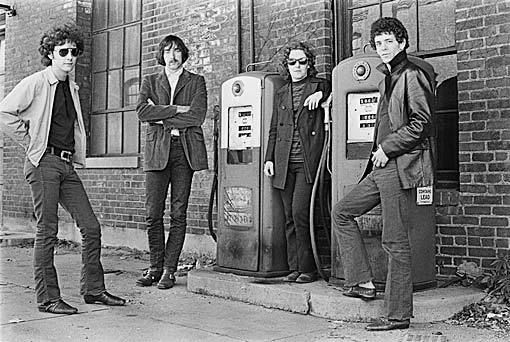
1. “Run Run Run”: The Velvet Underground and Nico. This delightfully crunchy track off the Velvet’s first album has long been a favorite and I actually prefer it to some of the more celebrated material on the legendary album. The great idea of highlighting a different character in each verse is inspired and pre-dates the similar notion that "Walk On The Wild Side" would perfect a few years down the road.
2. “Here She Comes Now”: White Light White Heat. Amidst one of the noisiest rock albums in history is this inspired and lovely sounding tale of a girl “made out of wood” who can never quite reach the perhaps sexual spot she is continually trying to reach.
3. “Jesus”: The Velvet Underground. Among the most surprising tracks in all of Lou’s catalogue, this stunner is remarkable in just how un-ironic it sounds. I would have loved to have heard Elvis sing this haunting and spiritually yearning track.
4. “Oh! Sweet Nuthin”: Loaded. Just about my favorite Velvets track…I would give anything to hear Lou revisit this rarely played number live. Intense, powerful and oh so sublime, this long track features some of Lou’s greatest characters and the guitar interplay between him and Sterling is absolutely unforgettable.
5. “Berlin”: Lou Reed. Everyone knows the album Berlin, but I am often surprised by how many people haven’t heard the longer original song that inspired it. The centerpiece of the first solo album features members of Yes playing with Lou, some extended lyrics and a coda nowhere to be found on the shorter Berlin version. This version would of course later be revisited live quite often with the Take No Prisoner’s take perhaps being the best.
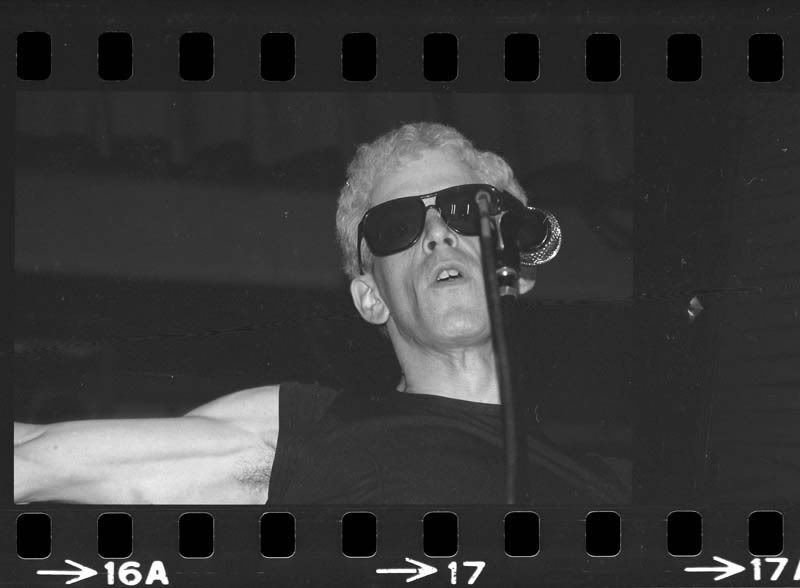
6. “Hangin’ Round”: Transformer. Sandwiched in a typically throwaway position on Side One, this rocking and hilarious song features some of the most surreal lyrics Lou has ever written, with the inspired “Harry was a rich young man who would become a priest. He dug up his dear father who was recently deceased.” being among the best.
7. “Lady Day”: Berlin. One of the most majestic tracks Lou has ever layed down but often overlooked as one of the album’s finest moments. Outside of being incredibly haunting, I love this track because it offers up one of the oddest connecting points to Sinatra’s Watertown, as that concept album on divorce was originally planned to close with a song called “Lady Day”.
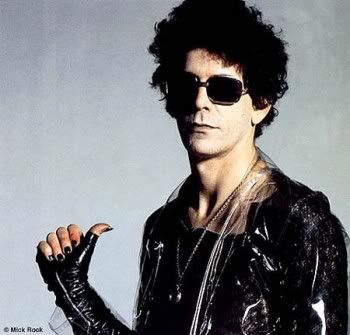
8. “Ennui”: Sally Can’t Dance. Drugged out and downright classic ode to disintegrating, sparked by one of the creepiest monotone vocals in rock history. The line “Pick up the pieces that make up your life, maybe someday you’ll have a wife…and then alimony” stands as one of the most simultaneously devastating and hilarious in Lou's entire canon. Has falling apart ever sounded quite so delightfully dull?
9. “A Gift” Coney Island Baby. The lead off two Side Two of one of Lou’s most personal and greatest albums. This light tongue in cheek tale of a man who is an admitted “Gift to the women of the world” is sparked by some wonderfully warm and evocative guitar playing by Lou (who was returning to the instrument here for the first time in several years).
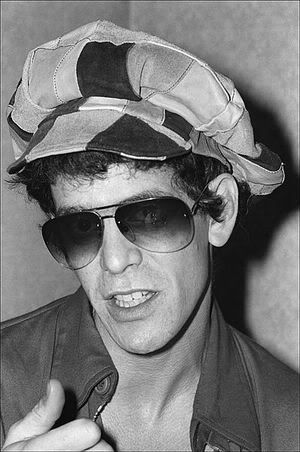
10. “Ladies Pay”: Rock N Roll Heart. A monumental song with one of the most devastating guitar solos he has ever layed down, "Ladies Pay" is an absolute masterpiece and, like the album it graces, has never gotten its due (even among some of Lou’s most dedicated fans). Another one I would love to see him pull out for a newer live reworking.
11. “Dirt”: Street Hassle. Outside of being one of the most vicious put down songs ever placed on vinyl, this track simply sounds like nothing else out there. The moment when he starts singing a slowed down, and unbelievably menacing, portion of Bobby Fuller’s “I Fought The Law” is one of the great moments in seventies rock.
12. “Coney Island Baby” Take No Prisoners. I am making an exception to ignoring live albums here to make mention of this unbelievably powerful take of one of Lou’s signature songs. Frantic, intense and oh so moving, this is one of the great Lou Reed moments and should be more readily available.
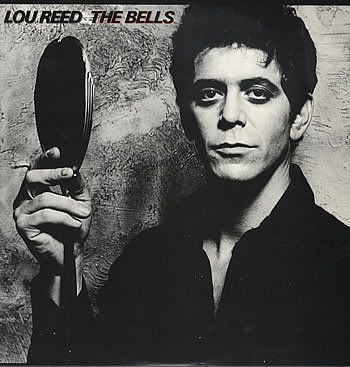
13. “Families” The Bells. Although he has denied it, I suspect that this extraordinary song off my favorite Lou Reed album is one of his most personal. Featuring some of the most painfully honest and knowing lyrics of his career, this song is guaranteed to send chills down the neck of anyone whose ever felt spiritually disconnected from the place they come from…a real favorite.
14. “Standing on Ceremony” Growing Up In Public: Anyone who doubts Lou Reed’s astonishing abilities as a great rock vocalist is advised to check out this frenzied tribute to non-conformity. Growing Up In Public is one of Lou’s most underrated works and this song is among his best.
15. “The Heroine” The Blue Mask. Lovely and haunting track off one of the key albums in Lou’s canon, and one of the most subtle. Listening to this track always reminds me of that great thing Patti Smith said about Lou around ten years ago…something along the lines of “the poet in him won out”…
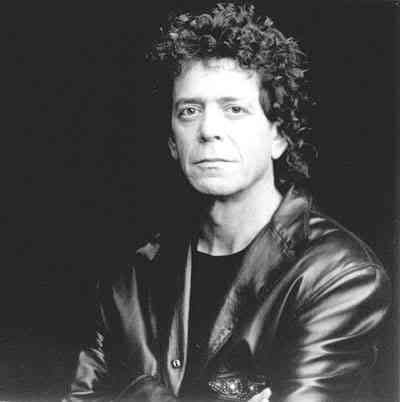
16. “Rooftop Garden” Legendary Hearts. Although he rarely gets credit for it, Lou Reed is capable of writing some truly transcendent love songs with this being one of the greatest. Anyone who has ever known the rush of a new love will smile at the lines “Let’s not see any letters, let’s not answer the phone. Let’s just pretend that there’s no one at home.”
17. “Heroin” Live In Italy. Once again I am making an exception to the live record rule to include this searing take of Lou’s most legendary track. Marked by the face melting guitar dueling of Reed and the great late Robert Quine, this charging version of “Heroin” has to be heard to be believed.
18. “Doin The Things We Want”: New Sensations. Bob Dylan himself sang the praises of this great tribute to Martin Scorsese and Sam Shepherd back in the eighties and I totally agree with him…”Here’s to Travis Bickle and here’s to Johnny Boy”…wow.
19. “Tell It To Your Heart” Mistrial. Another gorgeous love song that had the misfortune to be on Lou’s worst album (which by the way you still need to have)…thankfully rescued from oblivion a few years back when he surprisingly started performing it live again.
20. “Endless Cycle” New York. Often overlooked as one of the best moments one one of Lou’s greatest albums, this song is one of the most devastating and honest looks at the cycle of abuse ever recorded…not just a great rock song, but shockingly great literature.
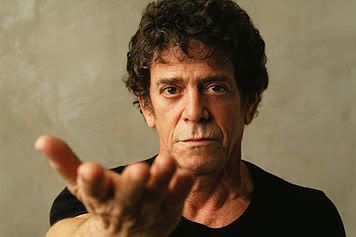
21. “Hello It’s Me”. Songs For Drella. The closing song to Lou and John’s moving memorial to Andy Warhol features some of the most forthcoming and emotive lyrics of Lou’s career…just so damn moving on so many different levels.
22. “Sword Of Damocles”: Magic and Loss. Featuring an unexpected and poignant string section and some of the most emotional lyrics of his career, this is simply put one of the great moments in Lou Reed’s catalogue.
23. “Finish Line”: Set The Twilight Reeling. Racing and charging with some incredible guitar work, this song closes with the ferociously brilliant lines “First came fire, the came light…then came feeling, the came sight.”
24. “Big Sky”: Ecstasy. The anthem like closing to another one of Lou’s key works is a thrilling listen. While lyrically not among the stronger moments on the record, musically this is one of the most breathtaking songs from the last decade.
25. “Fire Music” The Raven: Insane revisit to Metal Machine Music is a potent reminder that no one can make more of a sublime racket than Lou Reed when he tries…would be perfectly at home on one of Sonic Youth’s more experimental records…a wordless triumph.
More Lou Reed posts to come…I hope this proved interesting to already devoted fans or perhaps to anyone who just knows Lou from “Walk On The Wild Side”.
Every truly great rock artist from Elvis Presley to Bob Dylan to David Bowie has a mountain of lost in the groove tracks buried on their albums between the bona-fide classics everyone knows, and Lou Reed is no different. I thought it would be fun to go through his albums with The Velvets and his solo work and mention some of my favorite more ‘hidden’ and less talked about tracks that are just as powerful as the ones everyone knows like "Sweet Jane" and "Walk On The Wild Side". This isn’t a list of my favorite Lou Reed songs per say, although many of these would fall into that category, but instead a look at some often ignored classics that are among the man’s best.
1. “Run Run Run”: The Velvet Underground and Nico. This delightfully crunchy track off the Velvet’s first album has long been a favorite and I actually prefer it to some of the more celebrated material on the legendary album. The great idea of highlighting a different character in each verse is inspired and pre-dates the similar notion that "Walk On The Wild Side" would perfect a few years down the road.
2. “Here She Comes Now”: White Light White Heat. Amidst one of the noisiest rock albums in history is this inspired and lovely sounding tale of a girl “made out of wood” who can never quite reach the perhaps sexual spot she is continually trying to reach.
3. “Jesus”: The Velvet Underground. Among the most surprising tracks in all of Lou’s catalogue, this stunner is remarkable in just how un-ironic it sounds. I would have loved to have heard Elvis sing this haunting and spiritually yearning track.
4. “Oh! Sweet Nuthin”: Loaded. Just about my favorite Velvets track…I would give anything to hear Lou revisit this rarely played number live. Intense, powerful and oh so sublime, this long track features some of Lou’s greatest characters and the guitar interplay between him and Sterling is absolutely unforgettable.
5. “Berlin”: Lou Reed. Everyone knows the album Berlin, but I am often surprised by how many people haven’t heard the longer original song that inspired it. The centerpiece of the first solo album features members of Yes playing with Lou, some extended lyrics and a coda nowhere to be found on the shorter Berlin version. This version would of course later be revisited live quite often with the Take No Prisoner’s take perhaps being the best.
6. “Hangin’ Round”: Transformer. Sandwiched in a typically throwaway position on Side One, this rocking and hilarious song features some of the most surreal lyrics Lou has ever written, with the inspired “Harry was a rich young man who would become a priest. He dug up his dear father who was recently deceased.” being among the best.
7. “Lady Day”: Berlin. One of the most majestic tracks Lou has ever layed down but often overlooked as one of the album’s finest moments. Outside of being incredibly haunting, I love this track because it offers up one of the oddest connecting points to Sinatra’s Watertown, as that concept album on divorce was originally planned to close with a song called “Lady Day”.
8. “Ennui”: Sally Can’t Dance. Drugged out and downright classic ode to disintegrating, sparked by one of the creepiest monotone vocals in rock history. The line “Pick up the pieces that make up your life, maybe someday you’ll have a wife…and then alimony” stands as one of the most simultaneously devastating and hilarious in Lou's entire canon. Has falling apart ever sounded quite so delightfully dull?
9. “A Gift” Coney Island Baby. The lead off two Side Two of one of Lou’s most personal and greatest albums. This light tongue in cheek tale of a man who is an admitted “Gift to the women of the world” is sparked by some wonderfully warm and evocative guitar playing by Lou (who was returning to the instrument here for the first time in several years).
10. “Ladies Pay”: Rock N Roll Heart. A monumental song with one of the most devastating guitar solos he has ever layed down, "Ladies Pay" is an absolute masterpiece and, like the album it graces, has never gotten its due (even among some of Lou’s most dedicated fans). Another one I would love to see him pull out for a newer live reworking.
11. “Dirt”: Street Hassle. Outside of being one of the most vicious put down songs ever placed on vinyl, this track simply sounds like nothing else out there. The moment when he starts singing a slowed down, and unbelievably menacing, portion of Bobby Fuller’s “I Fought The Law” is one of the great moments in seventies rock.
12. “Coney Island Baby” Take No Prisoners. I am making an exception to ignoring live albums here to make mention of this unbelievably powerful take of one of Lou’s signature songs. Frantic, intense and oh so moving, this is one of the great Lou Reed moments and should be more readily available.
13. “Families” The Bells. Although he has denied it, I suspect that this extraordinary song off my favorite Lou Reed album is one of his most personal. Featuring some of the most painfully honest and knowing lyrics of his career, this song is guaranteed to send chills down the neck of anyone whose ever felt spiritually disconnected from the place they come from…a real favorite.
14. “Standing on Ceremony” Growing Up In Public: Anyone who doubts Lou Reed’s astonishing abilities as a great rock vocalist is advised to check out this frenzied tribute to non-conformity. Growing Up In Public is one of Lou’s most underrated works and this song is among his best.
15. “The Heroine” The Blue Mask. Lovely and haunting track off one of the key albums in Lou’s canon, and one of the most subtle. Listening to this track always reminds me of that great thing Patti Smith said about Lou around ten years ago…something along the lines of “the poet in him won out”…
16. “Rooftop Garden” Legendary Hearts. Although he rarely gets credit for it, Lou Reed is capable of writing some truly transcendent love songs with this being one of the greatest. Anyone who has ever known the rush of a new love will smile at the lines “Let’s not see any letters, let’s not answer the phone. Let’s just pretend that there’s no one at home.”
17. “Heroin” Live In Italy. Once again I am making an exception to the live record rule to include this searing take of Lou’s most legendary track. Marked by the face melting guitar dueling of Reed and the great late Robert Quine, this charging version of “Heroin” has to be heard to be believed.
18. “Doin The Things We Want”: New Sensations. Bob Dylan himself sang the praises of this great tribute to Martin Scorsese and Sam Shepherd back in the eighties and I totally agree with him…”Here’s to Travis Bickle and here’s to Johnny Boy”…wow.
19. “Tell It To Your Heart” Mistrial. Another gorgeous love song that had the misfortune to be on Lou’s worst album (which by the way you still need to have)…thankfully rescued from oblivion a few years back when he surprisingly started performing it live again.
20. “Endless Cycle” New York. Often overlooked as one of the best moments one one of Lou’s greatest albums, this song is one of the most devastating and honest looks at the cycle of abuse ever recorded…not just a great rock song, but shockingly great literature.
21. “Hello It’s Me”. Songs For Drella. The closing song to Lou and John’s moving memorial to Andy Warhol features some of the most forthcoming and emotive lyrics of Lou’s career…just so damn moving on so many different levels.
22. “Sword Of Damocles”: Magic and Loss. Featuring an unexpected and poignant string section and some of the most emotional lyrics of his career, this is simply put one of the great moments in Lou Reed’s catalogue.
23. “Finish Line”: Set The Twilight Reeling. Racing and charging with some incredible guitar work, this song closes with the ferociously brilliant lines “First came fire, the came light…then came feeling, the came sight.”
24. “Big Sky”: Ecstasy. The anthem like closing to another one of Lou’s key works is a thrilling listen. While lyrically not among the stronger moments on the record, musically this is one of the most breathtaking songs from the last decade.
25. “Fire Music” The Raven: Insane revisit to Metal Machine Music is a potent reminder that no one can make more of a sublime racket than Lou Reed when he tries…would be perfectly at home on one of Sonic Youth’s more experimental records…a wordless triumph.
More Lou Reed posts to come…I hope this proved interesting to already devoted fans or perhaps to anyone who just knows Lou from “Walk On The Wild Side”.
Saturday, April 26, 2008
Mort d’un Pourri (Death Of A Corrupt Man)
Despite having the admittedly remarkable cast of Alain Delon, Ornella Muti, Stephane Audran, Mireille Darc, Maurice Ronet and Klaus Kinski, Georges Lautner’s 1978 thriller Mort d’un Pourri (Death Of A Corrupt Man) isn’t as noteworthy as it might seem. The Cesar nominated film, despite some intriguing and powerful moments, finally falls a bit flat due to an overly convoluted script and some downright odd directorial decisions by Lautner.
Born in Nice in the early part of 1926, Lautner got his start as an Assistant Director and actor in a number of French films throughout the fifties. Graduating to the director’s chair in 1958, Lautner delivered around forty or so features up until the early nineties when he mostly switched to television productions.
Mort d’un Pourri is a political thriller based on a Raf Vallet novel and adapted by talented Michel Audiard. The extremely prolific and Cesar winning Audiard had his work cut out for him adapting Vallet’s complex and cynical tale of a man caught up in a world where everyone is seemingly corrupt and it shows as the final script for Mort d’un Pourri is just too layered for its own good. At nearly two hours, the film is quite exhausting and one can’t help thinking that a more toned down distillation of the novel’s themes might have worked better for the screen.
The Delon produced Mort d’un Pourri is an extremely attractive production thanks to the always noteworthy Henri Decae, who provides some typically wonderful photography here. The Stan Getz performed Phillippe Sarde score is also a thing of beauty and the soundtrack is ultimately more recommended than the film it graces.
The cast is uniformly fine and if the film is finally ultimately disappointing, then it is at least worth a look due to the actors involved with it. Delon dominates the film and is featured in nearly every scene. Just past the height of his beauty in 1978, Delon has begun to take on the sad world-weariness that he play so well throughout the eighties and nineties. He is quite good in this role, although finally it isn’t among his great works, and the Cesar nomination he received for it was well deserved.
Although billed just below Delon in the film, breathtaking Ornella Muti has a surprisingly smaller role in the film and one cant help but wonder what more screen time for her might have done for the production. As always, she is a wonder to watch and looks lovely under the thoughtful lenses of Decae.
The rest of the cast is fine, although some of their work, specifically Kinski, was hurt by some truly atrocious dubbing in the version I saw. Still seeing Alain Delon and Klaus Kinski working together in a few scenes is remarkable.
Mort d’un Pourri is finally damaged the most by the rather flat direction of Lautner, whose work here is competent but never all that inspired (although it should be mentioned that there are some nice visual motifs repeated throughout the picture that I have tried to highlight with the sceenshots here). Honestly, it would have been preferable to have Delon directing the picture himself as it seems fairly obvious he was pulling many of the behind the scenes strings in general. There is a great film somewhere in Mort d’un Pourri, but unfortunately it never comes out and as it is it is just an average entry in the French Crime Thriller genre of the seventies.
Lautner’s film did fairly well in French cinemas in the early part of 78 and it played throughout the year all over the world. It has never, to my knowledge, had a legitimate home video release in America and is currently only available on DVD in Europe. Fans of the genre, Delon and Muti should of course seek it out but it remains a flawed film that could have been something really special.
To view some of the poster designs for this film, please visit my Harry Moseby Confidential.
Born in Nice in the early part of 1926, Lautner got his start as an Assistant Director and actor in a number of French films throughout the fifties. Graduating to the director’s chair in 1958, Lautner delivered around forty or so features up until the early nineties when he mostly switched to television productions.
Mort d’un Pourri is a political thriller based on a Raf Vallet novel and adapted by talented Michel Audiard. The extremely prolific and Cesar winning Audiard had his work cut out for him adapting Vallet’s complex and cynical tale of a man caught up in a world where everyone is seemingly corrupt and it shows as the final script for Mort d’un Pourri is just too layered for its own good. At nearly two hours, the film is quite exhausting and one can’t help thinking that a more toned down distillation of the novel’s themes might have worked better for the screen.
The Delon produced Mort d’un Pourri is an extremely attractive production thanks to the always noteworthy Henri Decae, who provides some typically wonderful photography here. The Stan Getz performed Phillippe Sarde score is also a thing of beauty and the soundtrack is ultimately more recommended than the film it graces.
The cast is uniformly fine and if the film is finally ultimately disappointing, then it is at least worth a look due to the actors involved with it. Delon dominates the film and is featured in nearly every scene. Just past the height of his beauty in 1978, Delon has begun to take on the sad world-weariness that he play so well throughout the eighties and nineties. He is quite good in this role, although finally it isn’t among his great works, and the Cesar nomination he received for it was well deserved.
Although billed just below Delon in the film, breathtaking Ornella Muti has a surprisingly smaller role in the film and one cant help but wonder what more screen time for her might have done for the production. As always, she is a wonder to watch and looks lovely under the thoughtful lenses of Decae.
The rest of the cast is fine, although some of their work, specifically Kinski, was hurt by some truly atrocious dubbing in the version I saw. Still seeing Alain Delon and Klaus Kinski working together in a few scenes is remarkable.
Mort d’un Pourri is finally damaged the most by the rather flat direction of Lautner, whose work here is competent but never all that inspired (although it should be mentioned that there are some nice visual motifs repeated throughout the picture that I have tried to highlight with the sceenshots here). Honestly, it would have been preferable to have Delon directing the picture himself as it seems fairly obvious he was pulling many of the behind the scenes strings in general. There is a great film somewhere in Mort d’un Pourri, but unfortunately it never comes out and as it is it is just an average entry in the French Crime Thriller genre of the seventies.
Lautner’s film did fairly well in French cinemas in the early part of 78 and it played throughout the year all over the world. It has never, to my knowledge, had a legitimate home video release in America and is currently only available on DVD in Europe. Fans of the genre, Delon and Muti should of course seek it out but it remains a flawed film that could have been something really special.
To view some of the poster designs for this film, please visit my Harry Moseby Confidential.
Monday, February 18, 2008
Slave To Love: The Fabled Workprint Of Nine ½ Weeks
One of my favorite features that the IMDB carries is the ‘alternate versions’ and ‘trivia’ sections for their individual film listings. The listing for Adrian Lyne’s Nine ½ Weeks is particularly interesting as it includes some information on the fabled ‘workprint’ version which has still yet to see a legitimate release. A quick run through shows that one of his most controversial films was subjected to some of the most studio interference, a fact that makes a special edition DVD of the film with his original cut a much needed release.
Of course, rumors of Lyne’s original cut have been floating around for years. Mickey Rourke himself spoke of it in a Playboy interview after the films release, stating that Lyne’s version was a flat out ‘masterpiece’. It is also known that MGM sent the film through well over twenty test screenings and finally removed more than an hour from it in an attempt to make it more commercial, and Rourke’s character more likeable.
 Recently I revisted Nine ½ Weeks for the first time in well over a decade and I must say the film, even in its tampered and butchered state, has aged quite well. Obviously many of the fashions and some of the music has dated but when the film works, it still feels as fresh and as scintillating as ever. Lyne remains after over three decades in the directors chair one of cinema’s premiere stylists and Nine ½ Weeks is still one of his definitive productions.
Watching Nine ½ Weeks today is an eye opening experience on many levels. It is hard to believe the furor that the film caused back in 1986 but this was indeed one of the most controversial productions Hollywood had ever put out. The film still has some punch although the last twenty years has taken some of the sting away, which is good in a way as it allows a fresher eye to view it with.
Key to the film’s success is the casting of Kim Basinger in the lead role as Elizabeth. Basinger has always been an underrated actress in my book and I find her work in this film to be particularly resonating. I find it hard to believe that such a provocative, brave and go for broke performance was nominated for a Razzie award that year but indeed it was. Mickey Rourke was really at the top of his game here and his work as the seedy but seductive Wall street businessman John is one of his definitive turns. No other actor could have played the mysterious part with as much cool conviction as Rourke does.
The film does indeed work best in the many scenes featuring just Basinger and Rourke. Both of them are at the height of their beauty here and the heat they manage to generate, even in some of the film’s stilted dialogue scenes, pretty much guarantee that it will always have some bite.

As a visual exercise the film is still a wonder to behold. I always thought an interesting experiment would have been to make this into a silent film with the chemistry between Rourke and Basinger acting as dialogue.
The script co-written by Zalman King (from the Elizabeth McNeil novel) is the film’s biggest liability, although I agree with King’s contention that there is something wrong with a society that will accept films driven by violence and not by sex. I suspect that his script works much better and feels more complete in Lyne’s preferred longer cut. As it is in the theatrical print, the script feels a bit choppy and not fully formed.
Complaints that the film feels too much like a music video are perhaps valid in spots but damn, with Adrien Lyne filming it who cares. This guy has such a grasp on what he is attempting to capture that I have trouble arguing with any of his shots. His work here with Peter Biziou as DP is extraordinary especially in the films masterful lit love scenes, which feel like David Hamilton photographing Blade Runner. The two would work together again on another one of Lyne’s best works, 2002’s Unfaithful.
Outside of the films sex scenes, it was best known in 1986 for its soundtrack, which was a huge hit. Jack Nitzsche’s score is good but feels underused and I wonder if Lyne’s cut has more of it and less of the songs that ended up being put in the film. The songs themselves are a mixed bag but Bryan Ferry’s lovely and imaginative “Slave To Love” remains one of the great songs from an eighties film. Lyne’s images of Basinger and Rourke set to it remain as stirring and as powerful as ever.
Nine ½ Weeks is more than deserving of a solid DVD release with Lyne’s original cut. I think it would surprise a lot of people who have always just considered the film a soft-core failure. As it stands, the film is still one of the most definitive works of the eighties and I must say I really enjoyed revisiting it again after so many years. I would love to write a full post on the Lyne’s original version, and will if I ever get a chance to see it.
Of course, rumors of Lyne’s original cut have been floating around for years. Mickey Rourke himself spoke of it in a Playboy interview after the films release, stating that Lyne’s version was a flat out ‘masterpiece’. It is also known that MGM sent the film through well over twenty test screenings and finally removed more than an hour from it in an attempt to make it more commercial, and Rourke’s character more likeable.
 Recently I revisted Nine ½ Weeks for the first time in well over a decade and I must say the film, even in its tampered and butchered state, has aged quite well. Obviously many of the fashions and some of the music has dated but when the film works, it still feels as fresh and as scintillating as ever. Lyne remains after over three decades in the directors chair one of cinema’s premiere stylists and Nine ½ Weeks is still one of his definitive productions.
 Watching Nine ½ Weeks today is an eye opening experience on many levels. It is hard to believe the furor that the film caused back in 1986 but this was indeed one of the most controversial productions Hollywood had ever put out. The film still has some punch although the last twenty years has taken some of the sting away, which is good in a way as it allows a fresher eye to view it with.
Key to the film’s success is the casting of Kim Basinger in the lead role as Elizabeth. Basinger has always been an underrated actress in my book and I find her work in this film to be particularly resonating. I find it hard to believe that such a provocative, brave and go for broke performance was nominated for a Razzie award that year but indeed it was. Mickey Rourke was really at the top of his game here and his work as the seedy but seductive Wall street businessman John is one of his definitive turns. No other actor could have played the mysterious part with as much cool conviction as Rourke does.
The film does indeed work best in the many scenes featuring just Basinger and Rourke. Both of them are at the height of their beauty here and the heat they manage to generate, even in some of the film’s stilted dialogue scenes, pretty much guarantee that it will always have some bite.

As a visual exercise the film is still a wonder to behold. I always thought an interesting experiment would have been to make this into a silent film with the chemistry between Rourke and Basinger acting as dialogue.
The script co-written by Zalman King (from the Elizabeth McNeil novel) is the film’s biggest liability, although I agree with King’s contention that there is something wrong with a society that will accept films driven by violence and not by sex. I suspect that his script works much better and feels more complete in Lyne’s preferred longer cut. As it is in the theatrical print, the script feels a bit choppy and not fully formed.
Complaints that the film feels too much like a music video are perhaps valid in spots but damn, with Adrien Lyne filming it who cares. This guy has such a grasp on what he is attempting to capture that I have trouble arguing with any of his shots. His work here with Peter Biziou as DP is extraordinary especially in the films masterful lit love scenes, which feel like David Hamilton photographing Blade Runner. The two would work together again on another one of Lyne’s best works, 2002’s Unfaithful.
Outside of the films sex scenes, it was best known in 1986 for its soundtrack, which was a huge hit. Jack Nitzsche’s score is good but feels underused and I wonder if Lyne’s cut has more of it and less of the songs that ended up being put in the film. The songs themselves are a mixed bag but Bryan Ferry’s lovely and imaginative “Slave To Love” remains one of the great songs from an eighties film. Lyne’s images of Basinger and Rourke set to it remain as stirring and as powerful as ever.
Nine ½ Weeks is more than deserving of a solid DVD release with Lyne’s original cut. I think it would surprise a lot of people who have always just considered the film a soft-core failure. As it stands, the film is still one of the most definitive works of the eighties and I must say I really enjoyed revisiting it again after so many years. I would love to write a full post on the Lyne’s original version, and will if I ever get a chance to see it.
Subscribe to:
Posts (Atom)
