THE MOON IN THE GUTTER ARCHIVES

I AM CURRENTLY WORKING ON EXPANDING AND REVISING SOME OF THE BEST PIECES FROM MOON IN THE GUTTER AT MY OFFICIAL SITE, NOSTALGIA KINKY. THIS NEW PROJECT CAN BE ACCESSED BY CLICKING THE PICTURE BELOW.

THE MOON IN THE GUTTER ARCHIVES

Recent Posts from my Official Site

Showing posts with label Jean-Pierre Melville. Show all posts

Sunday, June 28, 2026

Dust Off Those Grooves (Chapter 22) Eric Demarsan's Le Cercle Rouge

Part of my Le Cercle Rouge Tribute week at Harry Moseby Confidential.


I know the term ‘cool’ had been created long before Eric Demarsan stepped into a French studio in 1970 to score Jean-Pierre Melville’s masterful Le Cercle Rouge but everytime I watch the film or listen to the soundtrack album it feels like the word was invented for both.
Calculated, coolly seductive and chilling, just like the movie it was written for, Demarsan’s score is one of the best to ever grace a French film, a twenty-five song powerhouse of horn driven jazzy interludes and strangely unsettling vibraphone driven exercises of solitude.
Demarsan recalled to interviewer Stephane Lerouge in the liner notes to Universal’s essential French reissue that the music of Le Cercle Rouge was designed to “give you the feeling of being trapped” and was based on the “idea of fate.” With that thought, Demarsan goes a long way towards describing the sound of his most remarkable score.
Melville initially hired legendary Michel Legrand to score his epic crime film but after hearing Legrand’s initial compostitions he realized he had made a mistake and reconnected with Demarsan, the novice composer who had done such a shockingly good job on his 1969 film Army of Shadows.
Demarsan was born in France in October of 1938. Even though his father was immersed in the business world, Demarsan had some music in his background as his Grandmother was a painter who was interested in the piano. He began taking piano lessons just before his thirteenth year and instantly excelled at it and just over five years later was playing various Pariasian nightclubs with a popular Jazz quartette.
To help support himself and get closer to the cinema that he was falling more and more in love with, the budding composer began scoring French commercials in the early to mid sixties. This led to orchestration duties on some French television and in the mid sixties he scored a major assignment with iconic French composer François de Roubaix that would lead him to the attention of several directors, including Melville who would give him his first full composing job for a feature with the aforementioned Army of Shadows.
After Melville’s untimely death in 1973, Demarsan began working prolifically for a large variety of French and European filmmakers including Costa-Gavras and Jean-Pierre Mocky. He continues to be an in demand composer to this day in France, with his most recent credits alternating between features and the television work that he got his start in.
It can be argued that Demarsan peaked with his work for Melville, but that shouldn’t take away from what has been an extremely successful career. Perhaps the two were just made for each other and there simply wasn’t another filmmaker who could match the painterly like majesty of his scores like Melville could. Whatever the reason, Demarsan’s most influential work can be heard on Le Cercle Rouge, a real masterpiece of a record marked not only by expert compositions but also by the expert playing of the band Demarsan assembled (with special mention going to Bernard Lubat’s Vibraphone work).
Joining Demarsan in the Davout Studio in October of 1970 along with Lubat are Daniel Humair on percussion, Guy Pedersen on Bass, Georges Arvanitas on piano, Raymond Guiot on flute and Joss Baselli on the accordion. Together they create a rich sound that has gone onto to influence everyone from Roubaix himself to bands like Saint Etienne. The soundtrack, along with Roubaix’s score for Le Samourai, would have such an influence that in 2002 a group of musicians (including Saint Etienne, April March and Helena Noguerra) would record an entire album entitled Tribute to Alain Delon and Jean-Pierre Melville, that was fittingly not as good as the scores that inspired it.
The excellent remastered CD to Le Cercle Rouge is getting harder and harder to find but copies are still available online for those interested. A compilation, including some moments from the film is still in print and is more readily available but alas not as essential.
Demarsan admits in the CD booklet of Le Cercle Rouge that he was the only composer that Melville "ever worked with twice" and that he feels "a certain pride in having Melville" as his "first film director". It was a match made in heaven and both the film and soundtrack of Le Cercle Rouge are major masterpieces from two artists at the top of their game.

A Showdown With Dean Martin and Rock Hudson


Even though it contains the only screen teaming between two of the biggest stars in Hollywood history, George Seaton's 1973 feature SHOWDOWN has been largely forgotten. Starring Dean Martin and Rock Hudson, SHOWDOWN has been unjustly neglected since it opened and closed quickly back in June of 1973.
Seaton had been directing since the mid forties when he shot SHOWDOWN in 1972, and it would turn out to be his final feature film as director. A talented, if undervalued director, Seaton is probably most famous for the original version of MIRACLE ON 34th STREET. Other credits include the searing Clifford Odets adaptation, THE COUNTRY GIRL, the charming TEACHER'S PET and the best picture winning AIRPORT. A two time Oscar winner, Seaton would sadly die of cancer just a few years after finishing SHOWDOWN.
SHOWDOWN would mark one of the last major appearances by Dean Martin, who was said to be unhappy during the shoot due to the death of his favorite horse. SHOWDOWN also marked an end to the great Rock Hudson's prolific run of films that had started in the fifties and he would just work sporadically after 1973.
SHOWDOWN was a bit out of step for the early seventies. Directors like Sam Peckinpah and Monte Hellman had totally transformed the American Western and the fairly subdued and elegiac SHOWDOWN didn't stand much of a chance in mid 1973.
Seaton's film tells the fairly simple story of two men, Chuck and Billy, who grew up together but went very separate ways in their lives. Rock Hudson's Chuck settled down and became a lawman while Martin's Billy chose a life of crime. It is a story that had been told a countless number of times before and since but there is something so weary and sad about SHOWDOWN that I think it stands apart from them.
With it lovely, and at times, haunting score by David Shire and wisely shot 2.35 compositions, SHOWDOWN is a very effective film throughout it's fairly short running time of 99 minutes. There is something positively epic in this little film about two friends who chose the most different of lives but never stopped caring for each other or forgot where they came from.
The acting is fine throughout with Martin and Hudson surrounded by many top tier character actors including Donald Moffat and Ed Begley, Jr. in a smaller role. Susan Clark does a good job as Chuck's wife Kate but I always think of Tuesday Weld when I watch the film and can only imagine the multi-layered performance she would have given in the part. Hudson is at the top of his game here, middle aged and exhausted looking but still beautiful. He does a brilliant job at playing a man who has a job to do that he knows will ultimately ask him to make the hardest decision of his life. Martin is excellent as well and it is a performance that improves as the film goes along. At first it appears Dean will be giving one of his patented comic and winking performances but he does some really remarkable heavy dramatic work here as a man who knows what his destiny holds and that there isn't any escape from it.
Shot by prolific cinematographer, Ernest Laszlo, SHOWDOWN is gorgeous to look at and his photography is particularly good in the films many flashback scenes to the boys youth, when they were the closest of friends.

SHOWDOWN isn't perfect, I don't think that anyone working on it realized that they had what was close to being a really great film on their hands. It could do with being about thirty minutes longer as more characterization is needed, especially with Kate and Chuck. It feels edited a bit tight also, although the cutting by DIAMONDS ARE FOREVER editor John W. Holmes is mostly well done throughout. SHOWDOWN feels like a film that the studio expected to fail but that somewhere along the way, Seaton and crew realized they might have a winner on their hands. I think had that thought been there at the beginning, SHOWDOWN would have turned out to be a small masterpiece. As it is, it is a solid and moving good film with more great moments than anyone might expect.
SHOWDOWN does indeed reach greatness in its final few minutes where we see both men reaching their individual destinies. There is a particular flashback scene and a line speaking of "the world spitting at you" that brings a tear to my eye every time I watch the film and the look on Rock Hudson's face at the end of this movie is the work of a master giving one of his last truly great performances.
SHOWDOWN would open and close quickly with very little critical or popular attention given to it. For most in the Summer of 1973, it was a product of a time that had slipped away. Ironically it was about two men who themselves were living in a world that had passed them by. SHOWDOWN would appear briefly on VHS in the mid nineties but has never been released on DVD. It is currently missing in action and is rarely mentioned in film circles.

SHOWDOWN reminds me of some of Jean-Pierre Melville's films. It, of course, doesn't achieve the greatness of Melville but in its own small way it has some of the same emotional resonance as the great French master's films.
Late in his life, Dean Martin was said to get great pleasure from watching old westerns on tv. I often think about the lovely man, sitting in his chair smoking, with perhaps a drink, and watching the flickering memories of his youth. I sometimes wonder if he ever happened to stumble across SHOWDOWN during one of those Western marathons he so enjoyed. Would he have flipped quickly by or would he have stopped, if only for a brief moment, and smiled at a film that is a lot better than anybody has ever given it credit for? There is no telling, we lost Dean as well as Rock years ago and I suppose in a way it is fitting, even if it is unjust, that SHOWDOWN has in its own way all but been lost to time also.

Some Quick and Random Thoughts On Le Samourai


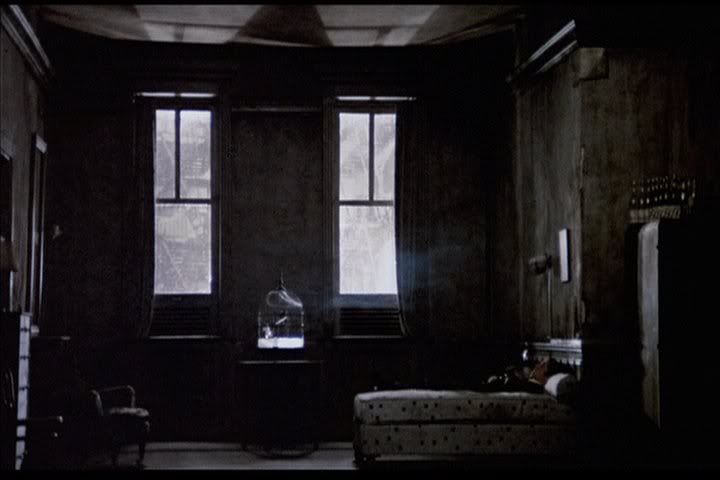
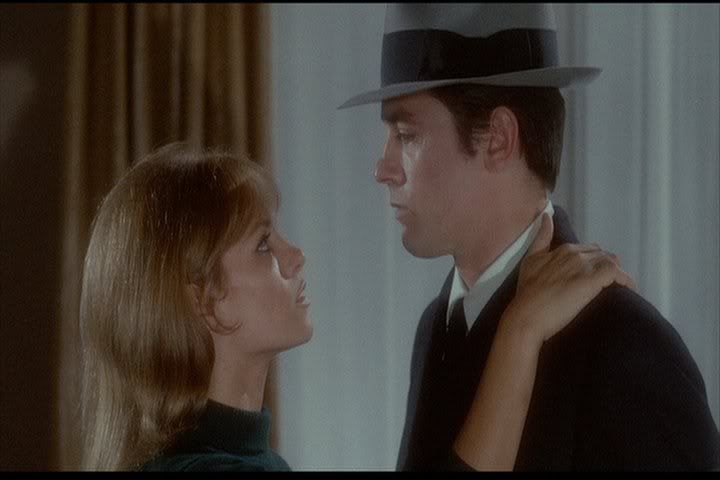
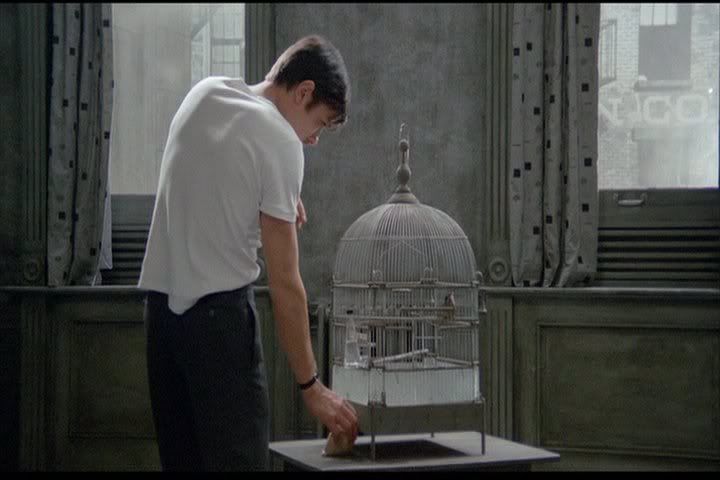
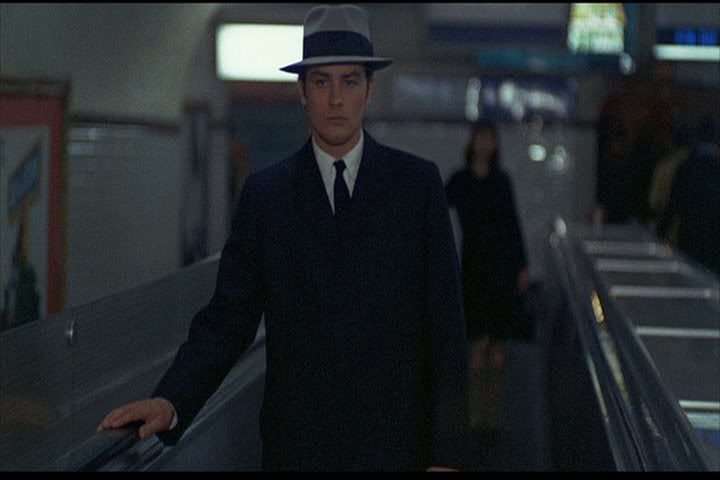
I think it was John Woo who called Jean Pierre Melville’s 1967 feature Le Samourai a perfect film and, truth be told, I don’t think Woo was too far off the mark. Melville’s tale of lonely hitman Jef Costello, played absolutely perfectly by Alain Delon, remains one of the most distinctive and original films ever made. The mood, atmosphere and tone Melville, and the films often-unsung hero Henri Decae, sets from its amazing opening sequence to its final tragic moments never falter. Le Samourai is one of the most resonate mood pieces ever set to film…like a visual version of Side 2 of Brian Eno’s Before and After Science only even more chilling in just how still and quiet it is.

I am always struck by something different when I revisit Melville’s great film. This time it was just how extraordinarily and refreshingly simple Melville’s script for the film actually is. Based loosely on Joan Mcleod’s novel The Ronin, Melville and co-screenwriter Georges Pellegrin script is such a perfectly designed piece that it is hard to imagine that even a comma was out of place. I have always wondered what the script felt like for Delon to hold, as it surely must have been one of the lightest his hands had ever grasped. So many sections of the film are almost pure silence. Melville would employ this wonderful technique throughout his career but it was never as devastating as it is here. We are in Costello’s world throughout Le Samourai and it is a lonely and isolated one. Even when he is relating to other people, such as his real life wife Nathalie Delon, Alain seems like he is at an impenetrable distance…like an animal raised in a cage who has suddenly been let out in an open space he has no understanding of.

I always find it hard to watch Le Samourai without thinking about Delon himself. Images of him alone in his apartment with only a Samurai Sword on the wall above his couch spring to mind and also of course the mysterious and tragic turn of events involving one of his bodyguards a year after Le Samourai was released. Of course, only Alain Delon knows how far he actually slipped into the persona of Jef Costello in his real life, but the two are finally inseparable in Delon’s career as he has never fully escaped his overwhelming performance in this film, and I often wonder if he ever really wanted to.

Sylvia Kristel described Delon a decade after Le Samourai in her book as, “trapped, careful, anxious, suspicious” and that she “sensed in this man with the intense gaze a never admitted pain that ate away at him.” She would go onto say that “He was complex to say the least, vulnerable and powerful” and finally that he was “a magnificent and broken being.” Sylvia could have very well been describing Costello with these very vivid descriptions.
I am always struck not by the acclaim the film has received (as it is well deserved) but by the amount of film fans that don’t respond to it…who actually don’t like it. It’s odd how great art, and I believe Melville’s film is just that, can have a polarizing effect on some people. I vividly remember a discussion I had with a friend, who was very well versed in French cinema, who didn’t understand the film’s allure. I finally realized that my attempt to persuade him was futile; there is something about Le Samourai that people either get or don't get.

Honestly, I love everything about the film. From the fascinating and coolly sinister score by the great Francois de Roubaix (a soundtrack that is never far from my CD player) to the way Nathalie Delon plays the police inspector with such cool precision when he is trying to get her incriminate Costello, to the final gunshot in the film that always makes me jump no matter how many times I have seen it.
For a terrific look at the film’s iconic opening shots, take a look at this piece by my friend and Out 1 contributor Brandon, and for anyone who hasn’t seen the film give Criterion’s excellent DVD a look. While not as loaded up with extra features as some of their discs, the print is lovely and the vintage interviews (especially one with Delon in 67) are fascinating.

Moon in the Gutter (Month By Month)

BLOG CREATED, EDITED and WRITTEN BY JEREMY RICHEY: Began in DEC 2006. The written content of all posts (excepting quotes from reviews, books, other publications) COPYRIGHT JEREMY RICHEY.