THE MOON IN THE GUTTER ARCHIVES

I AM CURRENTLY WORKING ON EXPANDING AND REVISING SOME OF THE BEST PIECES FROM MOON IN THE GUTTER AT MY OFFICIAL SITE, NOSTALGIA KINKY. THIS NEW PROJECT CAN BE ACCESSED BY CLICKING THE PICTURE BELOW.

THE MOON IN THE GUTTER ARCHIVES

Recent Posts from my Official Site

Showing posts with label Brian Eno. Show all posts

Sunday, June 28, 2026

Dust Off Those Grooves (Chapter Ten)


When the dust settles on the remarkable career of David Bowie I believe two things will become evident. The first being that this man is the most innovative and important artist of the rock era and secondly that he reached his artistic peak in, not in the 1970s, but in the 1990s.
Bowie's artistic disintegration in the eighties has been well documented in many publications and after reaching his nadir with the heartbreaking Never Let Me Down album Bowie would begin to formulate the most impressive artistic comeback in rock since Elvis in 68.
Bowie's first step towards redemption was the savage project he formulated with guitarist Reeves Gabrels. Tin Machine is typically made fun of these days but one listen to the first album clearly shows just how necessary that band was. Blasting away the eighties, with one of the most brutal albums by a major artist ever, Bowie buries every over-produced and under-written song he had spent the previous five years performing.
After the furious Tin Machine period where Bowie would successfully alienate the audience that had adopted him in 1980's he would re-enter the studio with none of than Let's Dance producer Nile Rodgers. At first it seemed like Bowie was stepping backwards but it soon became apparent that Bowie was attempting to recapture his voice by going head to head with one of the men whom he had originally lost it with. The talented Chic founder Rodgers would find Bowie to be a very different artist from the one whom had made Let's Dance the decade before. Bowie took full control and produced an album that was at times heavily flawed but always interesting. Black Tie White Noise would debut at number one in Britain and would contain a couple of tracks that could be counted among Bowie's best, including the terrifying Jump They Say, but it wasn't a masterpiece to rank among his finest work. Bowie was already quietly getting ready to deliver that.
1993 saw director Roger Michell approach Bowie with the idea to provide the soundtrack to a mini-series he was working on entitled The Buddha Of Suburbia, based on the novel by Hanif Kureishi concerning a young man attempting to come of age in 1970's England. The idea that Michell had was to originally use Bowie's work from the seventies but Bowie liked the story immensly and agreed to provide new material.
Recorded in Switzerland, The Buddha of Suburbia is the great lost David Bowie album. Out of print for years and the weakest seller in his catalogue, some hardcore Bowie fans don't even know about it. Yet it is in these ten tracks where he hear Bowie truly reclaiming his art and it would signal the trilogy of masterworks (Outside, Earthling and Hours) that he would produce in the years following its release.
The Buddha of Suburbia would see Bowie returning not just to the strong song writing of the early seventies but also the longer instrumentals that had populated Low and Heroes.
Harking back to early compositions like The Bewlay Bros. and All The Madman the title track of the album would become one of the greatest of all Bowie songs. A lovely and exciting song that would recall not only the early seventies but would also see Bowie tipping his hat to newer British bands he admired like Suede and The Stone Roses, it is one of the great 'British' songs Bowie has ever recorded. The line 'Elvis is English and climbs the hills' among others would mark this a Bowie's homecoming and within a few years he would take to performing in a Union Jack coat.
After the stunning title track the album switched gears completely into a six minute plus instrumental entitled Sex And The Church. The song is a weird mix of house and free jazz with Bowie providing some buried spoken word throughout. Nicholas Pegg, author of the indispensable The Complete David Bowie, would note that the song's conclusion would sneak bits of The Jean Genie in before suddenly ending.
South Horizon is reported to be Bowie's favorite on the album and it is a delicious instrumental that sounds like Roxy Music doing a Cecil Taylor song. Mike Garson's piano is at it's most experimental here and the song weaves a hypnotic six minute groove.
The seven minute track The Mysteries sees Bowie returning to the ambient like instrumentals that he cut with Eno for Low and Heroes. It is one of Bowie's best moments as an instrumentalist and it would pay tribute to an expiermental moment in popular music that I still don't think has topped.
Strangers When We Meet would provide the album its next great moment and would serve as one of the most perfect pop songs Bowie has ever delivered. A glorious five minute side that Brian Eno loved so much that he would have Bowie record a second version two years later to close their astonishing Outside album.
Dead Against It is the most frenetic song on the album and would be selected as the B-side to the title track single. Untitled #1 again has Bowie harking back to his work with Eno in the seventies. Lush, sweeping and lovingly rendered with a line, "It's clear that some things never change", that sums up the entire album.
The album would close with one final stunning ambient piece, Ian Fish U.K. Heir and a reprise of the title track featuring a solid, but unnecessary, Lenny Kravitz guitar solo.
The Buddha of Suburbia is an album that manages to do the near impossible task of looking back and forward at the same time. It also works as a perfect introduction to the massive scope of Bowie's career as it seemingly features something from every one of his musical persona's.
The album has had a strange release history. Originally a botched British only release that was incredibly released as a straight soundtrack and not a new Bowie album. It managed only to get to 87 on the British charts and quickly slipped out of print. It finally got a quiet American release in the mid 90's with a new cover and that version also fell quickly out of print. It remains the only Bowie album that is currently not in circulation. It is also one of Bowie's favorites of all of his own work and he would draw heavily on it for his All Saints instrumental album.
Bowie would soon, after recording Buddha, be back in the studio with Brian Eno for the audacious and already influential Outside album. He would continue to grow more and more confident throughout the 90's and this decade with a series of albums that I believe will hold up as well as his best work from the 70s.
Dave Thompson in his fine study of Bowie's career renaissance, Hallo Spaceboy, would note that Bowie is, "moving into what will unavoidably be described as the next phase of his career from a position not only of contentment, but also of unparalleled creative strength". That is correct and for anyone curious to hear the moment when Bowie truly regained his genius should seek out the most elusive of all of his work, the magnificent Buddha Of Suburbia.

Bowie's Low Thirty Years On


Thirty years ago if you would have walked into any record store you might have seen a certain album called LOW gathering dust on the new release racks. You might have been struck by the striking cover photo and taken an open copy into a listening booth. Dropping the needle on random spots you would have heard something remarkably different and daring; from the deliberately chopping short splintered songs on the first side to the long instrumentals on side two. It would have been unlike anything else you had ever heard and thirty years after its release LOW remains a unique and audacious creation.
David Bowie released LOW just after his birthday in January of 1977. Initial reactions to the album were lukewarm to say the least. Critics were pretty condemning and fans were perplexed. After initial solid sales it quickly fell off the charts and became one of Bowie's poorest selling albums.
It soon became apparent that LOW was something remarkable and within just a few years its effects began to be felt in a wide variety of artistic fields. Bands like Joy Division among a slew of others would take it's chilly sound to more extreme levels. Pretty much the entire post punk movement was built on LOW.
The creation of LOW remains a misunderstood one. Often credited as being recorded completely in Berlin with Brian Eno in the producer's chair, LOW was actually recorded in France with Tony Visconti producing. Visconti remains one of the seventies most unheralded visionaries and he is deserving of major credit for LOW'S revolutionary sound. More mysterious is the album's connection to Nicolas Roeg's THE MAN WHO FELL TO EARTH.
Much of LOW'S side two was originally written for THE MAN WHO FELL TO EARTH's soundtrack but Roeg had never intended to use Bowie as composer. What exactly was recorded for the soundtrack and just how it sounded is debatable. A mysterious bootleg appeared in the seventies called THE VISITOR which purportedly claimed to be the original recordings but it is now said to be locked in the private vault of a certain Thomas Jerome Newton.
While Brian Eno did not produce LOW his contributions are immeasurable. He shared Bowie's love for the music of bands ranging from NEU!, CAN, POPOL VUH and KRAFTWERK and LOW helped turn an entire generation on to these remarkable German groups.
It remains an album that has spiritually affected many people, including myself and as Brian Eno said an album, 'that many people built an entire career from'.

The thing that we know of as 'the album' is slipping away from us, it is becoming something unrecognizable. LOW is a perfect reminder of just how powerful two sides and less than forty minutes of music can be. I have many albums I love but LOW is the one I would reach for to put on the turntable if I knew the world was coming to an end. Our downloaded culture needs reminding of its spiritually charged grooves more than ever and throughout this year I will be paying tribute to it.

Roxy Music Archives Finally Hitting DVD


My vote for the most important archival music DVD release of the year streets at the end of this month in England. ROXY MUSIC: THE THRILL OF IT ALL promises to be an absolutely mind blowing double disc set featuring tons of rare television footage, and live work from their monumentally important career.
No word as of yet, that I can find anyway, on a US release but it appears that the discs will be all region so there hopefully won't be too many compatibility issues. To read the full press release, please click on the link above. While there, you can also vote to have Bryan Ferry knighted (I'd personally rather see him and his extraordinary group put into the Rock and Roll Hall Of Fame) and read a new interview with Phil Manzanera that mentions Brian Eno was indeed involved on all of the tracks for the upcoming Roxy Music release, their first studio album since
1982's AVALON. He also mentions that Roxy have been contracted to deliver not one, but three new studio albums.
Roxy Music are my all time favorite band, and I can't wait to get my hands on this collection.

Inside Roxy Music 1972-1974


Gearing up for the release of the double disc THRILL OF IT ALL collection that is getting ready to hit American shores, I was finally able to catch up with the near hour long INSIDE ROXY MUSIC 1972-1974 last night.
I have read a lot of complaints about the British INSIDE series, that has profiled everyone from Syd Barrett to Kate Bush, but I must admit that I am quite fond of it for the most part. While it is true that these are essentially unauthorized low budget productions with limited archival material and no input from the bands themselves, there is something so refreshing about the fact that they really are about the music and not the artist’s personal lives. I find them all really welcome in our age of sick and draining tabloid journalism run rampant.
INSIDE ROXY MUSIC 1972-1974 follows the pattern set up by the other shows in the series where we see a group of musicians, fans and critics being interviewed (talking head style) about just what it is that captivates them so much about the artists in question.

The Roxy Music panel is fairly strong although I must admit that I wasn’t familiar with most of them with the exception of late period bassist Mark Smith and the Roxyrama founder. Still, despite not knowing them, I found them all to be compulsively watch-able, well spoken and intelligent.
The show starts with a discussion of the band’s legendary first single, the blazing VIRGINIA PLAIN, and how unique Roxy Music were from the get go. Lou Reed and The Velvet Underground are correctly mentioned throughout the show as being one of the pivotal influences on Roxy, especially in relation to that first single and STREET LIFE. Interesting comparisons are drawn throughout including an interesting talk on A SONG FOR EUROPE’S connection with David Bowie and why Roxy continue to impress and be talked about long after most bands from the period have faded into obscurity.
Much is made of the dynamic between Ferry and Brian Eno, and the disagreements on Eno probably provide the documentary with its most bracing moments. Particularly telling are the differing views on Eno’s replacement Eddie Jobson who is viewed as musically more sophisticated but perhaps not as creative…an interesting but not totally accurate view as I have always found Jobson’s work to be quite extraordinary especially on the majestic COUNTRY LIFE album.
My favorite aspect of the disc is the serious discussion on how incredibly inventive and original Ferry is. I have stated before that I consider Bryan Ferry as important as any rock artist from the past forty years and seeing his often undervalued work treated with such respect and care was extremely satisfying.
Archival clips from the BBC are spread throughout and even broken up into pieces like they are here, they still show Roxy as one of the most visually and musically astonishing bands of this or any other age. One critic notes that it was like they were aliens who had fallen to earth and viewing these clips, that seems absolutely true.
Like I said, this isn’t a program at all interested in the personal lives of these artists. So no Jerry Hall, no information on the fights between Ferry and Eno…just an hour of serious discussion on why the songs and albums of Roxy Music remain so absolutely essential and vital.

The main problem with the disc is how short it is and the fact that it just covers the first half of Roxy Music’s career. I would love to see a volume two on the underrated second half, a period which is in many ways even more confrontational and interesting than the first. Also looks at the solo careers of Ferry and Eno would be absolutely essential and are hopefully in the works.
Fans of Roxy Music, Bryan Ferry and Brian Eno should absolutely take a look at INSIDE ROXY MUSIC 1972-1974. While it is no way definitive and just contains a smattering of performance clips, it will remind you of the undeniable triumph this band was and why their music continues to prosper to this day.

Dust Off Those Grooves (Chapter 13) Bryan Ferry The Bride Stripped Bare


Bryan Ferry's furious 1978 release THE BRIDE STRIPPED BARE was a relative failure upon initial release and is now mostly remembered in the context of Jerry Hall leaving him for Mick Jagger. Rolling Stone exclaimed in the headline of their original negative review that the album was "more Edith Piaf than Muddy Waters" and I always wondered why that was considered a bad thing.
THE BRIDE STRIPPED BARE is one of the great break-up albums of all time as it is an album that had Ferry responding to punk and the criticism he had fell under after his first solo albums.
No band had been more progressive or acclaimed than Roxy Music in the early seventies but by the time of the brilliantly subversive MANIFESTO and FLESH AND BLOOD they were becoming more and more disdained by groups and critics who had forgotten what the word irony meant. So THE BRIDE STRIPPED BARE is an incredibly ambitious album, one that sees Ferry trying to answer his critics with a reminder that he could indeed rock while still maintaining the cool and slightly sinister air that he had developed for himself with Roxy Music.
THE BRIDE STRIPPED BARE is an album obviously made by a man in distress. It is one of the most authentically paranoid albums ever recorded and it is a startling cohesive album considering it is a mixture of original songs and cover versions.
Ferry is one of the great underrated singers of the rock era, he is an extremely talented song stylist who has the unique ability (like one of his idols Elvis Presley) to take seemingly any kind of song and make it uniquely his own. He is also an incredibly important songwriter and when he is at the top of his game (FOR YOUR PLEASURE, COUNTRY LIFE, FRANTIC) he is pretty unmatchable.
Ferry had been unhappy with 1977's IN YOUR MIND, even though it contained several astonishing tracks and the brutally good guitar work of Chris Spedding, and he wanted THE BRIDE STRIPPED BARE to signal a new beginning for him.
The album opens with the surprisingly volcanic SIGN OF THE TIMES, one of the shortest and most potent songs Ferry has ever recorded. It's crunching twin guitar attack of Waddy Watchel and Neil Hubbard combined with some of Ferry's most biting lyrics proved a thrilling starting point. The single famously failed at the height of the punk movement but it holds up just as good as say anything off The Clash's second album that was released around the same time. When Ferry spits out, "Here is a rainbow for your hair" we know that glam is truly over and that we are in the midst of something far more desperate and real.
The album's second track, CAN'T LET GO, is its most famous as Ferry and Roxy Music have revisited it live many times throughout the years since THE BRIDE STRIPPED BARE original. Again the duel guitar work by Watchel and Hubbard is incredible and Ferry delivers one of his most pained and impassioned performances. Never has anyone so known for being so cool, that they are almost cold, sounded so vulnerable. The song has been looked at as an obvious message to Jerry Hall but there is the sense that Ferry is singing also to the time period that he came from that was obviously disappearing.
The albums next two tracks were two of the most surprising choices of Ferry's career up to that point. The famous soul track HOLD ON I'M COMING had been a major hit for Sam and Dave in the sixties and Ferry's crunchy version is a fine cover with again his impassioned vocals carrying the track. Even more surprising was the tough version of J.J. Cale's SAME OLD BLUES. Ferry sounds absolutely possessed with anger on this track with Alan Spenner's impressive bass playing standing out.
The gorgeous ballad WHEN SHE WALKS IN THE ROOM marks the albums halfway point and it's a lovely track with Ferry singing lines like, "And your fair weathered friends fail to speak, they're so afraid still waters run deep". The song's final few moments with Ferry and Waddy Watchel harmonizing the title is incedibly haunting and absolutely devastating sounding when you consider what Ferry was going through at this point in his life and career.
Al Green's TAKE ME TO THE RIVER shows just how much bad luck Ferry was having at this point. Originally ridiculed for his version, it would soon become a monster hit for the Eno produced Talking Heads with David Byrne obviously more inspired by Ferry's version than Green's original.

THE BRIDE STRIPPED BARE'S masterpiece follows with Ferry's thunderous stab at The Velvet Underground's WHAT GOES ON. Ferry transforms Lou Reed's original into a frustrated and impassioned plea and when he suddenly starts incorporating lyrics from The Velvets BEGINNING TO SEE THE LIGHT into the mix we are caught in one of Ferry's great moments. The accompanying video featuring a bearded and weary looking Ferry is one the indelible images in a career full of them.
Another beautiful ballad follows in CARRICKFERGUS and like CAN'T LET GO we have Ferry admitting his inability or need to move on. It's a lovely version of a much often performed traditional Irish song.
One last cover is THAT'S HOW STRONG MY LOVE IS and Ferry's version hearkens back to not only Otis Reddings version but ironically Mick Jagger's vocal take on The Rolling Stones cover. All is fair in love and war it seems.
The eerie THIS ISLAND EARTH closes the album and it would have been right at home on one of Roxy Music's early albums. It is worth noting that Ferry's excellent keyboard work here resembles some of Eno's solo albums from this period which gives a good example that these two have always been in a way connected.
Ferry has recently returned to THIS ISLAND EARTH with some remarkable live performances and a BBC session which saw this great lost track getting an amazing response. It is one of Ferry's loneliest numbers and one of his best.

THE BRIDE STRIPPED BARE was Bryan Ferry's biggest gamble and biggest failure in the decade which he owns as much as David Bowie or any other iconic figure you can think up. It was troubled from the beginning as it was originally planned as a double album (the scrapped songs showed up later as b-sides) and an odd, half-hearted marketing campaign sealed it's fate.

The album is not often mentioned among Ferry's best and while it doesn't have the majestic draw of his greatest albums it does give us a rare glimpse of one of our coolest and most important artists at his most open and vulnerable.

Ferry's newest album, Dylanesque, has just been released and the much anticipated new Roxy Music studio album will hopefully arrive later this year.

Please note that the above WHAT GOES ON sleeve collage comes from the remarkable THESE VINTAGE YEARS site. Visit them at www.vivaroxymusic.com for a comprehensive and up to date guide to the wonderful world of Roxy Music and Bryan Ferry.

An Anniversary Worth Celebrating


Since we past the fifty year mark last year of Elvis' appearance on the Ed Sullivan show it seems like there will be an endless number popular culture anniversaries that can be celebrated. One that I didn't want to let pass was the fortieth anniversary of what I consider to be the most important album released in that watershed year of 1967.
The number of influential and mind bending albums released during 67 is staggering with just a few of the most notable being The Beatles SGT. PEPPER'S LONELY HEARTS CLUB BAND, Pink Floyd's PIPER AT THE GATES OF DAWN, Jefferson Airplane's SURREALISTIC PILLOW, The Kinks SOMETHING ELSE and I could go on and on. None of these, admittedly brilliant albums, compare though to my ears to one poor selling album that would have been gathering dust in the V section of your favorite local record store 40 years ago.
Released in March 1967, THE VELVET UNDERGROUND AND NICO was an album unlike anything ever heard before. Although it barely scraped the bottom half of the top 200 in the spring of 67, for the people who bought it became a watershed moment. It is ground zero for modern music and I would argue the most influential album ever made.
With the financial and artistic support of Andy Warhol (credited as producer although Dylan producer Tom Wilson actually handled it) The Velvet Underground at this point was made up of Lou Reed, John Cale, Sterling Morrison, Maureen Tucker and a tall German model and actress named Nico.
New Yorker Reed had met Welshman Cale a few years before while they were both employed at a knockoff songwriting and recording company. Reed's astonishing street wise poetry and feedback drenched guitar stylings and Cale's classical avant-garde training would soon collide into the most searing sounds rock had ever heard.
The story of how The Velvets formed and met up with Warhol has been repeated so many times that I won't go into it here so I will flash forward to the album itself and my thoughts on it.
The thing that continues to give THE VELVET UNDERGROUND AND NICO so much power after 40 years is that it simply sounds like nothing else in popular music. No matter how many thousands of bands that have attempted to copy it's sound or Reed's words, the album is still its own separate universe. It is also one of the few recordings that doesn't have a clear starting point. With Elvis you could hear many of the blues artists and pop singers that he had heard growing up and with pretty much everyone after him you can hear Elvis, but songs like VENUS IN FURS or THE BLACK ANGELS DEATH SONG don't seem to have any starting point. They still sound like a clear beginning, some sort of musical big bang that hadn't been dealt with in rock before.
I would never slight the contributions of Maureen Tucker's primal revolutionary drumming style, the crystal purity of Sterling Morrison on guitar or the haunting vocals of Nico but it is hard to deny that THE VELVET UNDERGROUND AND NICO's main elements are Lou Reed and John Cale.

I have heard the studio take of HEROIN probably over a thousand time and I have dozens upon dozens of live recordings of it but there is still a moment in its original VELVET UNDERGROUND AND NICO take that still gives me chills and causes me to stop whatever other thought processes I might be having. It's the section that features Reed singing one of the most brilliant and chilling passages in rock history,
"When the smack begins to flow
Then I really don't care anymore
About all the jim-jims in this town
And everybody putting everybody else down
And all of the politicians makin' crazy sounds
All the dead bodies piled up in mounds"
and then Cale's Viola literally sounds like it is taking off into a completely uncharted splintered universe. The sound of Cale's viola along with Tucker's rapid heartbeat like drumming has still been unmatched for all out intensity in rock. You'd have to pull out an Ornette Coleman-Don Cherry collaboration or one of Albert Ayler's wilder moments to sonically come even close to what The Velvet's are doing on this album, and it all falls into place that moment when it feels like Lou Reed and John Cale come face to face with the most impending of all darkness and the darkness retreats screaming.


Much has been made of Lou's lyrics on this album and it is all justified. No one before or since has managed to capture urban angst or the frustrations of addiction, depression and ultimately redemption better than Lou Reed. The journey that he began in these grooves with tracks like HEROIN continues to this day. Much more than being rock's dark prince Lou Reed has reminded us for forty years now that there is indeed light at the end of the longest and blackest tunnel.


Equally compelling is John Cale. Like Reed, Cale has had one of the most ferocious and compelling careers of the past four decades, consistently releasing as many masterpieces as any of his peers, including Lou. The sound captured on THE VELVET UNDERGROUND AND NICO is these two warriors stepping into the ring for the first time battling off every conceived notion that a serious music fan might have of rock music, and the final bell still hasn't sounded on them.
THE VELVET UNDERGROUND AND NICO is perfect in every respect beyond the most obviously brilliant tracks like HEROIN, WAITING FOR THE MAN and VENUS IN FURS. It contains some of the most startling ballads in Reed's catalogue like SUNDAY MORNING, FEMME FATALE and I'll BE YOUR MIRROR. These songs, with all of their doubt and vulnerability, still rank among the finest songs of lost love and yearning ever written. The album is also filled with a handful of perfect rock songs like THERE SHE GOES AGAIN, RUN RUN RUN and EUROPEAN SON that chronicle both Reed's and Cale's love for rock at it's purest. It was no coincidence when Cale turned Elvis Preseley's HEARTBREAK HOTEL into one of his greatest tracks as a solo artist or that Reed would cite Presley's THAT'S ALL RIGHT as the creation of rock music. For all of their avant-garde leanings, these guys really loved the basic foundation of rock and roll and that comes through clearly on this album, it just so happened that no one had ever played it quite like them before.
THE VELVET UNDERGROUND AND NICO was of course a major failure upon release and it is hard to cite the exact moment of when it began to become the legend it is. You can hear the rumblings of it when David Bowie began to cover I'M WAITING FOR THE MAN in the late sixties but the exact moment is near impossible to place. It just feels like the album wasn't there and then it was...the moment of its release is rock music's point of B.C and A.D.
Brian Eno has that famous quote about how only a few hundred people bought the first Velvet Underground album but they all started bands. That's one of the most accurate thoughts in rock history and starting with the first Roxy Music album you can began to see the creative string that THE VELVET UNDERGROUND AND NICO album had dangled for other artists to grab onto. After Roxy Music, a virtual catalogue of the greatest albums of the last thirties years sprang directly from the bruising sonic masterpiece of The Velvet's first lp. Album's like Pere Ubu's DUB HOUSING, PiL's METAL BOX, Jesus and Mary Chain's PSYCHOCANDY and My Bloody Valentine's LOVELESS all the way up to the upcoming White Stripes record would be unthinkable without the Velvets. Thousands of others ranging far and wide between Joy Division to Vanessa Paradis or Television to The Birthday Party have continually paid tribute to The Velvet's and the extraordinary legacy they left.
Nico would never record with the full unit again although she would work with Lou and Cale at different points in her audacious and always brilliant solo career. My favorite Velvet Underground album remains the follow up to THE VELVET UNDERGROUND AND NICO, the chaotic and pulverising WHITE LIGHT WHITE HEAT. That would be the only record with just the four core group members and to me it is their ultimate work. The third album and LOADED are also masterpieces and it is hard to think of another group that has such a perfect, if small, studio catalogue. Start at track one on THE VELVET UNDERGROUND AND NICO and go to the final track on LOADED and you have one of the most seamless and extraordinary bodies of artistic expression in music history.

I was 15 when I got my first copy of THE VELVET UNDERGROUND AND NICO. It was on vinyl and there was a small scratch on the record that caused a rhythmic popping sound during FEMME FATALE. I often thought that little pop was my own little secret version of the album and it's that sound and the music on this remarkable album that have stuck with me now for nearly twenty years of my life. I have no doubt that it will be something that I will have with me when I take my own eventual exit into the great unknown Lou Reed, John Cale, Sterling Morrison, Maureen Tucker and Nico travelled to forty astonishing years ago.

Elvis Topping The Charts Again, Brian Eno and The Dreaded Tribute Artist


To add to an ever growing list of impossible accomplishments, Elvis Presley, thirty years after his death, has returned to the top of the British Album charts with a double disc compilation called THE KING. This marks the eleventh time that an Elvis album has topped the British charts (it nudges him just past The Rolling Stones to put it into perspective). The album has become a first week smash also in Australia and France where it has crashed unexpectedly into the top ten.
I must say after an invigorating week in Memphis, seeing music as fine as this finding its way into a number of new homes worldwide is very satisfying. I find myself thinking about a room full of baffled modern music executives trying to figure out why their pre-packaged performers continually fail to artists like Elvis and The Beatles. I am also reminded by something Brian Eno once said about how Elvis was just too brilliant to ever truly explain.
On the United States charts, the download only single of IN THE GHETTO has topped the I-Tunes chart just a few days after appearing. All proceeds to this particular track go to Lisa Marie Presley's newly established Presley Place in New Orleans, an organization that has been created to help Katrina victims and their families.


On a side note, the dreaded word, 'impersonator' has been brought up to me a couple of times lately. I just wanted to go on record as saying that these jump suited buffoons, no matter how good their intentions might be, continue to do more damage to one of America's greatest artists than anyone can possibly imagine. They are a blight to one of our true treasures and I agree with Johnny Carson when he said, "In a perfect world all the impersonators would be dead and Elvis would be alive."

The real thing is thankfully back on top this week and THE KING is a nice introduction for anyone who hasn't discovered the majesty and power of Elvis Presley.

More information on the valuable Presley Place can be found here:

http://www.elvis.com/presleyplace/

Some Quick and Random Thoughts On Le Samourai


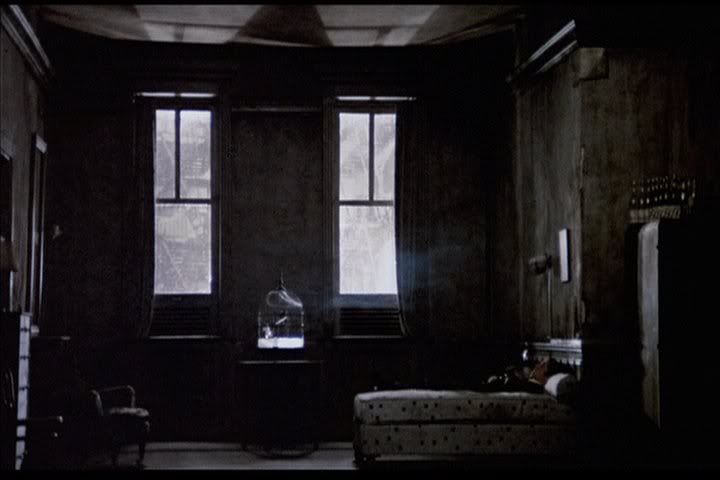
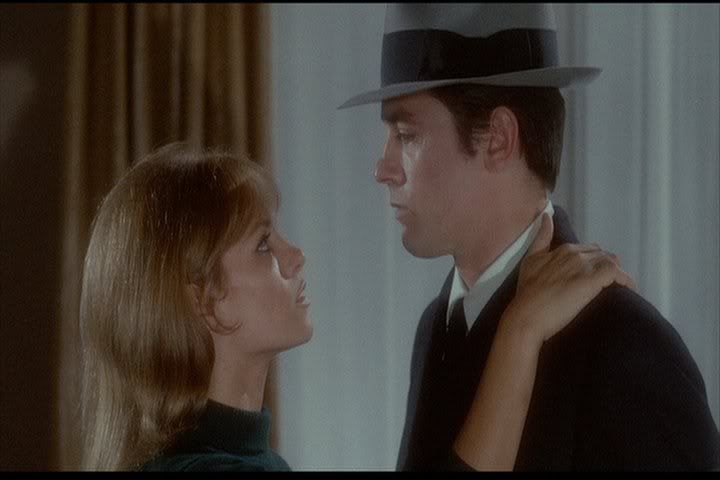
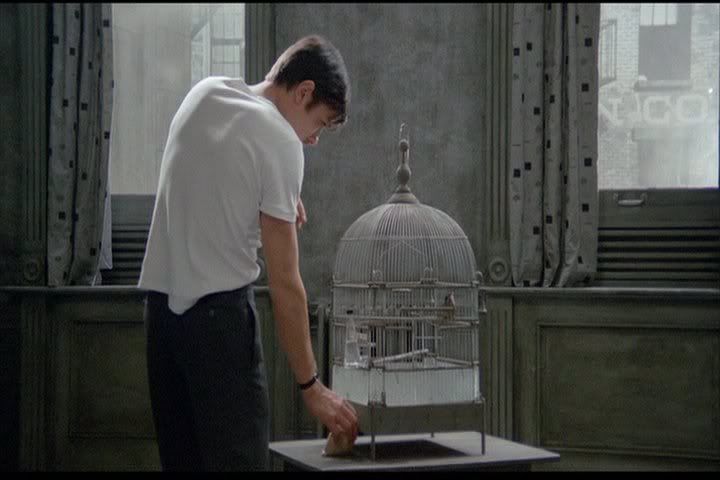
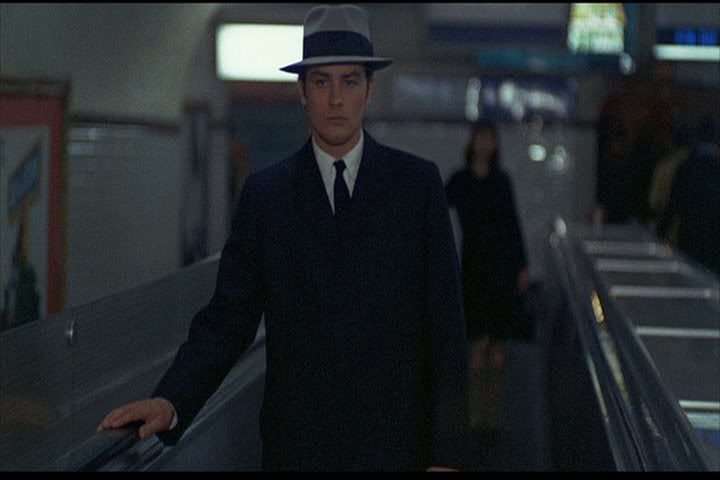
I think it was John Woo who called Jean Pierre Melville’s 1967 feature Le Samourai a perfect film and, truth be told, I don’t think Woo was too far off the mark. Melville’s tale of lonely hitman Jef Costello, played absolutely perfectly by Alain Delon, remains one of the most distinctive and original films ever made. The mood, atmosphere and tone Melville, and the films often-unsung hero Henri Decae, sets from its amazing opening sequence to its final tragic moments never falter. Le Samourai is one of the most resonate mood pieces ever set to film…like a visual version of Side 2 of Brian Eno’s Before and After Science only even more chilling in just how still and quiet it is.

I am always struck by something different when I revisit Melville’s great film. This time it was just how extraordinarily and refreshingly simple Melville’s script for the film actually is. Based loosely on Joan Mcleod’s novel The Ronin, Melville and co-screenwriter Georges Pellegrin script is such a perfectly designed piece that it is hard to imagine that even a comma was out of place. I have always wondered what the script felt like for Delon to hold, as it surely must have been one of the lightest his hands had ever grasped. So many sections of the film are almost pure silence. Melville would employ this wonderful technique throughout his career but it was never as devastating as it is here. We are in Costello’s world throughout Le Samourai and it is a lonely and isolated one. Even when he is relating to other people, such as his real life wife Nathalie Delon, Alain seems like he is at an impenetrable distance…like an animal raised in a cage who has suddenly been let out in an open space he has no understanding of.

I always find it hard to watch Le Samourai without thinking about Delon himself. Images of him alone in his apartment with only a Samurai Sword on the wall above his couch spring to mind and also of course the mysterious and tragic turn of events involving one of his bodyguards a year after Le Samourai was released. Of course, only Alain Delon knows how far he actually slipped into the persona of Jef Costello in his real life, but the two are finally inseparable in Delon’s career as he has never fully escaped his overwhelming performance in this film, and I often wonder if he ever really wanted to.

Sylvia Kristel described Delon a decade after Le Samourai in her book as, “trapped, careful, anxious, suspicious” and that she “sensed in this man with the intense gaze a never admitted pain that ate away at him.” She would go onto say that “He was complex to say the least, vulnerable and powerful” and finally that he was “a magnificent and broken being.” Sylvia could have very well been describing Costello with these very vivid descriptions.
I am always struck not by the acclaim the film has received (as it is well deserved) but by the amount of film fans that don’t respond to it…who actually don’t like it. It’s odd how great art, and I believe Melville’s film is just that, can have a polarizing effect on some people. I vividly remember a discussion I had with a friend, who was very well versed in French cinema, who didn’t understand the film’s allure. I finally realized that my attempt to persuade him was futile; there is something about Le Samourai that people either get or don't get.

Honestly, I love everything about the film. From the fascinating and coolly sinister score by the great Francois de Roubaix (a soundtrack that is never far from my CD player) to the way Nathalie Delon plays the police inspector with such cool precision when he is trying to get her incriminate Costello, to the final gunshot in the film that always makes me jump no matter how many times I have seen it.
For a terrific look at the film’s iconic opening shots, take a look at this piece by my friend and Out 1 contributor Brandon, and for anyone who hasn’t seen the film give Criterion’s excellent DVD a look. While not as loaded up with extra features as some of their discs, the print is lovely and the vintage interviews (especially one with Delon in 67) are fascinating.

Art Decades: Dianna Dilworth's Mellodrama: The Mellotron Movie (2009)


One of the best documentaries in recent memory, Mellodrama: The Mellotron Movie (2009) is director Diana Dilworth's engrossing, fascinating and surprisingly moving look at the history of the truly game-changing instruments the Mellotron and Chamberlin. Dilworth's remarkable film, featuring insightful interviews with everyone from Brian Wilson to Fabio Frizzi to Jon Brion to Michael Penn, is everything a great documentary should be and it is never less than completely engrossing.
Chronically the rise and fall (and rise) of what was essentially music's first 'sampling' machine, Mellodrama: The Mellotron Movie (2009) is a film about an incredibly important subject that hasn't been explored anywhere near as much a it should have been. While, the Mellotron's place in musical history is often overlooked, Dilworth's striking film puts it in its proper historical perspective and makes clear that Harry Chamberlin's invention (originally designed so middle-upper class families could recreate the glorious sounds of a big-band without leaving their suburban homes) changed the way we listen to and hear recorded music. Far from just a dry art-history lesson though, Dilworth's film ultimately becomes a work about a seemingly unconnected group of musicians and music-lovers quest to rediscover and re-introduce the sound that they heard on so many pop and rock records of the sixties and seventies.
And what about that sound? Featured unforgettably on records from the likes of The Beatles, The Bee-Gees, King Crimson, Goblin, Abba, Black Sabbath, Elvis Costello, Aimee Mann, Jon Brion, Radiohead and Fiona Apple, the sound of both the Mellotron and the Chamberlin is ingrained deep in many of my psyches; mine certainly included and I found myself responding emotionally to Dilworth's film in an extremely deep and profound way.
Mellodrama: The Mellotron Movie (2009) is available from Bazillion Points in a gorgeous fold-out DVD featuring many bonus interviews as well as a booklet. A stirring soundtrack is also available and I highly recommend both to music and pop-culture lovers. More information on the DVD can be found at the link above and more info on Dianna Dilworth can be found at her official site, located here.

Moon in the Gutter (Month By Month)

BLOG CREATED, EDITED and WRITTEN BY JEREMY RICHEY: Began in DEC 2006. The written content of all posts (excepting quotes from reviews, books, other publications) COPYRIGHT JEREMY RICHEY.