THE MOON IN THE GUTTER ARCHIVES

I AM CURRENTLY WORKING ON EXPANDING AND REVISING SOME OF THE BEST PIECES FROM MOON IN THE GUTTER AT MY OFFICIAL SITE, NOSTALGIA KINKY. THIS NEW PROJECT CAN BE ACCESSED BY CLICKING THE PICTURE BELOW.

THE MOON IN THE GUTTER ARCHIVES

Recent Posts from my Official Site

Showing posts with label The Blaxploitation Operation. Show all posts

Sunday, June 28, 2026

The Blaxploitation Operation: Youngblood


While mostly remembered today for its scorching soundtrack from legendary WAR, Noel Nosseck’s 1978 feature Youngblood is a film well worth tracking down as a sincere if minor look at the damaging effect of gang warfare in the late 1970’s.
Shot on location in Los Angeles in the early part of 1978, this American International Picture has mostly been under the radar since its brief theatrical release in the summer of 78. Starring young Bryan O’Dell, probably best known for his role as Marvin in What’s Happening!, and Freddie ‘Boom-Boom’ Washington himself, Lawrence Hilton-Jacobs, Youngblood is an extremely well acted if ultimately not totally satisfying production that benefits greatly from the low key shooting style of Nosseck and its vivid on location setting.
Nosseck worked as an editor and writer on a variety of TV productions in the sixties before helming his first feature in 1975 with the exploitation picture, Best Friends. He followed that picture up with the sleazy but fun Stella Stevens film Las Vegas Lady (also 1975) but neither really helped propel his blossoming directorial career too far. Youngblood was a big switch from the exploitative tone of his first two films as it is at heart a very serious picture about a difficult subject.

The screenplay is credited to the playwright Paul Carter Harrison and I haven’t been able to locate too much on his film background. With only one other feature to his credit, 1975’s Lord Shango, he wasn’t exactly prolific in the film world but his script for Youngblood is pretty rich and it feels mostly authentic. The story, focusing on a talented young teenage athlete who joins a local gang, is an ambitious one that tackles not only gang problems but also drug issues, family situations and societal attitudes in general. Harrison’s dialogue is very crisp and if Youngblood finally does fall a little short, it isn’t for lack of conviction. There is a lot of heart in Harrison’s script and Nosseck’s direction.
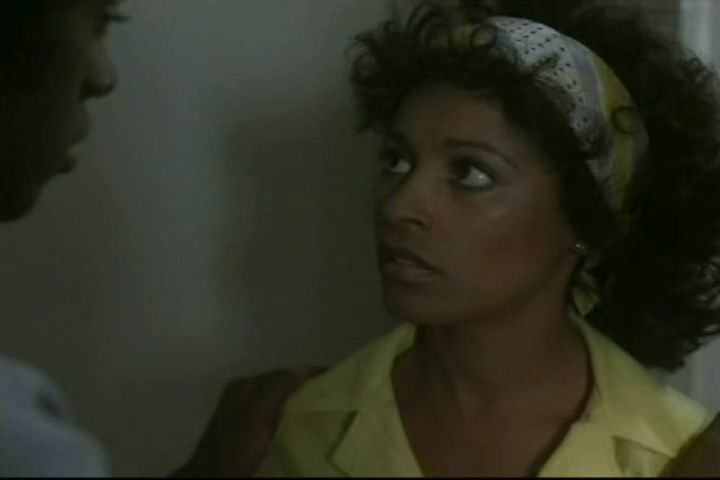
Youngblood works its best in the scenes involving family as nearly all of the main characters in the film are driven to their destinies by problems at home. Jacobs is especially extraordinary in the scenes with his wife where he desperately attempts to explain his inability to separate from the gang mentality that has haunted him his whole life. It is in these moments where the film is at its most emotional and it is clear John Travolta shouldn’t have been the only Welcome Back Kotter veteran to find stardom and respect.
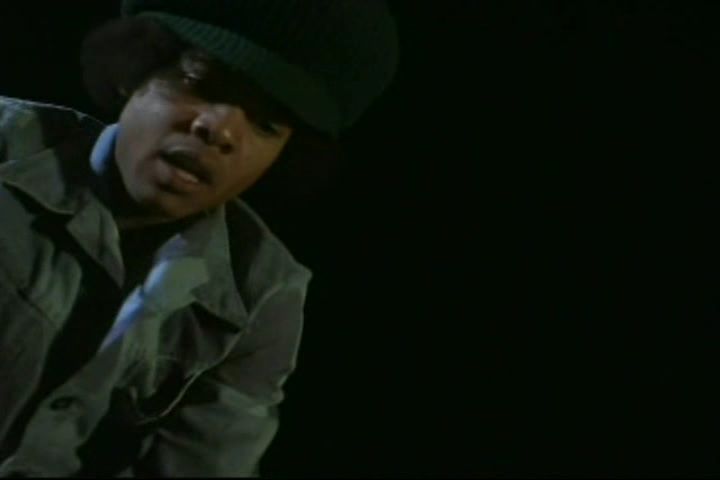
Young O’Dell is also extremely good in what is a very demanding roll. In the film in nearly every scene, O’Dell portrayal of youth just as it is getting lost is right on the money and like Jacobs it is a shame he didn’t come to more prominence in his career.
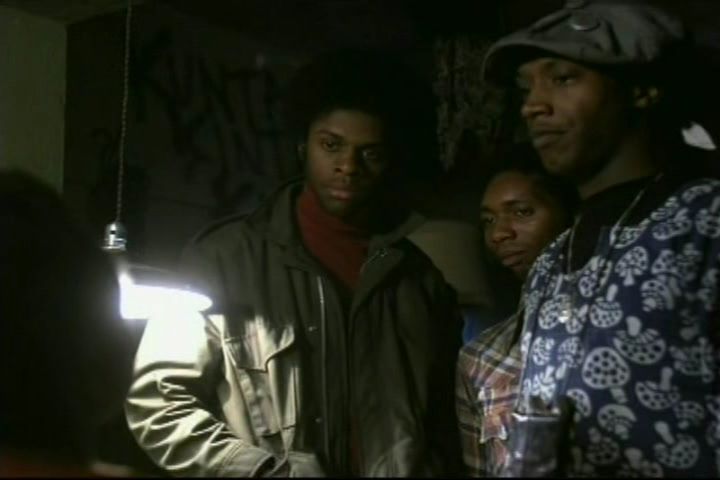
Filling out the cast are a variety of faces that fans of seventies cinema will find familiar, including Car Wash’s Len Woods and character actors Art Evans, Earl Billings and the late Lionel Mark Smith. The cast is quite a unit and everyone delivers consistently good work here.
The film was shot by Emmy winner Robbie Greenberg but it is a bit hard for me to comment on the photography as my copy came from a full frame and faded print. The film’s fast pace can be contributed partially to the expert cutting of future Oscar nominated editor Frank Morris who had just come off the extraordinary I Wanna Hold Your Hand (1978) for Robert Zemeckis.
Nosseck has a good eye for on location storytelling and it is the backstreets and alleys of Los Angeles itself that becomes perhaps the films most resounding character. An expertly handled riot sequence in the middle stands out especially as does the lonely rock mine closing of the film that almost makes it feel like it is taking place on another distant and deserted planet.
The film isn’t perfect by a longshot though. It feels a bit episodic and certain characters and storylines are brought up but are never fully realized, but still Youngblood is a good and well meaning film that deserves a larger audience.
The soundtrack by WAR is the most famous aspect of the production and it is, as previously mentioned, what most people remember. It is a great score, although truth be told, not one of WAR’S essential albums. Still, I promise that once the theme song gets in your head, it won’t leave anytime soon.
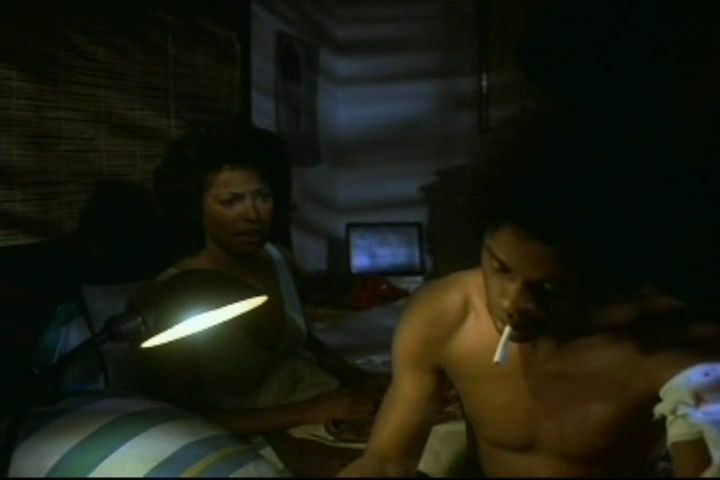
Nosseck has worked mostly in TV since with the odd theatrical feature thrown in. Youngblood is probably his most distinguished and fully realized production. The talented Jacobs continues to work steadily to this day but I must admit that it angers me that such a charismatic and good actor has never fully attained the status he deserves. O’Dell surprisingly never went on to do a lot more as he just has a dozen or so minor film and TV work to his credit after his strong performance here.
Youngblood didn’t make much of a splash in 1978 and it has virtually vanished since as it has never had a proper home video release. I would love to see a quality DVD of it in the future as it is a good if not great film well worth the time anyone might be willing to give it.
The Blaxploitation Operation: Johnny Tough


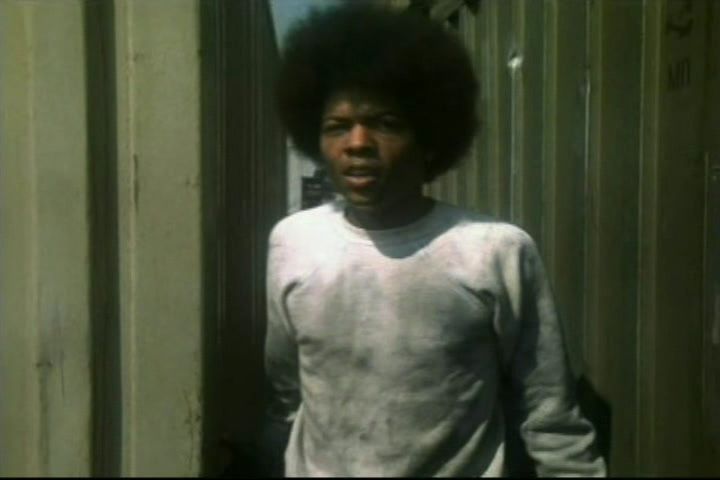
It is a real shame that the directorial debut from Horace Jackson, 1974’s Johnny Tough, isn’t a better film. A shame because the idea behind it, to remake Francois Truffaut’s monumental masterpiece The 400 Blows as an inner city African American drama, is a fascinating and compelling one. Even though the film is a disappointment and a heavily flawed feature it is still an interesting one and is deserving of a look if you can track the film down.

Jackson only directed two features in his career, with the other being 1977’s Joey (a.k.a. Deliver Us From Evil), and he is probably best know as the screenwriter of the fascinating The Bus Is Coming (1971)…a film I will be focusing on soon.
Jackson’s film career started in the mid sixties with Living Between Two Worlds (1963), a film he wrote, produced and even acted in. Johnny Tough shows him as an ambitious talent but unfortunately an experienced cast and budgetary problems damage the film nearly beyond repair and today it is mostly just a valuable curiosity more than anything else.
Johnny Tough is indeed an almost straight remake of Truffaut’s legendary first Antoine Doinel film with young Dion Gossett (seen here in his only big screen appearance) as the troubled title character. Gossett is actually quite good in the film and, truth be told, he is more convincing than most of the adult actors that surround him.

The rest of the cast is almost entirely made up of actors with no film experience and it shows as almost everyone struggles with Jackson’s ambitious screenplay. Character actor Renny Roker is the only one featured of the major players who has more than a handful of credits on his resume and it is no surprise that he gives one of the better performances in the film. The rest of the cast, put simply, fail to sell the material at nearly every turn and the film has a hard time making up for this.
The film is also visually flat and resembles a TV movie more than a big screen feature, although admittedly the faded full frame print I saw makes it hard to definitively judge the photography of Pets cinematographer Mark Rasmussen. Even in this print though it is clear that Johnny Tough lacks the urban finesse that typified the best of this period. It is a bland looking picture about an exciting subject and it simply never visually pops.

The score, by acclaimed Detroit musician Dennis Coffey, is also a bit of a let down as it suffers from a lot of needless repetition, which is more than likely due to the limited budget and short shooting schedule.
Despite all of the major problems the film has, it is still hard not to admire what Jackson was attempting here. The film has balls and I must admit by the closing scene (which does a fascinating turn on Truffaut’s famed closing still of Jean-Pierre Leaud’s Doinel) I was more than a little moved…even though my emotion was due more to the fact of what was behind the film rather than what was actually on the screen.

Johnny Tough was released in theaters in 1974 and failed to connect with audiences or critics. It floated around for awhile (sometimes under the title of just Tough) and reappeared in 1977 on a Drive In Bill as a companion piece to Jackson’s Joey. It can be found on a public domain, transferred from VHS, DVD usually for around a dollar around the country.

Johnny Tough is a well meaning little film that has too many flaws to give a real recommendation to. Still, warts and all, fans of African American cinema in the seventies and admirers of Truffaut’s film in general shouldn’t miss it.

The Blaxploitation Operation: Hammer (1972)

Hammer 1
Some films survive just based on the strength of the personalities starring in them. Take 1972’s Hammer for instance, a film that is flawed in nearly every aspect of its production from the script to the direction and yet it remains immensely watchable, thanks to the aura of its stars Fred Williamson and Vonetta McGee. Hammer is not a good film, hell it’s not even a particularly good exploitation film, but every time Williamson and McGee are on screen all of its faults and flaws just fall away.
Hammer 12
The Al Adamson produced Hammer came out in the late summer of 72 and it is mostly remembered as one of the film’s that gave the mighty Fred Williamson one of his first starring roles. Directed with very little finesse by Bruce D. Clark, a filmmaker with only one other credit to his name after this (1981’s Galaxy of Terror) and featuring a good if very spare score by legendary Philadelphia soul man Solomon Burke, Hammer tells the rather tired and routine story of a struggling boxer under the thumb of a corrupt and savagely unfair system.
Hammer 9
Producer Adamson is of course best known as the director of such horror exploitation titles such as Dracula vs. Frankenstein (1971) and Blood of Ghastly Horror (1972) but he didn’t limit himself to any one genre and he tried his hand at Blaxploitation several times, with Hammer being the first. He would later go onto produce and direct such titles as Black Heat (1976), Black Samurai (1977) and perhaps most memorably the infamous Nurse Sherri (1978). I’ve often wondered how involved Adamson was with Hammer’s production and I wouldn’t be surprised if he had his hand in some of its direction although I can’t say for sure.
Hammer 7
With a killer cast surrounding Williamson and McGee, including the awesome William Smith (one of the cinema’s great bad guys), Bernie Hamilton, Mel Smith and D’Urville Martin, and some surprisingly stylish nice photography from first time cinematographer Robert Steadman, the biggest problem that plagues Hammer is its by the number script by Charles Johnson. Johnson, who would later write the much stronger Blaxploitation productions Slaughter’s Big Rip Off and That Man Bolt (both 1973), was also making his debut with Hammer and there is nothing to separate the film from any other exploitable product of the early seventies with the exceptions of Williamson and McGee, but trust me brother they are two potent exceptions.
Hammer 11
I’ve praised McGee here before for her performance in Gordon Parks Jr’s stunning Thomasine and Bushrod and she is impressive here as well. One of the seventies most stunning looking women, McGee radiates a real intelligence and more than holds her own with the imposing Williamson. The two are quite a team and Hammer really comes alive in their scenes together. A smarter crew would have abandoned Johnson’s predictable script and just made a complete love story for Williamson and McGee.
Hammer 10
Williamson is incredible in the film. Cool, unbelievably handsome and projecting the kind of casual but ferocious charisma most actors can’t even dream of, Williamson is unforgettable in Hammer and he’s great even though the material isn’t. Williamson is also a good actor and, even in this early role, that is obvious even though both he and McGee are so much better than the material they are given here.
Hammer 8
I don’t mean to be too hard on Hammer as it is an entertaining picture (with some fairly striking boxing sequences and one solid chase sequence) but it ultimately isn’t among the more memorable productions of the seventies most distinctive and prolific genre.
Hammer 5
MGM’s DVD is a full-frame disappointment that makes the film seem even less than it is, with boom mike shadows creeping in constantly due to the inaccurate framing. The print itself is nice and it’s a shame MGM made the odd decision to not release this widescreen as most of their Soul Cinema series features at least that courtesy. A trailer is the only extra on hand and the reasonably priced disc is fairly easy to find as it is still in print.

Saturday, June 27, 2026

Overlooked Classics: Truck Turner (1974)

...Dedicated to the late great Isaac Hayes, who would be celebrating his birthday today...

Truck Turner 1

I have what is probably a fairly annoying habit, when I watch a film that I am excited about, of announcing that ‘this is pretty much the greatest film ever made.’ My girlfriend is typically the one subjected to these grand claims that I make every month or so on films ranging from vintage Italian Horror to modern American comedies as the genre really doesn’t matter. It’s just my way of celebrating a film that really sums up everything I love about cinema.

Truck Turner 2

Most recently I made the statement during our memorial for Isaac Hayes when Kelley and I watched Truck Turner, her first viewing and my sixth or seventh. As the end credits rolled and my joy spilled over I began the proclamation which Kelley finished for me because we both knew in that moment it was true…Truck Turner is pretty much the greatest movie ever made, or at the very least it contains all the elements that go into what makes me fall in love with the movies over and over again.

Truck Turner 3

Truck Turner has it all...action, laughs, violence, a lovable cat, hookers, pimps, cool side-kicks, Yaphat Kotto and one of the most bad-ass and coolest title characters in screen history. Truck Turner might not be the most important blaxploitation film of the seventies but it’s the most perfect one.
An American International Production co-scripted by the men responsible for such varying scripts as Enter The Dragon (1973) and Dirty Mary Crazy Larry (1974), Truck Turner benefits the most from the energetic and inventive direction of 25 year old filmmaker Jonathan Kaplan, a director probably best known for his 1988 film The Accused but who did his best work here in the early seventies in the exploitation genre.

Truck Turner 4

The son of soap opera star Frances Heflin and composer Sol Kaplan, Jonathan Kaplan was born in France in November of 1947. After bouncing around quite a bit during his childhood, Kaplan naturally fell into the world of cinema just past his twentieth birthday when he began various jobs under AIP’s tutelage. Like many figures connected with the company in the sixties and seventies, he worked on a variety of jobs ranging from editing to acting to scriptwriting. He got his first directing assignment in 1972 with the memorable Night Call Nurses, a film which featured a stronger than usual script courtesy of George Armitage.

Truck Turner 5

Proving himself as more than capable in the director’s chair, Kaplan became an AIP favorite and he quickly delivered the delightful sexploitation romp The Student Teachers and the exciting Jim Brown vehicle The Slams back to back in 1973. Both films would show Kaplan as a director of great promise who had obviously cut his teeth watching and soaking up as many new wave European films from the sixties as he could. He was a smart director and he brought that intelligence to all of these early productions, no matter the subject matter or limited budget.

Truck Turner 6

Isaac Hayes was on a major and influential role at the same time in the early seventies. The top selling performer at the legendary Stax Studios and the first African American to win an Academy Award for composing, for Gordon Park’s Shaft, Hayes had quickly become one of the most respected and wealthiest musicians in the world so the leap to the big screen was only natural.

Truck Turner 7

While Truck Turner is often remembered as the debut performance by Hayes, it was actually preceded by the Italian co-production Three Tough Guys in the spring of 1974, a lesser film made memorable by the pairing of Hayes with Fred Williamson and Lino Ventura. Truck Turner is the classic though and it should have made Hayes one of the great leading men of the seventies although it would prove to be nearly his swan song as it remains one of his only starring roles in a career made up of memorable supporting turns.

Truck Turner 8

Truck Turner is one of the ultimate AIP movies from the seventies. Mixing humor with slices of rather shocking violence with a little sex and social commentary thrown in for good measure, Kaplan’s film can make a legitimate claim to being one of the ultimate examples of the blaxploitation genre at its storming and provocative best.

Truck Turner 9

Mack “Truck” Turner is a no-nonsense former football star turned bail bondsman on assignment with his partner to find a pimp named Gator. When Gator is killed, things really heat up for Truck when his world is turned upside down when Gator’s vengeful woman and and-coming pimp on the move named Blue go to war.

Truck Turner 10

Kaplan’s film is a real joy to behold. From the hilarious opening scenes where we see Truck’s domestic life as he tries to care for his girlfriend’s (whose in the slammer for a month for shoplifting) cat to the chilling final scenes featuring one of the most memorable death scenes in cinema history, Truck Turner is one hell of a wild ride and I’m hard pressed to name a more purely entertaining film from the seventies.

Truck Turner 11

Truck Turner is also a film that could have only been made in the seventies under the kind of company like AIP. Watch the amazing opening credits sequence set to Hayes astonishing score (which I have always thought was the equal to Shaft) made up of stolen shots of urban squalor in Los Angeles, that have the feel of more of a vintage hard hitting socially aware documentary rather than a commercial exploitation film, and look at the more tender moments between Hayes and lovely Annazette Chase that feel closer to the European Art films that Kaplan no doubt sucked up in the sixties. Truck Turner is, simply put, unlike any other blaxploitation film from the seventies and yet it belongs proudly in the category.

Truck Turner 12

Technically, despite being shot on a low budget, the film is superb. Kaplan’s expert framing and ingenious visual storytelling ability is matched by the editing of future Close Encounters of the Third Kind cutter Michael Kahn and Oscar nominated veteran cinematographer Charles F. Wheeler provides the film's memorably gritty look.

Truck Turner 13

In front of the camera joining the iconic Hayes is an impressive cast of character actors and cult figures including Star Trek actress Nichelle Nichols, Scatman Crothers, Dick Miller and Charles Cyphers. The real star of the show though outside of Hayes is the incredible Kotto, fresh from his role in the James Bond pic Live and let Die (1973), who gives one of the most intense and powerful performances of his career as the vicious and ambitious pimp Harvard Blue.
Hayes is extraordinary in the title role and watching the film today serves as a potent reminder to his talents in front of the camera. His soundtrack is just as good and the album it spawned remains one of the most memorable funk albums of the seventies...if you haven't played it in awhile be sure to give it a fresh spin.
Kaplan's terrific film played in some areas as Black Bullet and it did fairly well on the drive in circuit throughout 1974, although it failed to catch the public's attention like Shaft and Super-Fly had in the couple of years before. The film's soundtrack did better and sold fairly well although again not as much as Hayes previous releases had.
Isaac Hayes would appear in just one more film in the seventies, 1975's It Seemed Like a Good Idea at the Time, and his next major role wouldn't come until his iconic turn as The Duke in John Carpenter's legendary Escape From New York in 1981.

The undervalued Kaplan would make four more films in the seventies, including White Line Fever in 1975, and would find success in the eighties with the terrific Heart Like a Wheel (1983) and of course The Accused which garnered Jodie Foster her first Oscar. He currently works almost exclusively in TV, with the underrated Claire Danes-Kate Beckinsale prison drama Brokedown Palace being his last feature.
Today Truck Turner is widely regarded as one of the best examples of the blaxploitation genre. It has been praised by the likes of Quentin Tarantino, who would use bits of its score in Kill Bill (2003) and Turner's bail-bondsman character no doubt at least partially inspired the unforgettable Max Cherry in Jackie Brown (1997).
The film is currently available on a nice widescreen DVD from MGM with only a trailer as the extra and it makes the ideal film (along with Wattstax) to watch if your looking to have a tribute to Isaac Hayes, or just to remember a period in American cinema when a film this fresh and alive could be made.

Moon in the Gutter (Month By Month)

BLOG CREATED, EDITED and WRITTEN BY JEREMY RICHEY: Began in DEC 2006. The written content of all posts (excepting quotes from reviews, books, other publications) COPYRIGHT JEREMY RICHEY.