THE MOON IN THE GUTTER ARCHIVES

I AM CURRENTLY WORKING ON EXPANDING AND REVISING SOME OF THE BEST PIECES FROM MOON IN THE GUTTER AT MY OFFICIAL SITE, NOSTALGIA KINKY. THIS NEW PROJECT CAN BE ACCESSED BY CLICKING THE PICTURE BELOW.

THE MOON IN THE GUTTER ARCHIVES

Recent Posts from my Official Site

Showing posts with label Youngblood. Show all posts

Sunday, June 28, 2026

The Blaxploitation Operation: Youngblood


While mostly remembered today for its scorching soundtrack from legendary WAR, Noel Nosseck’s 1978 feature Youngblood is a film well worth tracking down as a sincere if minor look at the damaging effect of gang warfare in the late 1970’s.
Shot on location in Los Angeles in the early part of 1978, this American International Picture has mostly been under the radar since its brief theatrical release in the summer of 78. Starring young Bryan O’Dell, probably best known for his role as Marvin in What’s Happening!, and Freddie ‘Boom-Boom’ Washington himself, Lawrence Hilton-Jacobs, Youngblood is an extremely well acted if ultimately not totally satisfying production that benefits greatly from the low key shooting style of Nosseck and its vivid on location setting.
Nosseck worked as an editor and writer on a variety of TV productions in the sixties before helming his first feature in 1975 with the exploitation picture, Best Friends. He followed that picture up with the sleazy but fun Stella Stevens film Las Vegas Lady (also 1975) but neither really helped propel his blossoming directorial career too far. Youngblood was a big switch from the exploitative tone of his first two films as it is at heart a very serious picture about a difficult subject.
The screenplay is credited to the playwright Paul Carter Harrison and I haven’t been able to locate too much on his film background. With only one other feature to his credit, 1975’s Lord Shango, he wasn’t exactly prolific in the film world but his script for Youngblood is pretty rich and it feels mostly authentic. The story, focusing on a talented young teenage athlete who joins a local gang, is an ambitious one that tackles not only gang problems but also drug issues, family situations and societal attitudes in general. Harrison’s dialogue is very crisp and if Youngblood finally does fall a little short, it isn’t for lack of conviction. There is a lot of heart in Harrison’s script and Nosseck’s direction.
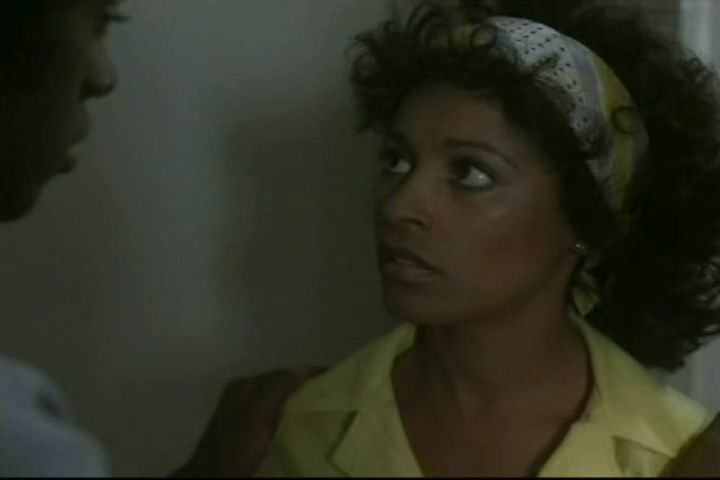
Youngblood works its best in the scenes involving family as nearly all of the main characters in the film are driven to their destinies by problems at home. Jacobs is especially extraordinary in the scenes with his wife where he desperately attempts to explain his inability to separate from the gang mentality that has haunted him his whole life. It is in these moments where the film is at its most emotional and it is clear John Travolta shouldn’t have been the only Welcome Back Kotter veteran to find stardom and respect.
Young O’Dell is also extremely good in what is a very demanding roll. In the film in nearly every scene, O’Dell portrayal of youth just as it is getting lost is right on the money and like Jacobs it is a shame he didn’t come to more prominence in his career.
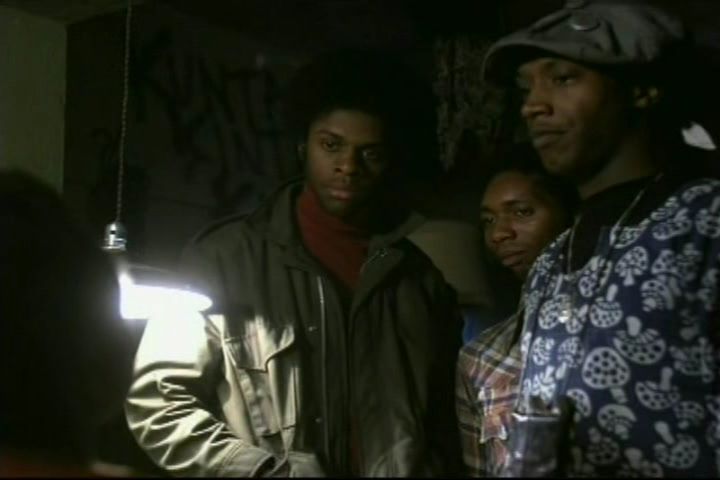
Filling out the cast are a variety of faces that fans of seventies cinema will find familiar, including Car Wash’s Len Woods and character actors Art Evans, Earl Billings and the late Lionel Mark Smith. The cast is quite a unit and everyone delivers consistently good work here.
The film was shot by Emmy winner Robbie Greenberg but it is a bit hard for me to comment on the photography as my copy came from a full frame and faded print. The film’s fast pace can be contributed partially to the expert cutting of future Oscar nominated editor Frank Morris who had just come off the extraordinary I Wanna Hold Your Hand (1978) for Robert Zemeckis.
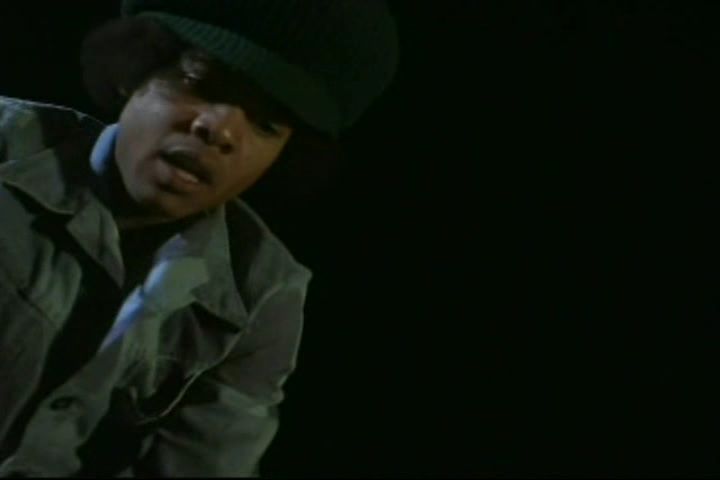
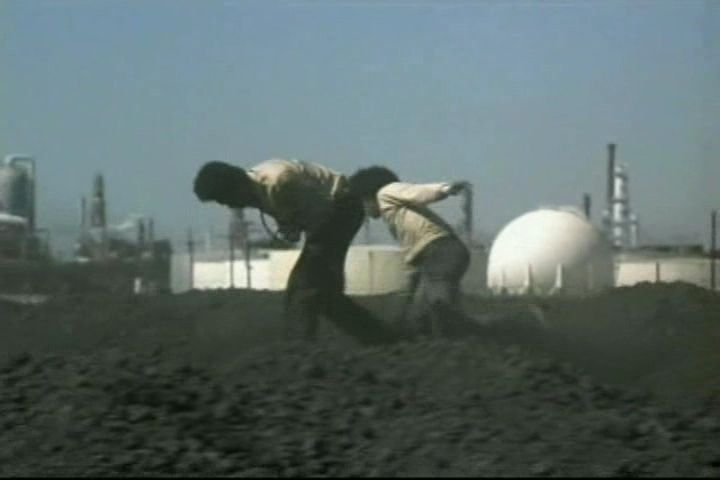
Nosseck has a good eye for on location storytelling and it is the backstreets and alleys of Los Angeles itself that becomes perhaps the films most resounding character. An expertly handled riot sequence in the middle stands out especially as does the lonely rock mine closing of the film that almost makes it feel like it is taking place on another distant and deserted planet.
The film isn’t perfect by a longshot though. It feels a bit episodic and certain characters and storylines are brought up but are never fully realized, but still Youngblood is a good and well meaning film that deserves a larger audience.
The soundtrack by WAR is the most famous aspect of the production and it is, as previously mentioned, what most people remember. It is a great score, although truth be told, not one of WAR’S essential albums. Still, I promise that once the theme song gets in your head, it won’t leave anytime soon.
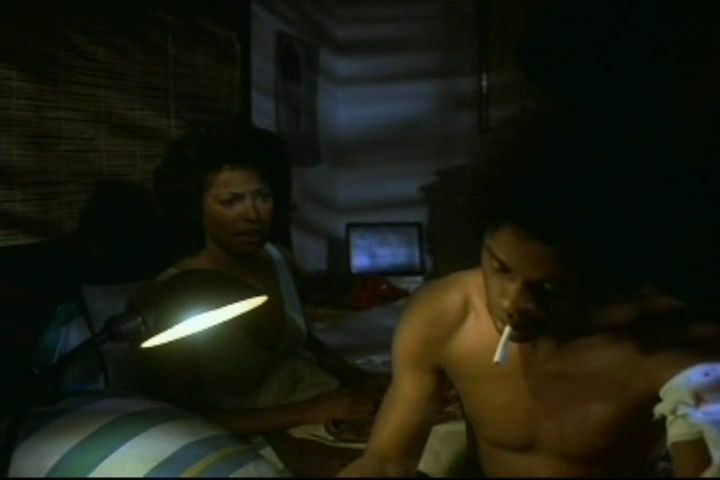
Nosseck has worked mostly in TV since with the odd theatrical feature thrown in. Youngblood is probably his most distinguished and fully realized production. The talented Jacobs continues to work steadily to this day but I must admit that it angers me that such a charismatic and good actor has never fully attained the status he deserves. O’Dell surprisingly never went on to do a lot more as he just has a dozen or so minor film and TV work to his credit after his strong performance here.
Youngblood didn’t make much of a splash in 1978 and it has virtually vanished since as it has never had a proper home video release. I would love to see a quality DVD of it in the future as it is a good if not great film well worth the time anyone might be willing to give it.
On the Road With Noel Nosseck's Best Friends (1975)


Jesse and Pat have been best friends for as long as they can remember. They grew up together, went to school together and even went off to Vietnam together. Since coming out of the war though things have been a little different, as Jesse wants nothing more than to settle down with his fiancée and have a ‘normal’ life, while a frustrated a war-scarred Pat wants to just keep things like they always were with just the two of them alone together. A road trip with both of their ladies turns increasingly dark as Pat quickly becomes more and more frustrated at the thought of losing his best friend and settling down to a 'regular' way of living.


An excellent, and mostly forgotten, 1975 road movie from Crown International Pictures, Best Friends was the first feature length film from prolific television director Noel Nosseck, the man who would later helm big-screen productions like Las Vegas Lady (1975) and the undervalued Youngblood (1978).


Highlighted by an excellent cast, including Richard Hatch and Doug Chapin as Jesse and Pat with Susanne Benton and Ann Noland as their girlfriends Kathy and Jo Ella, Best Friends is a real-step above most of Crown International’s low-budget drive-in films of the mid seventies. Working from a fairly tight script by TV scribe Arnold Somkin, Nosseck’s debut outing manages to escape many of the clichéd steps that dog so many road pictures from the period and he creates a cerebral work, with enough skin and violence to please the grindhouse crowd, that holds up extremely well well over three decades since its release.


Clocking in at just under a slim 84 minute running time, Best Friends begins with a terrific montage of black and white photographs under the opening credits chronicling Jesse and Pat’s lifelong friendship. Closing on a rather haunting shot of them in uniform before their departure from the war (Pat will literally chuck his in the garbage shortly after the film begins) Best Friends sets itself up immediately as a more serious film than most drive-in pictures of the day. Throughout its running time, novice director Nosseck never completely loses sight that he is finally attempting to please a quickly bored thrill-seeking audience but he never sacrifices his film’s more serious themes of alienation and the discouragement that often comes with ‘growing up’.


Nosseck worked as an editor and writer on a variety of TV productions in the sixties before shooting Best Friends in the early part of 1975 throughout Arizona. His work on the film shows the limitations of his low-budget and his stature as a first-time director. A little clunky at times, Nosseck’s direction is for the most part serviceable with occasional moments of inspiration shining through. More than anything else though, Nosseck shows himself as a director smart enough to let his talented cast run with an above-average script and Best Friends really succeeds because of this.


The cast of Best Friends is indeed quite excellent. Handsome Richard Hatch would have already been recognizeable to audiences in 1975 due to his work in a number of television shows, including a reoccurring role on The Hatfields and the Mccoys. The prolific Hatch continues to work today and he has appeared in dozens upon dozens of big and small-screen ventures. He is terrific as the conflicted Jesse in the film, a man who is ready to move on with his life but who doesn’t want to betray his friend in the process. Even better is Doug Chapin as the ready to explode Pat. Chapin, who also contributed some of the film’s sharp and realistic dialogue, had made his acting debut in Frank Perry’s 1963 production Ladybug Ladybug. Mostly working in television after Perry’s film, Best Friends is incredibly the last role Chapin would have, as he switched his attentions to producing shortly after, with his production credits including everything from the 1979 shocker When a Stranger Calls to 1993 Tina Turner Bio-Pic What’s Love Got to Do With It.


Proving just as strong as Hatch and Chapin are the ladies of Best Friends. Susanne Benton was, like Hatch and Chapin, mostly associated with television productions in 1975 although she had appeared in films like That Cold Day in the Park (1969) and Catch 22 (1970). Despite her wonderful work in Best Friends, she would only have a few credits to her name after its release, including The Last Horror Film in 1982. The real scene-stealer of Best Friends though is Ann Noland, a really great actress who sadly appeared in just a handful of roles in her career. Starting out as an uncredited extra on Dirty Harry (1971) Noland sporadically appeared throughout the seventies in a number of television roles, with a relatively small-part in the TV movie Satan’s School For Girls being her most noteworthy moment outside of her stirring turn in Best Friends. Noland shows herself as an actress with a lot of depth and heart in Best Friends and it’s a real shame her career went nowhere afterwards. Other cast members included busty dancer Renee Paul as a stripper in one of film’s more marketable scenes and prolific character actor John McKee pops up as an RV salesman.


Nosseck, also acting as producer on the film, gathered together a competent number of behind the scenes players as well for his first time out as director. Cinematographer Stephen M. Katz (who has gone on to have quite a busy career in mainstream films) gives Best Friend's a nice color palate with his crisp daytime photography, and future Return of the Living Dead editor Robert Gordon helps overcome Nosseck’s sometime sluggish direction with a nice cutting job that keeps the film moving at a steady pace. Capitol records artist Rick Cunha provides the film with its memorable, and sometimes haunting, score and even sings its outlaw country tinged theme.


Best Friends would play throughout the summer of 75 on the drive-in circuit but it would not garner much attention. All but lost for a number of years, it would thankfully reappear in an okay widescreen presentation on BCI’s excellent Drive in Cult Classics Collection where it is housed on the same disc as the interesting Trip with the Teacher. Best Friends can also be found on Mill Creek’s 12 film collection Savage Cinema. Both sets can be found extremely cheap and both are highly recommended.

Moon in the Gutter (Month By Month)

BLOG CREATED, EDITED and WRITTEN BY JEREMY RICHEY: Began in DEC 2006. The written content of all posts (excepting quotes from reviews, books, other publications) COPYRIGHT JEREMY RICHEY.