THE MOON IN THE GUTTER ARCHIVES

I AM CURRENTLY WORKING ON EXPANDING AND REVISING SOME OF THE BEST PIECES FROM MOON IN THE GUTTER AT MY OFFICIAL SITE, NOSTALGIA KINKY. THIS NEW PROJECT CAN BE ACCESSED BY CLICKING THE PICTURE BELOW.

THE MOON IN THE GUTTER ARCHIVES

Recent Posts from my Official Site

Showing posts with label Lucio Fulci. Show all posts

Sunday, June 28, 2026

Artist and Muse #5


Director Lucio Fulci and actress Florinda Bolkan discuss a scene from 1972's Don't Torture A Duckling. Blue Underground will be re-releasing this, one of the finest Fulci films, on February 27th.

Hard And R


I have really been enjoying all of the online discussion and disagreements on Eli Roth's upcoming HOSTEL 2 and the state of horror in general as of late. I have been amazed to see the wide ranging and strong opinions film fans seem to have on Roth and this so called 'Torture Porn' phrase that is being thrown around so much in the media these days.
I would be seeing HOSTEL 2 no matter what just because of the casting of the legendary Edwige Fenech. I would like to throw my two cents in on the subject though and say that I would be seeing, and looking forward to, the film even without the iconic Fenech's presence.
I was more than a bit cold on Roth's debut film CABIN FEVER. I just didn't understand the hype but I admired the first HOSTEL very much and felt that his THANKSGIVING trailer was among the best thing I have seen this year. Roth seems to be very consciously following the lead of a handful of directors, such as Fulci, Deodato, Craven, Martino and others, who believed the horror film has the capability to truly shock and disturb. It is this very primal, and at times almost oppressively dark, feeling that horror films lost in the nineties and that a handful of young directors have been trying to reclaim this decade.
I have always found it ironic that it was Wes Craven, who at his prime delivered some of the most truly unsettling and visceral horror films ever, would have been the guy who helmed the film that more than any other would turn the genre into a self referential, humorous and ultimately extremely sanitized form. I liked, and still like, SCREAM and SCREAM 2 but they created a winking and back patting breed that would give birth to a seemingly endless succession of safe and typically very bland films. I saw many of these films throughout the mid to late 90's...some were okay, most were very bad. I noticed that each one seemed to be a little safer and a little more meaningless than the last. These weren't films about anything other than pushing a lousy soundtrack of trendy songs and giving roles to forgettable teen tv actors. These seemed to be films designed for the PG13 rating, show us as little as possible and suggest something perhaps even less.
Obviously there have always films that combine humor and horror and I'm not suggesting that horror films always need to be graphic. What I am saying is that a key element to the horror film is to take us, and yes show us, places that are typically unseen and locked away. The so called horror films of the late 90s stopped doing that, they just began showing us television versions of things we had seen in countless other better films.

I really began to miss the extreme horror films of my childhood in this period. Films like DAWN OF THE DEAD and the original HILLS HAVE EYES became something more than just films that I loved from my youth. They became prime examples of everything that I loved in cinema that modern culture, and specifically the opening weekend gross watchers, had taken away. It's no coincidence that it was in the mid 90s that I started to obsessively hunt down and collect Italian horror films. Here were films that I hadn't known as a child that I could discover as new. The importance and greatness of a film as extreme as CANNIBAL HOLOCAUST seemed overwhelming to me, and it felt like we would never be allowed to see anything quite so graphic and disturbing as that powerhouse again.

One of the most exciting experiences I have had in a theater this decade was seeing Alexandre Aja's 2003 French film HAUTE TENSION (HIGH TENSION). There had been rumblings of a change in the horror landscape in the early part of the decade but here was a film so unrelenting, so bleak and so truly disturbing, that it felt to me like it was at times literally shaking the screen. HIGH TENSION seemed to open a floodgate of angry, and at times nihilistic, films that have given us some of the most extreme violence cinema has seen since the late seventies.

Not many of the films have been great, but for all their failings I admire pictures like WOLF CREEK, HOSTEL, SAW and Aja's HILLS HAVE EYES remake more than most 'great' horror films of the last 15 years. These films and filmmakers are trying to make horror dangerous again...to take the darker aspects of society that are continually thrown at us in the media and turn them into something we can properly internalize and hopefully understand.

"Torture Porn" is the most ridiculous media created term since "Punk" became "New Wave". It feels like a term made up and jumped on by people who not only don't know anything of the history of horror films, but plain just don't like them. A film like Rob Zombie's THE DEVIL'S REJECTS, which I loved, has been grouped in with this so called genre but the themes and images from it are decades old. I doubt very seriously the critics who use phrases like "Torture Porn" even know who Lucio Fulci or Ruggero Deodato are...sometimes I wonder if they even know who Sam Peckinpah is.

So I will be at HOSTEL 2 opening weekend and I hope it is as twisted and graphic as possible. Horror films should cause a reaction...they should make us feel and see things that hopefully we don't have to in our everyday life. A lot of people do not like these extreme images these films are promising and that is perfectly fine. Don't buy a ticket...it is a as simple as that. I fear though that 2008 will bring a landslide against the return of the extreme horror film and that the studios will once again start playing it safe. As a rule I try not to get political on this blog at all but I find the idea that both presidential parties might again try to deflect attention from the real issues with a battle against artistic expression to be the most horrifying thought of all.

Whatever Happened To Tisa Farrow?


The title of this particular post is a bit rhetorical because apparently Tisa Farrow is now a nurse in Vermont, at least according to the IMDB (so maybe the question isn't so rhetorical). Either way, I have been re watching some of Tisa's films as of late and felt inspired to write a little bit on her.
I always thought it must have been hard professionally having Mia Farrow as your sister, as it would be extremely hard for anyone to live in the shadow of someone so iconic and talented. While Tisa never came close to reaching the heights of her famous sister, I think her career has been unjustly neglected and is all but forgotten by most film fans.
Tisa was born in 1951 to John Farrow and Maureen O'Sullivan. She made her film debut at the age of 19 in the pretty well received HOMER. This coming of age drama, featuring an early soundtrack appearance by Led Zeppelin, found Tisa as the female lead and she would receive some strong notices as a talent to watch. Like several of Tisa's earliest roles, I have never been able to track down a copy of HOMER. It remains rather elusive and I hope to someday score a copy as the photographs and posters I have seen from it, as well as things I have read, make it extremely enticing.
Tisa's second film was helmed by none other than the great French director, Rene Clement, and it would find her working with some of cinema's top talent like Jean Louis Trintignant and Aldo Ray. While not among the great works by Clement, AND HOPE TO DIE is a solid entry in his filmography and Tisa is memorable in it although the film ultimately belongs to Tringtignant.
Among the films with Tisa that I most want to see is SOME CALL IT LOVING, a 1973 feature by James B. Harris and co-starring Carol White and Richard Pryor. The descriptions I have read over the years of this film make it sound like some sort of wild tripped out near masterpiece. Whether or not it can live up to my expectations remains to be seen but I would certainly love to find out.
After appearing in a film called ONLY GOD KNOWS in 74, Tisa's next film would be hugely important one to her career as it would mark the first Italian thriller she appeared in. Known by many different titles, with STRANGE SHADOWS IN AN EMPTY ROOM being my favorite, Alberto De Martino's 1976 feature is a film that I saw on a poor quality VHS years ago that has really stuck with me. Martino had just directed the very odd and memorable THE ANTICHRIST when he directed Tisa, along with genre favorite John Saxon, in this splendid little film. Tisa is lovely in this film, but like many Italian thrillers from this period it has unfortunately fallen into obscurity. I keep hoping that No Shame or Code Red might pick it up in the future for a dvd release as I would love to revisit it.
The 1978 tv film THE INITIATION OF SARAH was up next for Tisa and it would feature her in a smaller role working with a large ensemble cast including Shelley Winters and Morgan Brittany. This is one of the easier to locate of Tisa's early roles and is worth a look although it isn't that special. 1978 would also provide Tisa with what would prove to be her greatest role in James Toback's astonishing FINGERS.
FINGERS is one of my favorite films from the seventies and I will be covering it in more detail in the future but I will say for now if there is a role that proves Tisa could have developed into a fine actress, then FINGERS is it. Playing opposite acting heavyweight Harvey Keitel and an intense Jim Brown, Tisa more than holds her own in a strangely effective performance. Tisa would be the first of many actresses that Toback would pull something extraordinary out of, and in her own way she is one of the most devastating parts of what is still Toback's greatest film.
The action flick SEARCH AND DESTROY was up next and that was quickly followed by a tv film on Patty Hearst that would find Tisa playing one of the SLA kidnappers. She would make a quick cameo in Woody Allen's masterpiece, MANHATTAN, and had a bit part in WINTER KILLS before landing what has become her most famous role in late 1979.
Lucio Fulci's ZOMBIE (ZOMBI 2) is one of the most legendary Italian gore films in history and it cemented a major cult status for Tisa among Italian Horror fans. Fulci's unofficial follow up to Romero's DAWN OF THE DEAD in truth isn't one of the maestro's greatest films. It doesn't have the style or emotional pull of his early work and it isn't as good as the astonishing group of films that he would film in 1980 and 1981, but it is still one of the most infectiously fun Italian films of the period. Tisa is again lovely in the role but she doesn't seem totally engaged with the material. Perhaps it had something to do with the fact that FINGERS had more than hinted to the fact that Tisa could have become a really great actress that she doesn't seem totally there in ZOMBIE. I'm not trying to be overly critical as ZOMBIE is a film that I love very much but Tisa seems a bit trapped under Fulci's penetrating camera. I was very disappointed when Tisa wasn't among those interviewed for Shriek Show's exhaustive documentary a few years back, I have always wondered what her thoughts were on Fulci and the Italian Horror genre in general.
ZOMBIE was a huge worldwide success but it probably more than just slightly pigeonholed the talented Farrow.
Tisa would appear in just two more films after ZOMBIE before retiring from the screen entirely. THE LAST HUNTER, just released on American DVD, is a solid and entertaining Antonio Margheriti war film starring Tisa and David Warbeck. While not one of Margheriti's best films by a long shot, the bloody THE LAST HUNTER still works reasonable well and Tisa is just fine in it, as is the always reliable Warbeck.

Tisa Farrow's final film is not only one of her most infamous films, but also one of the most notorious films in Italian Horror history. The Joe D'Amato directed ANTHROPOPHAGUS is a cheaply made but, at times, stylish shocker that manages some truly unforgettable and horrifying moments that have kept it among the most famous of D'Amato's prolific career. Tisa is actually quite good in the film and I think this is her most successful Italian genre performance, even though the film isn't as good as the Martino or Fulci ones. Tisa generates a real palatable fear in the role and the film's final act is undeniably exciting and effective and much credit for it should go to Tisa's performance.
I don't know what made Tisa drop out after ANTHROPOPHAGUS. Perhaps she found that acting wasn't satisfying or maybe she just wasn't happy with the types of films she was being offered. Whatever the reason, I hope that life has given her happiness and that she doesn't regret her brief but memorable film career. It is unfortunate that she never got the chance to build on the promise of FINGERS but I'd rather watch her in the few genre films she made much more than most modern bland mainstream Hollywood actress. There was something very memorable about Tisa Farrow, something very real.

The Horror, The Horror


Ed at the great Shoot The Projectionist blog as been kind enough to invite me to nominate my favorite horror films for his 31 FLICKS THAT GIVE YOU THE WILLIES project. I have been working on my list in between classes, homework and my regular postings here and I must say that it has been rewarding and incredibly difficult. Neil at The Bleeding Tree recently posted his own set of rules for his list and I am struggling with some of the same issues he is.
At first I thought this will be easy but once I sat down and started compiling I quickly found it was one of the hardest lists I have ever attempted. My main problem is basically what constitutes a horror film. Is it anything that scares me? Does it have to be supernatural? What if it has comedic elements? I'm not coming up with any good answers so my list is going to be a bit all over the place, which is perhaps how it should be.
One thing I can say from looking over my tentative list, I am hoping to submit my final one to Ed by the weekend, is that I am obsessed with the seventies. I have known that to be true for a long time now but saying that the decade dominates my list is an understatement.
I hope to share my list here after the 31 FLICKS THAT GIVE YOU THE WILLIES has been completely compiled. Many of the usual suspects will be on mine but hopefully I will throw in a few surprises as well. I am really looking forward to seeing the final results. Ed's great blog is linked over to the right under my favorite movie blogs...check it out.

Paura: Lucio Fulci Rembered DVD


It looks like one of the most exciting DVD releases will also be among the most limited. Please go to this link to read all about PAURA: LUCIO FULCI REMEMBERED VOLUME ONE, a tribute DVD that sounds like it is going to be incredibly special. I wish I could afford the amazing limited edition they have but I will be more than happy with just the basic set, which sounds incredible on its own. I must admit that seeing more interview footage with Cinzia Monreale makes me positively giddy.

Murder To The Tune Of Seven Black Notes


Last night I caught up with Severin’s new DVD of Lucio Fulci’s 1977 feature THE PSYCHIC, or as I prefer it MURDER TO THE TUNE OF SEVEN BLACK NOTES. I had seen this film a couple of times courtesy of the old full frame VHS tape that was fairly common back in the eighties but Severin’s widescreen presentation made me feel like I was seeing it for the first time again.
THE PSYCHIC is one of Fulci’s most shocking films. Shocking in just how overwhelmingly subtle and subdued it is. Outside of a badly shot opening sequence that recalls an effect better used in his DON’T TORTURE A DUCKLING, THE PSYCHIC hardly contains any of the shock elements that Fulci would become so known for in the years just after its release. Instead THE PSYCHIC stands as stirring reminder that there was a lot more to Lucio Fulci than zombies, eye gouging and heavy gore, and it is also happens to be one of his best films.
Jennifer O’Neill (in a very good performance) stars as Virginia Ducci, a woman who discovers she has clairvoyant powers when she sees what she thinks is a murder from the past when she moves into her husband’s family home. She discovers part of her vision was correct after she finds a body buried within the walls of the house but she misreads another part of it which leads to the film’s most satisfying twist just over halfway through. While the plot turn in THE PSYCHIC is fairly easy to guesss, it is still very effective and Fulci handles it incredibly well and he builds the film slowly and methodically to one of the most striking final sequences of his career.

Fulci’s direction of THE PSYCHIC is well rendered and handled throughout the entire film. He slips occasionally with an overuse of the zoom and the film is perhaps a bit too low key for its own good at times, but it remains one of the most consistent films (tone wise) he ever shot. It is also a gorgeous looking film with the soft focus photography of Sergio Salvati being an absolute joy to watch.
Salvati is a legend to Italian horror fans, as he is the man responsible for the photography in nearly all of Fulci’s most famous works. The two started collaborating on 1975’s great FOUR OF THE APOCALYPSE and would work together continually until 1981’s HOUSE BY THE CEMETARY. The great director and cinematographer were to be reunited on 1997’s WAX MASK but Fulci’s untimely death made that an impossibility. The two remain one of the great teams in Italian horror and THE PSYCHIC is one of the high marks of their time together.
Another of Fulci’s regular collaborators, composer Fabio Frizzi, also does some of his best work here as the music from THE PSYCHIC is chilling and unforgettable. Frizzi composed and performed the score with Franco Bixio and Vince Tempera and it is a key work in his canon. Fans of Tarantino’s KILL BILL will of course instantly recognize one of THE PSYCHICS key themes as it was reused so strikingly well in one of that films key sequences. While it isn’t as overwhelming and strong as his work on later productions for Fulci like THE BEYOND, Frizzi’s soundtrack to THE PSYCHIC belongs in every Italian horror fans home. It is a really wonderful record.
The production and art design of the film by Luciano Spadoni is also quite extraordinary. The house where most of the action takes place is designed beautifully and is filled with the kind of tiny subtle touches that Spadoni would successfully bring to other prestigious productions like Freda’s DOUBLE FACE (1969) and Argento’s PHENOMENA (1985).

The cast is also uniformly good in this film. O’Neill, who had just come off Visconti’s THE INNOCENT (1976) plays fear and confusion exceedingly well and she turns what could have been a one note performance into something very memorable. Genre favorite Evelyn Stewart pops up in a key supporting role and Marc Porel gives a particularly strong performance also. Overall the cast doesn’t have the same iconic feel that Fulci would later capture with actors like Catriona MacColl, David Warbeck and Cinzia Monreale, but the cast he had here all deliver competent and at time very strong performances.
The script, credited to Fulci, Roberto Gianviti and Dardano Sacchetti, is one of the strongest the director ever got to work with. Fans who are used to overlooking the many plot holes and lapses in logic that plague many of Fulci’s productions might be surprised by just how well written and structured THE PSYCHIC is.

I suspect that Fulci hoped THE PSYCHIC might be a breakthrough in the international market for him. At times it almost feels more like a British production rather than an Italian film from the period. The controlled tone of the film would be a sharp change for the director and had it been a success one wonders where Fulci’s career might have gone. The film wasn’t the success the director hoped for though and his breakthrough film two years later, the magnificent and overwhelmingly violent ZOMBIE, would be the bi-polar opposite to THE PSYCHIC. Actually it struck me last night that THE PSYCHIC’S failure might have, in a very profound way, marked the ferocious energy that Fulci injected in the films he made in the five years following it.
THE PSYCHIC would do decent business in Italy in the summer of 77. It wouldn’t get a release Stateside and in Britain until 1979 though after ZOMBIE was released and forever categorized the versatile Fulci has just a gore director. In the mid nineties Quentin Tarantino announced he would be re-releasing the film in theaters and on disc like he had Jack Hill’s SWITCHBLADE SISTERS and Arthur Mark’s DETROIT 9000 but unfortunately this never happened. Severin’s welcome DVD of it will surprise a lot of people who only think of Fulci as just an over the top gore director, and I hope it leads to the release of films from the early part of his career like BEATRICE CENCI (1969).
Severin’s DVD is a fairly good presentation of the film. I have a feeling this was probably a tricky film to bring to disc as its memorably soft focus photography could be easily spoiled in the wrong hands. Despite some light picture fluctuation and grain I was fairly happy with the quality of the release. Early copies of the DVD reportedly had some severe low level sound issues but luckily my copy was a corrected one and the new mix is quite splendid and full.
Extras include a short trailer advertising its 1979 American release and a fascinating 25 minute plus collection of audio interviews with some of the films key behind the scenes figures. One wishes that Severin would have made this feature a full audio commentary but what it is here is very solid and it gives a good overview of the films history and what it was like to work with Lucio Fulci.

A final postscript rests with mega Italian Horror buff Bridget Fonda who absolutely adores this film. I am a purist at heart but I must admit my love for Fonda would cause me to welcome the remake she proposed several times throughout the nineties. She would be really splendid in the role and I hope if the film ever does get remade that the now retired Fonda returns for it.
THE PSYCHIC is a really strong film and the Severin’s DVD of it is one of the best releases of the past year. Check it out if you haven’t gotten a copy yet.

Return To The Green Inferno


Sylvester Stallone’s RAMBO is the most entertaining, brutal, vicious, nihilistic and savagely bad-ass action film in almost 25 years. You would have to go back to the Italian cinema of the early eighties to find a more exhilarating and primal film than the one Stallone has delivered here.
RAMBO is the absolute opposite to pretty much any other film out right now which is one thing that makes it so incredibly refreshing. It’s a grueling, ugly, rain and mud soaked work that feels more like an authentic Grindhouse film from a few decades ago than any other modern film I could possibly imagine.
Stallone, directing as if he is channeling Ruggero Deodato, thankfully pulls the series out of the macho cheesiness that hampered Parts Two and Three and returns his iconic character to the downtrodden outsider that marked the masterful FIRST BLOOD twenty five years ago. If ROCKY BALBOA was a heartfelt haunting elegiac finale to his key series, then his RAMBO is a angry go for the throat attempt at reclaiming the action genre from the Michael Bay slick hell than it has found itself in the past two decades.
Beginning with some chilling real life news footage of modern day Burma, Stallone’s film centers on a group of Christian missionaries who seek out an American boatman named John Rambo to take them up the river where they can deliver medicine and supplies. After doing so, the missionaries are kidnapped and Rambo returns with a group of mercenaries to rescue them. That’s the plot of this lean and savage film in a nutshell. Like the best of Stallone’s work, the screenplay for RAMBO is a jewel of minimalism and simplicity. Stallone has always been a genius at taking the simplest of stories and transcending them into something unexpected and surprisingly complex, and RAMBO does just that.
RAMBO fits very nicely into the classic Hollywood mold that Stallone has always delighted into playing into. Here we have all of the stock characters of the genre…evil villains, a few key supporting characters and even a damsel in distress surrounding a lone isolated title figure. The genius of Stallone is that he values these standard conventions…he embraces them, and in his best work he finally transcends them.
Stallone’s new film is a triumph on nearly every front. Easily the best of the series since FIRST BLOOD, RAMBO works mostly as a tribute to just how powerful a figure Sylvester Stallone can be. Gone is the slender and musical vision that populated Parts Two and Three and in its place is a brooding beast of a man who casually tosses off lines like, “Fuck the world” and “Live for something or die for nothing” like a practiced mantra that he whispers to himself each morning upon waking up. Stallone’s Rambo is quite unlike any other character in film history…half hero and half horrific killing machine, John Rambo remains a terrifying and yet totally enduring creation.
Stallone's RAMBO might be the most violent film ever released with an R Rating in Hollywood history. It’s the kind of film SAVING PRIVATE RYAN would have been if Steven Spielberg had any real kind of film making balls, which he doesn’t. By the way, if someone like Spielberg’s name was attached to this film exactly as it is, it would be greeted as a revisionist classic by the same critics who are currently trashing Stallone. RAMBO is the kind of film that will invite disdain from the critical establishment, intellectuals and film snobs, but trust me, this film will last much longer than most of the ‘great’ film that will appear throughout the upcoming year.

I mentioned at the outset the Italian films of the early eighties and it is productions CANNIBAL HOLOCAUST, THE NEW BARBARIANS and CANNIBAL APOCALYPSE that Stallone is clearly paying tribute to here. Fans of those films would be advised to check out RAMBO as soon as possible even if they have never admired the work of Sylvester Stallone. Even more than the works of more celebrated genre enthusiasts like Robert Rodriguez and Quentin Tarantino, Sylvester Stallone hits on an authentically brilliant and grimy feel with RAMBO that is incredibly seductive and hard to shake. With its many be-headings, severed limbs, stakings and stabbings, the carnage in RAMBO achieves an almost surreal and dizzying quality that is rarely seen in even the harshest of American or World cinema.
The difference between RAMBO and the Italian pictures that preceded it is a marked one though. Whereas Deodato had his cannibals, and Fulci had his zombies, Stallone has Stallone. Sylvester Stallone is his own greatest creation and as he did with ROCKY BALBOA, he return his second greatest character to an absolute grace with RAMBO.
I suppose it's not a perfect film and I am sure re-viewings will make its problems clearer but for now I just want to bask in the excitement of it. As the late Jerry Goldsmith's theme kicked in yesterday and RAMBO came to a close, I felt a real satisfaction that I rarely feel anymore in a theater. RAMBO will be a punching bag for critics and many film goers but I highly doubt I will enjoy or be more enthralled by another American film this year.

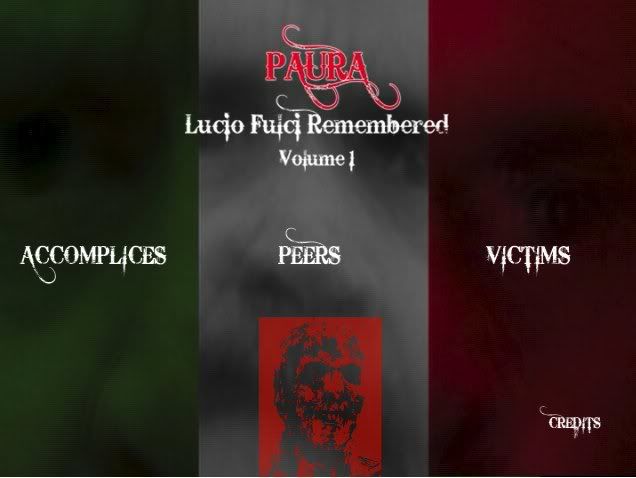
Paura: Lucio Fulci Remembered Volume 1


I was thrilled the other day to receive my copy of the just released DVD Paura: Lucio Fulci Remembered Volume 1. This limited to 2500 copies release from director Mike Baronas is a really wonderful tribute to the maestro as well as being an absolutely no-brainer buy for anyone who loves Italian film.
Containing nearly ninety interviews (typically ranging from one to seven minutes) with Fulci's actors, peers and collaborators, Paura works as a splendid and honest tribute to someone who was obviously a very complicated but fascinating man.

The main thing that impressed me in the majority of the interviews is how obviously happy many of the participants are to talk on Fulci, as it is pointed out over and over again how overlooked he is in Italy. One of the best interviews on the set is with Gino De Rossi who appears absolutely grateful and moved to be given the opportunity to discuss a collaborator he obviously very much admired. Other highlights from the disc include Riz Ortolani recalling Fulci as a songwriter and mentioning how they shared a major love of music together, and George Hilton who honestly admits that he had more respect for Lucio as an artist rather than a human being. Hilton is an exception though as most of the folks on here have only positive things to say about Fulci.

My favorite section of Paura are the interviews with Fulci's peers, featuring moments with many famed Italian directors (some who were friends with Fulci and some who barely knew him). These are particularly interesting pieces and help us get a glance at Fulci's many varied roles in Italian cinema and its history. Some highlights inn this section include Luigi Cozzi recalling a moving and funny moment with Fulci and Argento on the eve of the Wax Mask project and Ruggero Deodato speaking of the last time he saw an obviously ill Fulci and giving him a hug. The disc is filled with many moving and intimate moments and as such it stands as a nice personal and visual companion to Stephen Thrower's massive and important look at Fulci's career in printed form, Beyond Terror.

Probably the most entertaining interview on the disc comes with the always engaging and delightfully confident Umberto Lenzi, who has some great stories to tell and who signs off his interview by calling Fulci and himself a genius!
Anyone who has any number of Shriek Show DVDS will recognize where many of these interviews originated from (although don't be concerned that you are buying something you already have as this disc features unseen moments that weren't on those older DVD supplements) and it is still a pleasure to visit with so many legendary figures.

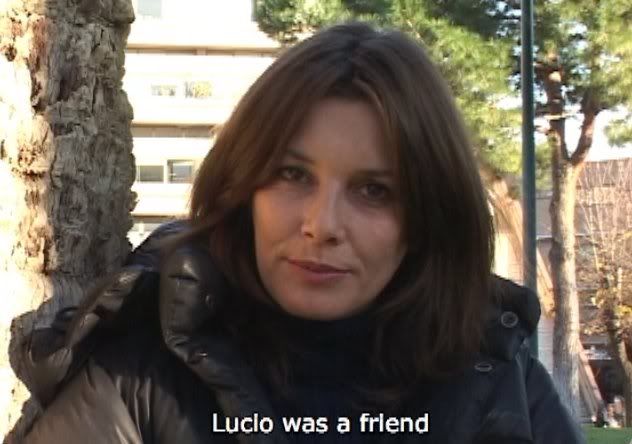
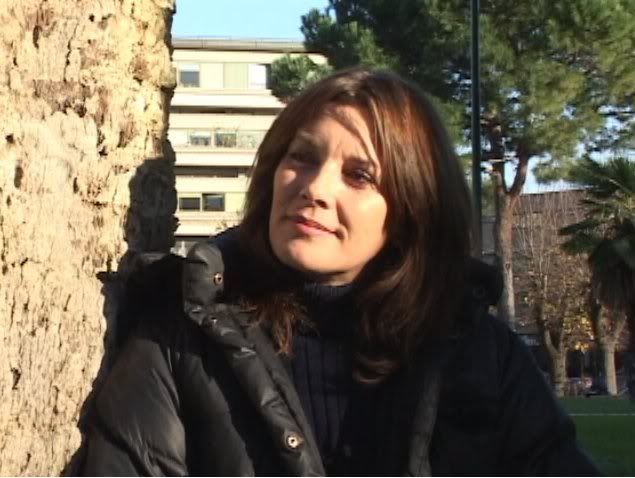
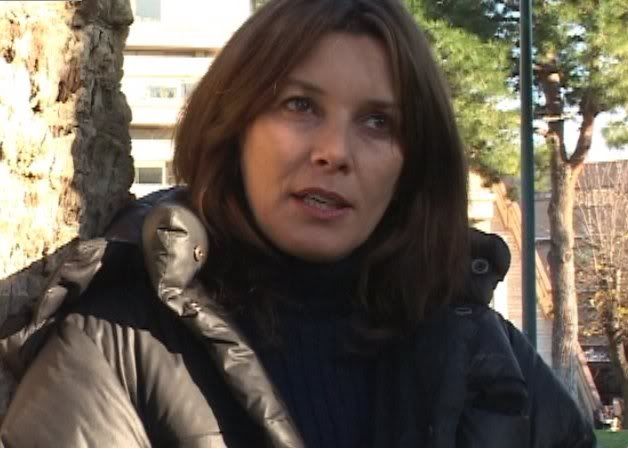
The screen shots I am including are of the lovely Cinzia Monreale, who I have written on here before. I was really excited to see more from the interview she gave from the Buio Omega disc and her thoughts continue to show her as a warmly engaging and charismatic woman who deserves more attention than she gets.
Follow this link to order Paura. It is an absolutely essential purchase to anyone with even a passing interest in Italian Horror and one of the best DVD's of 2008.

Lucio Fulci's Silver Saddle (Sella D'Argento) (1978)

Far from being just the Italian Splatter King many fans only know him as, legendary Italian director Lucio Fulci worked in many other genres of film outside of Horror. One such genre was the Italian Western, with his Four Horseman Of The Apocalypse (1975) ranking among the most striking the ‘Spaghetti’ West ever offered up.
Shot between 1977’s Murder to the Tune of Seven Black Notes (1977) and the legendary Zombie 2 (1979), Silver Saddle (1978) remains one of the most little seen of all of Fulci’s works as well as marking the last time Fulci would work in the western genre.
Nowhere near as noteworthy as Fulci’s past Western works and falling somewhere between the acclaim it receives in Thomas Weisser’s Spaghetti Western’s guide and the disdain it gets in Stephen Thrower’s essential Beyond Terror, Silver Saddle is a disjointed affair that ranks among the lesser offerings from Fulci in the seventies but is still worth a look for fans of the genre and the director himself.
While Silver Saddle seems to be an anomaly in Fulci’s career during this period, a closer look reveals that nearly all of the major players associated with the maestro are on hand for the production. Joined by several frequent collaborators including cinematographer Sergio Salvati, editor Ornella Micheli, composer Fabio Frizzi (along with Bixio and Tempera) and actress Cinzia Monreale, Silver Saddle is very much a Lucio Fulci picture even though this PG rated work will no doubt shock fans who only know him through his harder thriller and horror work.
Scripted by Adriano Bolzoni, a prolific writer probably best known for his work with Ernesto Gastaldi on Sergio Martino’s excellent Your Vice is a Locked Room and Only I Have the Key (1972), and concerning a bitter gunfighter named Roy Blood, played well by the always reliable Giuliano Gemma, and a young boy named Thomas, played by Sven Valsecchi, Silver Saddle is one of the most tender films Lucio Fulci ever shot…not exactly an emotion he is typically known for.
Gemma (father of future Dario and Asia Argento actress Vera) was born in Rome during World War Two (he actually suffered a near fatal injury after coming across a discarded bomb as a child) and became interested in sports before film as a teenager. After his dreams of being an athlete didn’t work out the fit and muscular Gemma began getting some work as a stunt man in the fifties while in his early twenties. He soon graduated to acting roles and by the mind sixties he had worked his way up to a role in Visconti’s The Leopard but he soon found his true calling when director Giorgio Ferroni cast him in the lead role in the 1965 Italian Western One Silver Dollar.
Working sometimes under the unlikely name of Montgomery Ward, Gemma seemed custom made for the Spaghetti Western and by the early seventies had appeared in more than a dozen of them. It wouldn’t be the only genre he would excel in as his appearances in the flawed political film Corbari (1970) opposite Tina Aumont and the memorably comedic Senta Berger film When Women Had Tails (also 1970) and others would show him at home in nearly any type of role he was given. Silver Saddle, a late entry in the Italian Western genre, would mark one of the last times Gemma would find himself riding a horse in front of the camera.
Joining Gemma for Fulci’s farewell to the old west is Ettore Mani (a gentleman who worked with everyone from Bava to Fellini in his four decade career), genre favorite Donald O’Brien and popular American character actor Geoffrey Lewis (a talented man who has found favor recently with writer and director Rob Zombie). Silver Saddle also features Italian sex symbols Licinia Lentini as a Madam named Sheba and Agnes Kalpagos as one of Sheba’s girls.
19 year old Cinzia Monreale makes the biggest impression though in one of her earliest roles and her first for Fulci. Monreale gives a stately, subtle and dignified performance as the nurturing Margaret and the films best moments belong to the few she shares with Gemma. She would have just a couple of years after Silver Saddle until she would become an Italian film icon in D’Amato’s unforgettable Buio Omega (1979) and as the haunting blind girl Emily in Fulci’s own The Beyond (1981). Silver Saddle would mark one of four times Monreale (The New Gladiators (1984) and Sweet House of Horrors (1989) being the other two) would work with Fulci, marking her as one of the actresses he ever worked most with.
Unfortunately, despite the talent in front of and behind the camera, Silver Saddle isn’t a very good film. Featuring a syrupy title song that plays irritatingly throughout the film’s running time, a lagging pace and a predictable story-line, Fulci’s final western is finally more than a little flat. While it does have it’s moments (the scenes with Monreale and Gemma, an eerie aftermath of a destroyed monastery and some inventive shoot-outs, one of which seems to have heavily informed the recent Resident Evil: Extinction), Silver Saddle is a surprisingly dull film from Fulci that never really comes together.
Known as They Died With Their Boots On in the United States although I can’t find any information on any kind of release here, this shot in Spain Scope production has never been granted a decent English friendly home video presentation. The version I saw comes from an Ancient full frame Greek VHS that destroys Fulci’s 2.35 compositions and buries Salvati’s photography. Xploited carries a Region 2 Italian DVD that reportedly features the film in its correct aspect ratio but is in Italian only.
While the film is not among Fulci’s finest, a nice DVD presentation restoring the dubbed English track would be very welcome.
Xploited also carries the film’s soundtrack on CD which is quite nice if you can get past the dreadful theme song that manages to bring the film down seemingly every few minutes.

Fulci's The Beyond Set for Re-Release

beyond_cvr

Lucio Fulci's classic L'aldilà (The Beyond) is coming back out on a remastered DVD from Grindhouse at the end of the month here in the States. The disc will contain all of the features from the out of print Anchor Bay disc as well as a rare interview with Fulci on the set and some interviews with the cast and crew.
Grindhouse will also be releasing their long awaited special edition of the rather insane Pieces at the same time. I'll be happy to add it and another copy of Fulci's masterful film to my collection.

The Great Video Store in the Sky: A Lucio Fulci Double Feature

Today we check out one of Fulci's finest:

A LIZARD IN A WOMANS SKIN

and one of his weakest:

1987 - Aenigma (VHS)

My Favorite Closing Shots: Alfred Hitchcock's The Birds and Lucio Fulci's Zombie


Fulci's City of the Living Dead Special Edition (This Might Make Me Get a Blu-Ray Player)

I have to admit that I still haven't upgraded to Blu-Ray. I've been dragging my feet for awhile, mostly due to financial reasons and the fact that I am not the biggest fan of change. While I am still not entirely sold on the idea, this upcoming release of Lucio Fulci's stunning City of the Living Dead might finally make me break down and climb aboard the Blu-Ray bandwagon. Hitting the streets on May 25th, this new DVD of Fulci's classic film contains just a featurette but the Blu-Ray contains that along with even more documentaries and interviews. The temptation to see these additional features for one of Fulci's greatest films might very well be the push I need to get a Blu-Ray player. Either way, I am thrilled that Blue Underground are staying strong and that they are unleashing this essential Euro-Cult classic once again.

After.Life


Logic is one of fantastique cinema's greatest enemies, but for whatever reason that’s something that the majority of English language horror films can’t grasp. Take for example the visually striking and at times haunting After.Life, a film totally derailed by its tired attempt to explain away all of its built-in inconsistencies with a ‘logical’ conclusion. Hell, the DVD even has a featurette where director Agnieszka Wojtowicz-Vosloo attempts to explain all the clues in the film to help her audience ‘understand’ what the film was about. Here are some suggestions for English Language Horror film directors…forget logic, embrace ambiguity, and forget attempting to explain everything and tying up all your loose ends. Let your film exist on its own deranged and haunted plateau and don’t let common sense come into play. Let us get lost in the supernatural world you have built up for us and don’t let us wake up from the nightmare until the end credits begin to role.
After.life is especially frustrating as it is, at times, so in line with classic Italian works like Joe D’Amato’s Buio Omega, Lucio Fulci’s City of the Living Dead and Michele Soavi’s Cemetary Man (not to mention older English language works that got it right like Carnival of Souls), but it ultimately turns into just another bland modern horror film spoiled by a final act that attempts to erase all of the mystery the film has tried so hard to build up. The great thing about those works by D’Amato, Fulci and Soavi is that they understood that they didn’t have to ground their imaginative films with reason. Those films forcefully ask from the first frame on that we, as an audience, abandon common sense and welcome the fact that we finally only get more questions than answers.
Director Wojtowicz-Vosloo seems aware of these past works, and she has a keen visual sense, but After.Life implodes in on itself by wanting to pander to an audience that needs a film to make sense. Had she gone full-force with this work it could have been a truly disturbing and surreal experience but, instead, it’s a depressing wreck of a film only salvaged by several memorable moments and a beautiful performance by Christina Ricci, who has become one of our great actors even though her films are rarely as good as she is.
I wanted very much to like After.Life and it gets so many things right, (Ricci’s performance, the score, the fall setting), that I am tempted to give it another chance eventually but the film’s inability to come to terms with its natural illogical state frustrated the hell out of me. I really don’t have much else to say about the film. I almost wish it hadn’t had moments that were so captivating so I could dismiss it outright. In fact, had After.Life been half as mesmerizing and brilliant as Christina Ricci’s performance then it would have been one of the best films of the year. Sadly, that’s not the case and Ricci (and horror fans) deserve much, much better.

Arbogast on Film on Fulci's City of the Living Dead


Please check out this brilliant article of Lucio Fulci's City of the Living Dead over at the always terrific Arbogast on Film. This is one of the best pieces I have ever read on one of Fulci's films and I wanted to alert other fans to it.

Lucio Fulci's House by the Cemetery and Zombie announced for Blu-ray!


In some of the best home-video news of the year, Lucio Fulci's unforgettable Zombie is finally going to hit Blu-ray in late October courtesy of Blue Underground. The new two-disc deluxe set (also available on DVD) will feature both new and old extras including:

Disc 1:

•Audio Commentary with Star Ian McCulloch and Diabolik Magazine Editor Jason J. Slater
•Theatrical Trailers
•TV Spots
•Radio Spots
•Poster & Still Gallery
•Guillermo del Toro Intro

Disc 2:

•Zombie Wasteland – Interviews with Stars Ian McCulloch, Richard Johnson & Al Cliver, and Actor/Stuntman Ottaviano Dell'Acqua
•Flesh Eaters on Film – Interview with Co-Producer Fabrizio De Angelis
•Deadtime Stories – Interviews with Co-Writers Elisa Briganti and (Uncredited) Dardano Sacchetti
•World of the Dead – Interviews with Cinematographer Sergio Salvati and Production & Costume Designer Walter Patriarca
•Zombi Italiano – Interviews with Special Make-Up Effects Artists Gianetto De Rossi & Maurizio Trani and Special Effects Artist Gino De Rossi
•Notes on a Headstone – Interview with Composer Fabio Frizzi
•All in the Family – Interview with Antonella Fulci
•Zombie Lover – Award-Winning Filmmaker Guillermo del Toro talks about one of his favorite films

Fellow Fulci fanatics will want to hold onto their old Shriek Show double-disc DVDs as it contains extras that still won't be found anywhere else, but I expect that Blue Undergrounds set will be the absolute ultimate edition as far as sound and vision goes.


Also, coming in September, Blue Underground is unleashing Fulci's equally mesmerizing House by the Cemetery on Blu-ray with these exciting extras:

Meet the Boyles - Interviews with Stars Catriona MacColl and Paolo Malco
Children of the Night - Interviews with Stars Giovanni Frezza and Silvia Collatina
Tales of Laura Gittleson - Interview with Star Dagmar Lassander
My Time With Terror - Interview with Star Carlo De Mejo
A Haunted House Story - Interviews with Co-Writers Dardano Sacchetti and Elisa Briganti
To Build a Better Death Trap - Interviews with Cinematographer Sergio Salvati, Special Make-Up Effects Artists Giannetto De Rossi & Maurizio Trani, Special Effects Artist Gino De Rossi, and Actor Giovanni De Nava
Deleted Scene
Theatrical Trailers
TV Spot
Poster & Still Gallery

I am truly excited to hear about these exciting releases
and can't wait to add them to Italian Horror and Fulci shelf!

Blue Underground's New Fulci Releases Drop Tuesday


Just a quick reminder that Blue Underground's new Special Edition DVDs and Blu-rays of Lucio Fulci's Zombie and House by the Cemetery will be avalible this Tuesday October 25th. More info. on these incredible releases can be found here.

A Few Words For Lucio Fulci


Italian director Lucio Fulci passed away eleven years ago today. The excellent Cinebeats blog is currently running a well written tribute to the man and I thought would post a few thoughts on one of the men that got me into Italian Horror cinema.
My first exposure to Fulci was, like a lot of others, through those old cut and horribly cropped videos of films like Zombie and The Gates Of Hell. The excitement of finding those old tapes and realizing that I was watching, even in sometimes gutted form, something completely different to the horror cinema I had been raised on was entrancing.
If discovering Argento was my entrance into the world of Italian Horror then my friend letting me borrow an uncut widescreen copy of Fulci's The Beyond marked my point of no return. The Beyond remains, if not Fulci's best film, at least the ideal introduction to his world. One of my most memorable filmgoing experiences remains seeing this film at a midnight showing in Lexington's Kentucky Theater. Regardless of the fact that the audience didn't get it seeing Fulci's surreal and sometimes over the top images on the big screen left an indelible impression.
Fulci's late work damaged his career. It is unfortunate that he couldn't have made The Wax mask with Argento, it would have been nice to have sent the man out on a strong note. The best of Fulci remains the three giallo's he made starting in 1969, Perversion Story, Lizard In Woman's Skin and Don't Torture A Duckling. All are thankfully on DVD and his work with Florinda Bolkan in those last two films is particularly notable. He made two fine, if undervalued, European westerns with A Bullet For Sandoval and Four Gunmen of The Apocalypse.
Fulci would return, in 1972, to his early comedies with the trippy Laura Antonelli vehicle, The Eroticist but starting with 1977's Murder To The Tune Of The Seven Black Notes through to the stylish and disturbing New York Ripper in 1982 Fulci would link his name forever to a particularly extreme brand of horror filmmaking.
Zombie 2, City Of The Living Dead, The Beyond and House By The Cemetary remain his most famous and popular films. Rightfully so I think, there is a distinctive feel to these films that can finally only be described as Fulciesque. He would work with many of the same people through these films and the performances of David Warbeck, Cinzia Monreale and especially Catriona MacColl would give these films an added element of greatness.
Something snapped after New York Ripper though and Fulci would never again get the type of financing or understanding that he needed. Manhattan Baby, Murder Rock and Devil's Honey are all frustratingly almost there but the brutal Ripper remains his last fully realized film.
It is often said that Fulci doesn't occupy the same place as Bava and Argento in the Italian cinema and this might be true but he does occupy his own very unique and at times shockingly sublime place. He is remembered and he will continue to be.

The Great Ones Vol.2 (Side A Track One) Mimsy Farmer


Among my favorite moments in any Dario Argento film is the climax of FOUR FLIES ON GREY VELVET where we see the intense Mimsy Farmer blow her top and then literally lose it. It's a moment that could have easily been made ridiculous in the hands of a lesser actor but Farmer handles it beautifully, giving us one of the great freak out moments in all of Italian horror and one of her most iconic moments in a pretty remarkable career.
Farmer was born in Chicago in February of 45 and made her debut as an actress in an episode of THE DONNA REED SHOW. Her first major role came at the age of sixteen Earl Hamner's SPENCER'S MOUNTAIN opposite Henry Fonda among others. The young Farmer already felt unique and delivered a very assured debut feature film performance as Claris.

Several years of tv work followed, as well as a part in the Ann-Margret vehicle BUS RILEY'S BACK IN TOWN, before Farmer appeared in a handful of biker and hot rod films. HOT RODS TO HELL, RIOT ON SUNSET STRIP, DEVIL'S ANGELS and THE WILD RACERS are all fun late sixties American exploitation flicks but it was Barbet Schroeder's powerful MORE that would really put Farmer on the map.

MORE is an uncommonly good 'drug' film that still feels unique and fresh today. Backed by an early Pink Floyd soundtrack MORE manages to be to pull off the tricky feat of being honest but not judgemental or condemning of its drug addicted main characters. Farmer's Estelle is a fascinating role and it is with a mixture of revulsion and sympathy as we watch her disintegrate through the film's intense two hour running time. Farmer mentioned in the Palmerini and Mistretta book SPAGHETTI NIGHTMARES that she was so good as the junkie Estelle that many people figured she was one in real life.
Farmer was credited as co-dialogue writer on MORE and the film signaled a new chapter in her career as she stayed on in Europe for much of the Seventies and Eighties. A role in STROGOFF opposite the always great John Phillip Law followed as did a role opposite Rita Hayworth in ROAD TO SALINA.
Dario Argento had remembered Farmer's intense work in MORE and in 1971 cast her as Nina in his final 'Animal trilogy Giallo' FOUR FLIES ON GREY VELVET. This hardest to see of all Argento's films features much of his trademark camera work and an incredible Morricone score but is Farmer who steals it. The aforementioned freak out and her death scene remain incredibly vivid in Argento's canon. Farmer fondly remembers Argento and the film in SPAGHETTI NIGHTMARES and it is a shame that the two didn't work together again, although apparently he did offer her a role in a later film that she turned down.
Farmer would continue working in Italy, often in International co-productions like the Alain Delon crime flick TWO MEN IN TOWN and 1974's THE SUSPECTS.
1974 would give Farmer possibly her greatest role in Francesco Barilli's strange and completely compelling PERFUME OF A LADY IN BLACK. This overwhelming and frankly brilliant Italian thriller is among the best of the seventies with Farmer delivering a vulnerable, moving and finally unhinged performance. It is among the great performances in genre cinema and this still unreleased, in the United States, film deserves a much wider audience. Highly recommended is Raro's imported special edition dvd of the film that can be purchased from the great Xploited cinema site.
After her extraordinary work in PERFUME OF A LADY IN BLACK, Farmer's career should have really taken off which makes it all the more unfortunate that it was her last truly great role. Some would argue that her work in Armando Crispino's AUTOPSY is among her finest, but it seems to me to be a let down after PERFUME.
The rest of Farmer's career is mostly made up of smaller supporting roles in some fine films, Ferreri's BYE BYE MONKEY and Campanile's GIRL FROM TRIESTE, and some poor ones.
She had larger roles in Deodato's CONCORDE AFFAIR 79 and Fulci's BLACK CAT but she didn't seem fully engaged anymore. One has to wonder if she simply recognized that the roles she was being offered didn't measure up to her talent, so she just didn't give as much as she had in the past. She said of her role in THE BLACK CAT that she, "was a little lazy and lacked motivation" but admitted to liking Fulci.
Farmer made her final acting appearance in an Italian tv movie in 1991. She currently resides in France. She would say of her career in SPAGHETTI NIGHTMARES, "I wish I were offered more intelligent and complex parts; on other hand, I don't exactly feel frustrated because, after all, what I have achieved isn't so bad." In a career featuring work as powerful as her performances in MORE, FOUR FLIES ON GREY VELVET, and PERFUME OF A LADY IN BLACK, I couldn't agree more. Not bad at all Mimsy.

Moon in the Gutter (Month By Month)

BLOG CREATED, EDITED and WRITTEN BY JEREMY RICHEY: Began in DEC 2006. The written content of all posts (excepting quotes from reviews, books, other publications) COPYRIGHT JEREMY RICHEY.