THE MOON IN THE GUTTER ARCHIVES

I AM CURRENTLY WORKING ON EXPANDING AND REVISING SOME OF THE BEST PIECES FROM MOON IN THE GUTTER AT MY OFFICIAL SITE, NOSTALGIA KINKY. THIS NEW PROJECT CAN BE ACCESSED BY CLICKING THE PICTURE BELOW.

THE MOON IN THE GUTTER ARCHIVES

Recent Posts from my Official Site

Showing posts with label Brandon Colvin. Show all posts

Sunday, June 28, 2026

Some Quick and Random Thoughts On Le Samourai


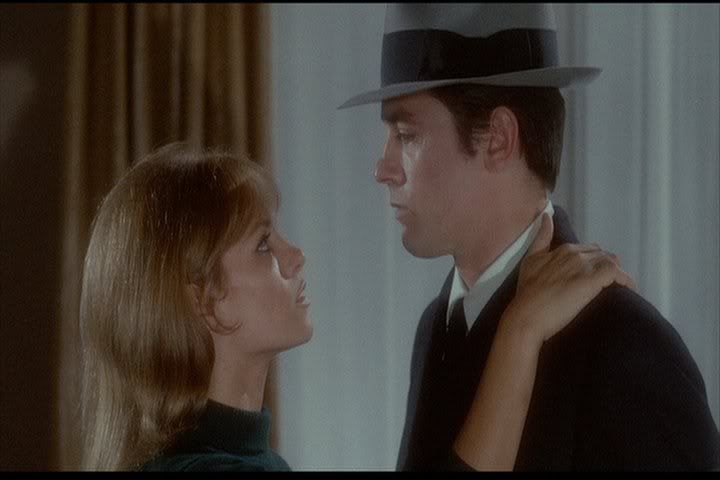
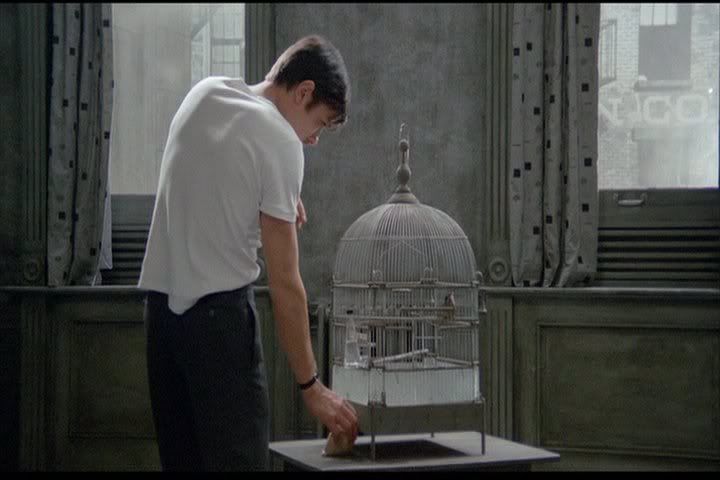
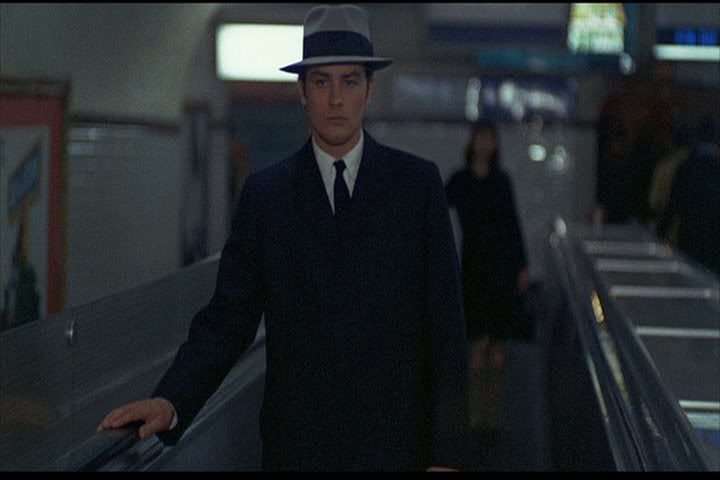
I think it was John Woo who called Jean Pierre Melville’s 1967 feature Le Samourai a perfect film and, truth be told, I don’t think Woo was too far off the mark. Melville’s tale of lonely hitman Jef Costello, played absolutely perfectly by Alain Delon, remains one of the most distinctive and original films ever made. The mood, atmosphere and tone Melville, and the films often-unsung hero Henri Decae, sets from its amazing opening sequence to its final tragic moments never falter. Le Samourai is one of the most resonate mood pieces ever set to film…like a visual version of Side 2 of Brian Eno’s Before and After Science only even more chilling in just how still and quiet it is.

I am always struck by something different when I revisit Melville’s great film. This time it was just how extraordinarily and refreshingly simple Melville’s script for the film actually is. Based loosely on Joan Mcleod’s novel The Ronin, Melville and co-screenwriter Georges Pellegrin script is such a perfectly designed piece that it is hard to imagine that even a comma was out of place. I have always wondered what the script felt like for Delon to hold, as it surely must have been one of the lightest his hands had ever grasped. So many sections of the film are almost pure silence. Melville would employ this wonderful technique throughout his career but it was never as devastating as it is here. We are in Costello’s world throughout Le Samourai and it is a lonely and isolated one. Even when he is relating to other people, such as his real life wife Nathalie Delon, Alain seems like he is at an impenetrable distance…like an animal raised in a cage who has suddenly been let out in an open space he has no understanding of.

I always find it hard to watch Le Samourai without thinking about Delon himself. Images of him alone in his apartment with only a Samurai Sword on the wall above his couch spring to mind and also of course the mysterious and tragic turn of events involving one of his bodyguards a year after Le Samourai was released. Of course, only Alain Delon knows how far he actually slipped into the persona of Jef Costello in his real life, but the two are finally inseparable in Delon’s career as he has never fully escaped his overwhelming performance in this film, and I often wonder if he ever really wanted to.

Sylvia Kristel described Delon a decade after Le Samourai in her book as, “trapped, careful, anxious, suspicious” and that she “sensed in this man with the intense gaze a never admitted pain that ate away at him.” She would go onto say that “He was complex to say the least, vulnerable and powerful” and finally that he was “a magnificent and broken being.” Sylvia could have very well been describing Costello with these very vivid descriptions.
I am always struck not by the acclaim the film has received (as it is well deserved) but by the amount of film fans that don’t respond to it…who actually don’t like it. It’s odd how great art, and I believe Melville’s film is just that, can have a polarizing effect on some people. I vividly remember a discussion I had with a friend, who was very well versed in French cinema, who didn’t understand the film’s allure. I finally realized that my attempt to persuade him was futile; there is something about Le Samourai that people either get or don't get.

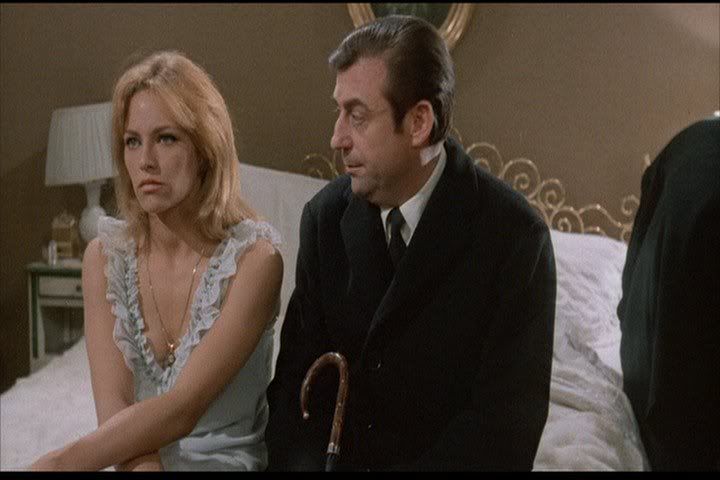
Honestly, I love everything about the film. From the fascinating and coolly sinister score by the great Francois de Roubaix (a soundtrack that is never far from my CD player) to the way Nathalie Delon plays the police inspector with such cool precision when he is trying to get her incriminate Costello, to the final gunshot in the film that always makes me jump no matter how many times I have seen it.
For a terrific look at the film’s iconic opening shots, take a look at this piece by my friend and Out 1 contributor Brandon, and for anyone who hasn’t seen the film give Criterion’s excellent DVD a look. While not as loaded up with extra features as some of their discs, the print is lovely and the vintage interviews (especially one with Delon in 67) are fascinating.

Saturday, June 27, 2026

Paul Thomas Anderson Blogathon: Brandon Colvin on Magnolia

***I first met Brandon Colvin about four years ago in a film theory class at Western Kentucky University. While our writing styles were different and our tastes sometimes clashed, Brandon and I immediately recognized ourselves as kindred-spirits both absolutely drunk on everything cinema-related. One of the first things we bonded on was our love for the films of Paul Thomas Anderson, so it seems fitting that my blogathon should be closed by this magnificent new piece by Brandon on Magnolia. Brandon, who is one of Out 1's main contributors, is a writer of extreme intelligence and this very thoughtful piece on Magnolia's place as a melodrama shows this clearly. It's a really special article and I think a perfect closer for this blogathon. Thanks to Brandon for writing such a challenging ode to one of modern cinema's greatest films and for allowing me to premiere it here.***


Magnolia’s Metaphysical Melodrama
Brandon Colvin

I first saw Magnolia (1999), Paul Thomas Anderson’s 3-hour masterpiece of meta-melodrama, at the tender age of 14. Lugging home two VHS tapes containing the movie, I was unaware of the formative impact the film would have on my understanding of cinema. I watched the film three times during that initial three day rental period, and I’ve seen it at least twice each year since. Every viewing serves as a reminder of the narrative virtuosity and unfettered emotion that first knocked me on my ass in a year that offered many video store treasures: Solaris (Soderbergh, 2002), Donnie Darko (Kelly, 2001), Punch-Drunk Love (Anderson, 2002), and Adaptation. (Jonze, 2002). Magnolia, however, towers above these foundational pillars of my cinephilia, primarily because it almost single-handedly taught me a very valuable skill – how to understand and appreciate the melodramatic mode of cinematic storytelling.


The source of Magnolia’s instructiveness towards the end of accepting melodrama lies in its relentless self-awareness as well as its sheer bravery, complimentary traits that support the film’s two-fold method of demonstrating the emotive capabilities of melodrama. This method is realized in the way Magnolia first presents itself as a self-conscious exemplar of post-modern insecurity only to explode that trepidation with unhinged histrionics and full-throttle excess in the form of cosmic coincidences and unabashed artificiality.


The fact that Magnolia begins in the post-modern mode before diving into extravagance is indicative of PTA’s awareness of his primary audience – educated adults attuned to the conventions of “art” or “indie” cinema and the attendant “grittiness” or “realism” of such film practices (my younger self included). Throughout the film’s first few hours, Anderson is covering his bases, so to speak, anticipating possible criticisms by co-opting them into a series of strategically self-reflexive moves – moves which allow him to nip certain objections to implausibility and assumptions of “realism” in the bud in an attempt to open up the skeptical viewer to a different type of storytelling: the melodramatic.


The first of these post-modern gestures, the film’s six-minute, Ricky Jay-narrated prologue, essentially serves the rhetorical function of addressing and invalidating the audience’s potential skeptical prejudices against chance, coincidence, and melodrama as reliable narrative tools for gaining insight into the human condition. Reality is depicted as unquestionably containing the incredible chance occurrences described in the prologue’s three vignettes: the Green-Berry-Hill murder, the scuba diver and the gambler, and the failed suicide-cum-homicide of Sydney Barringer. The vignettes point to something beyond happenstance, something which Anderson seeks to investigate through his film’s engagement with causality and artifice. As Ricky Jay’s narrator comments on Sydney Barringer’s death, “This is not just ‘something that happens.’ This cannot be just ‘one of those things.’ This, please, cannot be that. And, for what I would like to say, I can’t. This was not just a matter of chance. These strange things happen all the time.” In this way, the prologue provides an immediate, ready-made defense of Magnolia’s commitment to the coincidental and the fantastic as the centerpieces of its narrative structure: “these strange things happen all the time.” Through the prologue and its suggestive narration, PTA preemptively strikes, perhaps out of fear that a modern audience will reject his seemingly naïve immersion in the ostentatious.


This almost neurotic need to justify Magnolia’s deliberately fanciful approach pervades the film’s first few hours in the form of self-referentiality and, ultimately, self-defense. During the stunning post-title montage (cut to Aimee Mann’s rendition of “One”), which introduces the audience to Magnolia’s numerous intertwined characters, this self-consciousness is prominent in the form of omnipresent screens and ornately orchestrated cross-cutting, both of which throw the viewer, almost apologetically, into an overt awareness of the film’s constructedness. The shift to slight self-parody comes soon afterward, when Phil Parma (Philip Seymour Hoffman) realizes he must track down Earl Partridge’s (Jason Robards) son, Frank Mackey (Tom Cruise) in order to satisfy the dying man’s final wish. In a wide shot, Phil stands by Earl’s eventual deathbed. As Phil mentally develops his plan of action, Wagner’s “Also Sprach Zarathustra” swells, Mickey-Mousing his banal movements while also forming a sound-bridge to Frank Mackey’s infamous “Respect the Cock” speech. The joke is an intertextual one, mockingly comparing Phil’s moment of realization with the epic images of Stanley Kubrick’s 2001: A Space Odyssey (1968) – the cultural counterpart to Wagner’s composition. PTA seems to be self-consciously poking fun at the balls-to-the-wall ambition behind Magnolia here, placing his film alongside Kubrick’s in a way that highlights the potential silliness of his own hubris. Once again, Anderson is beating his critics to the punch by demonstrating his self-awareness, winking at the skeptics, saying, “I know, I know, but just keep watching.” Similar moments of meta-commentary (even mockery) occur throughout the film, such as when Earl’s wife, the drug addicted Linda (Julianne Moore) exclaims, “This is so fucked up and over-the-top” or when Earl himself acknowledges his hackneyed situation, apologizing to Phil for how pathetic and clichéd his “whole man on a bed” circumstance is. A certain insecurity suffuses these moments, an admittance of deviance from “art” or “indie” cinema’s realistic grounding; Anderson appears to be hesitant, but he is simply earning a sort of credibility by demonstrating his self-consciousness.


The fact that these intentionally archetypal gestures populate Magnolia’s plot is most directly addressed and defended during a scene in which Phil Parma pleads for assistance in finding Frank while telephoning an employee of Frank’s company. Anderson’s awareness of his audience’s possible skepticism is once again on display, as Phil remarks, “I know this sounds silly. And I know I might sound ridiculous, like this is the scene in the movie where the guy is trying to get a hold of the long lost son, ya know. But this is that scene. This is that scene. And I think they have those scenes in movies because they’re true, because they really happen. And, ya gotta believe me, this is really happening.” Anderson returns to the qualification that the seemingly grandiose events of his film happen all the time, that the syrupy, fantastic clichés are rooted in reality, but perhaps not “realism.” Phil’s remarks take up the self-conscious line of argument introduced by the narrator in the prologue and present the key for understanding Magnolia’s subsequent departure from rationality – that such implausible, artificial events are in movies because they actually have a correlation with reality, with lived experience. Indeed, interrogating and interpreting the nature of this correlation is what leads Magnolia to its eventual eruption of cosmic histrionics.


The film truly leaves behind its tentative relationship to the coincidence and obvious artifice that comprise it at the 139-minute mark, when the startling “Wise Up” sequence begins. Here, perhaps as well, is the point at which PTA feels the skeptical viewer will have been fully convinced to accept (or at least play along with) the type of narrative leaps found in Magnolia’s final hour – leaps that take it far away from any concept of “realism.” The scene begins with Claudia Gator (Melora Walters) snorting a line of cocaine while ostensibly listening to an Aimee Mann song on her record player; Mann’s music flows throughout the film, blurring diegetic boundaries in numerous instances (and giving credence to the film’s claim to melodrama), but nowhere is it as remarkable as in this show-stopping shot sequence. As Claudia listens, she begins singing along sullenly, continuing for a few bars before, surprisingly, Anderson cuts to Jim Kurring (John C. Reilly) singing along as well, followed by Jimmy Gator (Philip Baker Hall), Quiz Kid Donnie Smith (William H. Macy), Phil and Earl, Linda, Frank, then Stanley Spector (Jeremy Blackman). Of course, they can’t all be listening to the same song at the same time. It is diegetically impossible. What Anderson does here, however, is to impose an extra-diegetic linkage system that unites the characters around a common emotion – sorrowful resignation, as indicated by the song’s lyrical content (“It’s not going to stop / so just give up”). All of this is deliberately artificial, yet convincing in an emotional sense. The emotional, perhaps even spiritual or existential, content of the scene blatantly supersedes any obligation to “realism” or legible causation or continuous temporality; indeed, time seems to stand still for the scene’s duration. This emotional resonance is uniquely powerful as a direct result of Anderson’s willingness to suspend “realism” in favor of artifice and contrivance. With the “Wise Up” scene, PTA lays the groundwork for his eventual masterstroke, providing an expressionistic model of melodramatic storytelling in which emotional intensity overrides rationality and plausibility as a narrative imperative.

The correlation between reality and melodrama, between what “really happens” and what cinema represents, then, is one of emotion, of feeling, according to Anderson’s film. Melodrama externalizes the most intense interior states (as in the “Wise Up” scene), dramatizing passions and beliefs individuals are perhaps too timid or isolated or self-conscious to express – whether they be romantic, violent, or even metaphysical. The progress of Magnolia’s carefully arranged self-presentation – from insecurity to justification to excess – mirrors this process of externalization, providing a cautious arc toward extravagant artifice that is careful to keep the reluctant spectator (which certainly included my teenage self) credulous and interested.


Magnolia’s full melodramatic externalization of its emotional core, of course, famously comes in the form of a rather curious bit of precipitation – a narrative gambit of Biblical proportions. I speak of the millions of frogs which cascade over Magnolia’s San Fernando Valley during its concluding half-hour, washing over the landscape and characters at the precise point that the weight of coincidence, of unmitigated sorrow, of hopelessness, of tears and sins, of all the film’s building melodrama becomes unbearable, and the film must climb to newer heights of expressive intensity. The raining frogs are, appropriately, Magnolia’s signature image, representing one of the bravest creative choices in the history of narrative cinema, a moment of melodrama in its most abstracted, virtually transcendent form. It is a scene of celestial histrionics, of the unbelievable; yet, it is also the truest, most sincere, most profound scene in Anderson’s entire filmography (which includes it as one of the greatest world cinema has had to offer in the past two decades). It is also, particularly upon initial viewing, mystifying, and its significance as an expressionistically melodramatic explosion, one that exemplifies the pulverizing power of excess and emotion flying in the face of “realism,” is best explained by answering the perplexed Phil Parma’s stammering question upon witnessing the meteorological marvel, “How are there frogs falling from the sky?”

Most basically, Phil’s question is a metaphysical one, pondering how the basic laws of reality appear to have been transgressed and contradicted. In this light, the term deus ex machina seems particularly apt (the god in question being PTA). With the falling frogs, Anderson employs a deus ex machina to a deliberate end (rather than demonstrating the laziness typically ascribed to the use of such overt narrative intervention), one which elucidates the melodramatic ethos of Magnolia by aligning the film’s entire universe with its core emotional concerns – perhaps the ultimate form of expressionism. Indeed, the spiritual overtones of the sequence (look for references to Exodus 8:2 throughout the film) point to a certain transcendence-seeking impulse often associated with profound emotion, an impulse Anderson is happy to indulge by emphasizing the act of forgiveness (Christian connotations abound). A specifically cosmic variety of forgiveness is the source from which the frogs fall in Magnolia, whether that source is an implied deity/metaphysical force or simply the writer-director (the god of the narrative machine). It is a forgiveness from outside, one which deliberately pushes people together, saves them from themselves, and retracts their seemingly deserved punishments. It is a narrative leap predicated on emotion and sympathy – that of the filmmaker, and, perhaps, the audience, for the characters; however, the leap is also motivated by the emotion and desire for redemption buried in the most intense interiorities of the characters themselves. Overflowing with these swirling sentiments, Magnolia’s surge into unfettered melodrama seems somewhat inevitable – fated, one might say, not just “one of those things.”


But the falling frogs are still more complex. As the scene concludes, the audience is presented with the same sort of defense of the fantastic and coincidental as earlier in the film. A close up of the corner of a painting’s frame in Claudia’s apartment reveals a strip of paper reading “but it did happen” and, while watching the frogs rain from within the confines of his school library, Stanley mutters, “This is something that happens.” In this new, metaphysically provocative context, however, the previously self-conscious move of rhetorical defensiveness becomes something different. Rather than suggesting the actuality of the fantastic (“these things happen all the time”) as a method of justification and reliability, Magnolia now points to the unbelievable wonder of actuality, offering a phenomenon that demonstrates the shockingly strange qualities of real occurrences. (Raining frogs actually occur in nature. Seriously, look it up.) Ultimately, the recurrence of the “this happens” motif results in an underscoring of the relevance of melodrama to our lived experience. The most outlandish moment has a relatable root in reality, even if that root is essentially emotional. It is all startlingly reminiscent of one of the most memorable scenes of Spike Jonze and Charlie Kaufman’s aforementioned Adaptation., in which Robert McKee (Brian Cox) berates Charlie (Nicolas Cage) after the later remarks that he wants to make a movie in which nothing happens, as in life, to which Robert responds:

Nothing happens in the world? Are you out of your fucking mind? People are murdered every day. There's genocide, war, corruption. Every fucking day, somewhere in the world, somebody sacrifices his life to save someone else. Every fucking day, someone, somewhere takes a conscious decision to destroy someone else. People find love, people lose it. For Christ's sake, a child watches her mother beaten to death on the steps of a church. Someone goes hungry. Somebody else betrays his best friend for a woman. If you can't find that stuff in life, then you, my friend, don't know crap about life! And why the FUCK are you wasting my two precious hours with your movie? I don't have any use for it! I don't have any bloody use for it!


Like Adaptation., Magnolia is a film at odds with itself regarding its post-modern and melodramatic tendencies. Magnolia, however, is decidedly more committed to the latter, demonstrating the truth of McKee’s powerful objection by extracting and externalizing the power and intensity of world that frequently seems banal. The world, Magnolia suggests, is vital, dynamic, and beyond our ken – its full expression requiring a narrative mode imbued with the cataclysmic, the extravagant, the super real, in other words, the melodramatic.

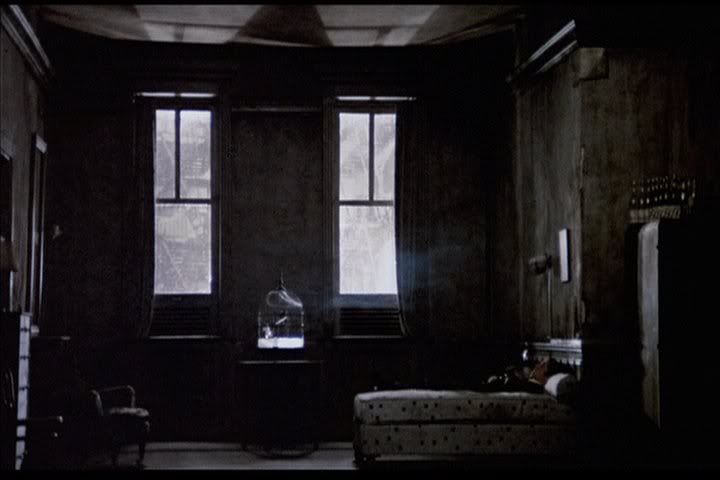
Wednesday, June 6, 2018

Please Support Brandon Colvin's A DIM VALLEY at Kickstarter

The extraordinary filmmaker Brandon Colvin has just recently launched a Kickstarter campaign to help fiance his upcoming film, A Dim Valley, and I would greatly appreciate if everyone would share the campaign's link and pledge if you can.  


The Kickstarter page can be visited here and Brandon's work at Moon in the Gutter can be read here.  Good luck to Brandon and I am excited to see this, his third feature after Frames and Sabbatical.

Friday, February 15, 2013

Watch Brandon Colvin's FRAMES at No Budge


Brandon Colvin's excellent debut feature Frames can now be viewed for free over at No Budge Films and I highly recommend it to everyone.  Some of you hopefully remember my Q&A with Brandon here awhile back and I am glad to see his film getting more attention, as it is an extremely fascinating and thought-provoking work.  So I would appreciate it if you would check out Frames, leave Brandon a tip to help out with his next film, Sabbatical, and share the link with others as well. 

Sunday, February 12, 2012

A Moon in the Gutter Q&A with Filmmaker Brandon Colvin

Many of you will know Brandon Colvin as one of the creative minds behind the terrific film site Out 1, and some of you might even remember the excellent piece he submitted here on Magnolia for my Paul Thomas Anderson Blogathon a couple of years back. I know Brandon as a great friend, and valued peer, and I am so happy to present this new Q&A with him to discuss his first feature-length film, Frames.
I had the great opportunity to view a cut of Frames and it is an excellent work by an artist really worth watching. Thanks to Brandon for stopping by and participating in this and, after you read, take some time to "Like' Frames at its Facebook page for more information.

Hey Brandon, thanks so much for stopping by Moon in the Gutter again to share some information about your first feature-length film Frames! I think the film is really terrific and I am excited to see it at the festival we are going to discuss here in bit. To start off, can you tell us a bit about yourself and where you are from originally?

Thanks so much for having me, Jeremy! To begin at the beginning, I’m originally from eastern Kentucky and lived in the Bluegrass State for the first 22 years of my life, including the four years I spent attending Western Kentucky University. I moved to Wisconsin a little under two years ago to begin my graduate work in film studies at UW-Madison. Currently, I work as a full-time student and film production instructor – a pretty great gig.

I always ask about early influences as I think it’s an important thing to know about every artist, so can you tell us about some of your yours?

My interest in film really began when I was about 14. A couple of older kids at my high school introduced me to Eraserhead, Reservoir Dogs and Boogie Nights within the span of a few days. I remember seeing those films and feeling aesthetic emotions I had never felt before. My best estimation is that this was primarily a result of the films’ relatively long takes and bold camera movement. Seeing these films marked the first time I was ever critically conscious of film style and technique – perhaps because these films all demonstrated styles which were decidedly not invisible, or “seamless,” as is the case with the majority of commercial Hollywood cinema.

David Lynch and Paul Thomas Anderson became huge figures for me, as did Stanley Kubrick. Soon after, I began exploring foreign cinema and latched onto the major icons of the art cinema golden age: Fellini, Bergman, Buñuel and Godard, primarily. Taxi Driver was also totally formative for me, especially in its depiction of isolation.


I know you are extremely passionate about writing on film. Tell us a bit about how you became interested in cinema-studies and what you see as the importance of discussing and writing on film.

As I did my best to learn about the great directors and great films in high school, I relied on the writings and recommendations of various critics and accessible scholars. Roger Ebert, Manohla Dargis, The Village Voice, authors of essays in Criterion Collection DVD booklets – they all provided context, guidance, and carefully considered evaluations. All of this was absolutely indispensable to a teenager in eastern Kentucky with limited access to “high” art (praise be to the Internet). These writers introduced me to artworks which enriched my life. They provided the first models of film culture I ever experienced. Without them, I would have been stranded, in a way.

In college, scholars began to take precedence over critics as my interests shifted from evaluative writing to theoretical, historical and analytical work. Though I was heavily into historically influential critics like André Bazin and Jonas Mekas, I found a deeper level of understanding in the academic work of David Bordwell and Kristin Thompson, among others. I still learn something new every day from film critics and scholars – something I hope never changes. Criticism and scholarship are incredibly useful for anyone with genuine curiosity about cinematic art, for anyone willing to acknowledge the following: there are many things worth knowing which I do not know, and which my uninstructed intuition will never fully grasp. Filmmakers and film enthusiasts of all types need instruction from real experts, as in any field of knowledge.


Before we move onto Frames, had you had much experience behind the camera and if so what did that entail?

Very little experience behind the camera, actually. I wrote, directed and edited a one-minute short when I was 17 and helped out on a few students productions in college; that’s basically it. My real experience came in screenwriting. I had written a couple of feature length scripts before Frames, none of which I attempted to produce, but which were great practice.

Okay, let’s talk about Frames! First-off can you give us a brief description of what the film is about and your many roles in making it?


Sure. Plot-wise, Frames is about Peter Farkas, a young filmmaker making a documentary about his hometown of White River. His filmmaking partner is a young woman named Vera, the daughter of a prominent pillar of the community – Larry Kanan. Romantic tension threatens to arise between Peter and Vera, a situation which is exacerbated when Peter becomes obsessed with a bit of surreptitiously-recorded erotic footage of Vera. Shortly after this development, Vera vanishes, prompting Peter to investigate her disappearance while mourning her absence. Thematically, the film is about how we create narratives out of images, the way cinema encourages us to “frame” reality, the way editing and juxtaposition allow us to rearrange fragments of reality into stories, stories which may be misleading, or enlightening. Along with this, the film is about aestheticization, how the art of cinema transforms elements of reality into art objects or aesthetic experiences – a central question of the film being: does making cinematic art constitute a dilution of the world or a purification/concentration of the world? To what extent are any of those transformations truthful, useful or reliable for people attempting to understand their lives? The film is also very much about itself. There are a number of parallels between Peter’s experience with his footage and his filming process and Frames as a film. Those are very important, but I’d rather leave it to viewers to uncover them.

As for my roles on the film, I wrote the script, directed the film, and co-produced/casted/location scouted/art directed and production managed with Aaron Granat. I was wearing many hats at all times, which was quite exhausting, but definitely thrilling.


I know one of the biggest obstacles in getting a film made is funding. Take us through the early planning stages for Frames and how difficult it was for a young filmmaker like yourself to get together the money and then the cast.

On a small production like this, funding amounts to sacrifice. There is no guarantee that this film will ever make money, so everyone involved in funding the film is more like a donor than an investor – which is tough. Most of the production was funded through loans, while we also gathered sizable donations from friends and family. Everyone around Aaron and I knew that we had both been wanting to make a film for years, and, when the time came, there were a number of people willing to help. We also received a ton of support from UW-Madison Instructional Media Center – where Aaron and I both work – as it provided quite a bit of equipment for us to borrow free of charge. I think most of the people involved in funding the production see their donation as an investment in everyone’s future as filmmakers, rather than an investment in a single project.

That being said, we learned a lot about how much making a film really costs – experience which will undoubtedly help us in the future, hopefully making our efforts to secure funding more efficient. This film went from “Hey, let’s make this” to shooting in about three months, during which we were casting, rehearsing, location scouting, assembling a crew, etc., all the while I was writing term papers in an highly challenging graduate program. With more pre-production time and more know-how, I think funding might be much easier.


Speaking of your cast, one of the main things that impressed me about Frames was the terrific performances given by Holland Noel and Maria Travis as the young couple. Can you tell us a bit about both of them and what it was like working with actors on a project like this for the first-time?

All of our actors were Wisconsin locals, with minimal, if any, screen acting experience. We found Holland via Craigslist, and I had met Maria in a class on Russian Cinema. Both of them, as well as the other actors, had to undergo a very particular type of casting process (which I will describe below). Before I get into the process and their reactions to it, I’d like to explain, in theoretical terms, how I intended the acting to work in the film.

Performance style, in my conception of cinema, is absolutely crucial for creating an aesthetically unified film (and, aesthetic unity is a quality I value). What I want to emphasize here is the importance of the word “style.” Naturalistic acting is a stylistic choice, not an absolute. Too often, it is a default setting for filmmakers, regardless of their other formal commitments. Indeed, many critical criteria used for determining a film’s quality are based on how naturalistic or realistic a performance is, or how accurately and legibly a character’s psychology is rendered “three-dimensionally” by a performance. This is only one option among many, however, an option rooted in a type of cinema explicitly concerned with character psychology.

My style is not so much interested in rendering psychology legibly and naturalistically, because that would be incredibly inconsistent with the formal design, at the level of images and sounds, of my work. I am most interested in surfaces and appearances, which is not to say I want to make superficial films. Rather, I find film a very perceptual medium rather than a psychological medium. It’s difficult to separate the two, and I’m not suggesting that Frames does, but it does differ in its emphasis from most films. Much of the film is about the relationship between perceiving and psychological understanding. Indeed, Peter’s crisis in the film is a result of his inability to understand what he perceives. This is directly related to how people apprehend aesthetic experiences, and, particularly, how they make sense out of cinematic stimuli. I want to give the viewer a series of chosen surfaces, which he or she will perceive and make a story out of, just as Peter does with Vera’s disappearance. The performances of the actors, then, must be carefully chosen surfaces, like everything else in the film. One might ask then, where does the psychological understanding occur? I would say, in the viewer, not in the film, just as the rationale for Vera’s disappearance lies in Peter’s mind, not in the fragments he combines to make that story.

The consequence this has for performers is that they must be able to render themselves as surfaces, which is a considerable challenge considering how explicit most human behavior is in terms of psychological communication. I wanted the actors to restrict and control every communicative tool they had. In order to do this, they had to be trained. Most people think of acting as inherently expressive, rather than depictive, as I mentioned earlier. And, of course, Holland and Maria came to our casting sessions with the assumption that they should represent the characters with emotion and psychology. The tough part was teaching them how to represent the characters with gesture, movement, and superficiality. What we were trying to do is not to communicate the idea that someone feels a certain way, but to dissect the surface elements of that emotional/psychological state (eye movement, bodily contortion, facial modulation, pace), abstract them, and then represent those isolated details apart from any sort of underlying intentionality.

After hours of rehearsal, take after take, motion after motion, inflection after inflection, both of them really got this down. They understood the idea of psychological “blankness.” We explored that concept by asking them to read their lines without moving or inflecting anything. Over and over and over again. We wanted them to start from nothing: no assumptions, no ideas of intentionality, no conceptions of psychological states which might inform their performances. Then, slowly and methodically, we added details: a facial modulation here, an altered vocal inflection there. The performances were built in this way, both in rehearsal and on set. It required a great deal of calm and focus throughout, an atmosphere which was difficult to maintain, but which worked, in no small part thanks to Holland and Maria. I’m very proud of all of the hard work and genuine openness they brought to the roles. Without them, the film would be a total failure.


I don’t want to delve into the film thematically at this point, due to the fact that it is just now starting to be seen by people, but there was an aspect that I loved about it that I did want to mention. There’s a terrific little repeating motif in the film about the main character’s inability to finish Hitchcock’s Rear Window, which is ironic considering he is a young filmmaker and due to the fact that his own real life is in some ways mirroring Hitchcock’s work. Talk a bit about what you see as perhaps the responsibility of young students of film, and filmmakers, to know their film history and, perhaps, the importance at times of rejecting accepted ‘great’ films (which I don’t mean as a swipe against Rear Window at all, as it is a film I personally love).

I’m happy that you latched onto that. Peter’s inability to finish Rear Window, as well as its general presence in Frames, serve several purposes. First, I’ll address the mirroring. I definitely want to encourage viewers to make comparisons between what happens in the two films and to pay particular attention to the differences between them. What happens to the investigative protagonists, each attempting to create a story out of what they see, each paranoid and emotionally volatile? How correct are their conclusions? What are the dangers they face? We know L.B. Jeffries’s hunch in Rear Window ends up being confirmed. Is Peter’s? What actually happens at the end of the film?

As for the second part of your question, I wanted to point out some things about Peter by using Rear Window. On one hand, I wanted to demonstrate that Peter might not be the best, most trustworthy viewer. On the other hand, I wanted to demonstrate that when he does watch, he seems to trust images too naively as representations of reality. To some extent, Peter’s investigative spirit is inspired by Rear Window, because he sees it at a time when it could spur him to look for secrets, perhaps to manufacture them in order to uncover assumed hidden meanings. In that way, Frames is encouraging viewers to consider the application value of the “classics” – particularly regarding happy, resolved endings – and to reject some of the ideological material in those films, if not the films themselves.


Speaking of personal canons and favorite filmmakers…who were some of the main people who inspired Frames and who are some of your favorite filmmakers in general?

The primary cinematic inspirations for Frames are Robert Bresson and Michelangelo Antonioni. Those two filmmakers are a sort of sacred duo, for me. Watching their movies over and over is really what has shaped my taste and my desire to create. Bresson’s Notes on the Cinematographer is my filmmaking textbook. It’s a constant reminder of the value of a film which is constructed with efficiency, concentration, and obliqueness. Seeing his films in college really shook up everything I thought I knew about cinema. His discussions of cinematic rhythm and restrained performances were absolutely formative for Frames. Antonioni is the ultimate model of a filmmaker concerned with surfaces, as well as a filmmaker who I feel does an excellent job of blending narrative tension and durational digressions – something I really worked on with Frames. His oblique thrillers – including Blow-Up and The Passenger – were models of how to stretch the conventions of the genre.

As for contemporary filmmakers, I’d say Michael Haneke and Gus Van Sant (in his more formalist works) are the most important for me. Frames is certainly in a sort of dialogue with a number of their films – Haneke’s The Seventh Continent, Benny’s Video and Caché; Van Sant’s Paranoid Park and Elephant – perhaps because those filmmakers have the same, or similar basic influences, but do very different things.


I know February is going to be a big-month for you and Frames. Let’s talk about the upcoming festival appearances!

Right! The film will be premiering at the Derby City Film Festival in Louisville, KY on February 18. I’m really happy about this screening, as it provides an opportunity for a number of friends and family to see the film in a theater. In late April, the film will also be playing at the Wisconsin Film Festival in Madison, which means a lot of folks related to the cast and crew will have a similar opportunity to see the film in an optimal environment. We’re still waiting on responses from a number of fests, so, hopefully, this list of screenings will grow in the coming months.

Take us through the process of how a young director gets his (or her) work into a festival.

I’m actually still learning about that process, and it’s been pretty enlightening. Festival submissions require a lot of work, research, and money. The main thing I’ve learned is that it’s important for a truly independent, upstart filmmaker – no industry connections, stars, etc. – to strategically target which festivals he or she applies to. The biggest festivals are often the biggest rackets, with limited slots, tons of submissions, and exorbitant entry fees ($75-$100 per fest, which really adds up). What this means is that experienced filmmakers, or those with marketable actors, often have a leg up on first-timers. Zeroing in on small and mid-range festivals – places where your film will be seen, but where you won’t be competing with productions with much higher budgets and profiles – is important. It’s also crucial to target festivals specifically interested in first-time filmmakers, or which might have a particular interest in your film’s general style or subject matter.

Are you more nervous or excited about having Frames seen by more and more people and how much does a positive reception mean to you?

Definitively excited, but guarded. I’m fully aware that the film is a bit “challenging,” to use a popular euphemism. The acting is muted. The narrative is deliberately elliptical. The visual style is patient and restrained. A great deal of the thematic content is buried below the surface, or might only become clear upon repeat viewings and careful attention to structure. It’s a bit of a hard sell, especially for viewers who might not be accustomed to the work of the filmmakers I’ve discussed above. However, it’s a film I feel good about. It’s not perfect, and there are a number of things I would do differently, if given the opportunity. It’s my kind of movie, though. I’d love to receive a positive response, and it’s always encouraging to hear praise and appreciation. Seeing a feature length film through from start to finish is tough, and knowing that what you’re doing will matter to other people is fuel for the fire. And, when another person “gets” the movie and likes it, the pleasure I feel is similar to the pleasure of feeling genuinely understood in a conversation, though on a much grander scale. To me, that’s very powerful and motivating.

Finally, what’s next for you after Frames?

Glad you asked. I’m currently working on a new script, tentatively titled Yield. It’s about a Kierkegaard scholar who goes back home to take care of his ill mother while on sabbatical. My dream is to shoot it in Kentucky. I hope to finish the script this summer and initiate fundraising efforts shortly thereafter. It’s shaping up to be a bit of a scandalous narrative, which is exciting.

Thanks so much Brandon. I always love when you stop by and we are looking forward to seeing you (and your film again) in a few weeks! All the best of luck with it and your future-projects.

Moon in the Gutter (Month By Month)

BLOG CREATED, EDITED and WRITTEN BY JEREMY RICHEY: Began in DEC 2006. The written content of all posts (excepting quotes from reviews, books, other publications) COPYRIGHT JEREMY RICHEY.