THE MOON IN THE GUTTER ARCHIVES

I AM CURRENTLY WORKING ON EXPANDING AND REVISING SOME OF THE BEST PIECES FROM MOON IN THE GUTTER AT MY OFFICIAL SITE, NOSTALGIA KINKY. THIS NEW PROJECT CAN BE ACCESSED BY CLICKING THE PICTURE BELOW.

THE MOON IN THE GUTTER ARCHIVES

Recent Posts from my Official Site

Showing posts with label Jean Rollin. Show all posts

Saturday, July 4, 2026

Jean Rollin's Les Nuit Des Traquees.


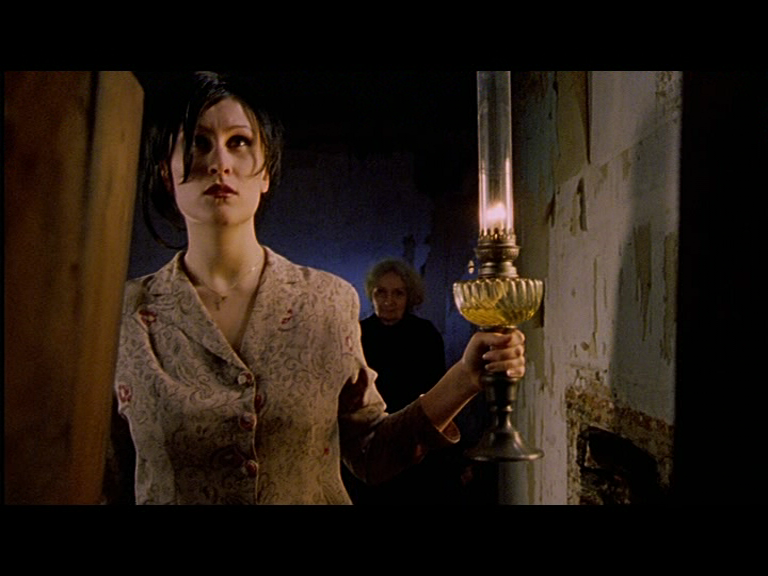
Encore Film's most recent addition to their splendid collection of Jean Rollins films is his 1980 La Nuit Des Traquees (The Night Of The Hunted). Long considered one of Rollin's weakest films, I was struck by how much this film has stuck with me since I first saw it several years ago. It is one of the most un-Rollin like films he ever made in that his typically Gothic setting is traded in for a more cold interior modernistic look. This film is often compared to Cronenberg's Shivers and I think that's pretty spot on, with both film's sharing a very chilly clinical feel.
Rollin's work stars the incredibly beautiful and talented Brigitte Lahaie and I feel that this is one of her finest performances, if definitely her most heartbreaking.
The plot centers around a group of people who have been affected by a radioactive leak and can no longer hold onto to any memories. As the film progresses the condition gets worse until they are literally just walking blanks. It's the plot itself and the lonely tone that Rollin so successfully gets that attracts me so much to this film. I have thought it is a bit like Robbe-Grillet re-writing Memento. It is absolutely a very flawed work that is hampered by a minuscule budget and extremely tight shooting schedule. Lahaie points out in one of the disc's interviews that she worked longer for four minutes screen time on Philip Kaufman's Henry and June than the she did for Rollin's whole feature.
The film, despite it's flaws, features some of Rollin's most poetic scenes. The love scene between Lahaie and the young man who finds her wandering at the film's beginning might seem overly prolonged, but when you realize that her character is desperately trying to find something her memory can hold onto it becomes one of the most poignant scenes in Rollin's whole oeuvre. The film's final moments of the two lover's extended walk is equally haunting and sadly triumphant in that they are joined together as an equally clean slate.
Dominique Journet is effective as Lahaie's friend who is also infected and several familiar faces from Rollin's past appear throughout the film.
Encore's new special edition continues the great work they are doing with Rollin's catalogue. The gorgeous slip case houses two dvds, the first holding just the film in it's original French language with no less than eleven subtitle options (including English) and the second disc houses the generous extras.
The extras consist of two informative audio commentaries, one featuring Lahaie and the other with just Rollin. Lahaie is obviously enjoying watching the film again and mentions in her interview that she had just recently seen it. Rollin remains as fascinating as ever and it's always a pleasure to listen to him reminisce and he is very open about the films flaws as well as strengths.
The disc also features interviews with Lahaie, producer Lionel Wallmann and a fascinating talk with Alain Plumey. The Plumey interview also showcases clips of his Museum of Eroticism that he has obviously worked very hard on and is very passionate about. A nice photo gallery is also included with selections from the minimalist score by Philippe Brejean, working here under the name of Gary Sandeur. Rounding out the extras are some trailers and some pretty unnecessary harder outtakes of two love scenes, neither involving Lahaie. Finally a very nice 32 page book is included, only about half the size of the earlier Encore releases but still a lovely thing to have.
Encore's transfer is much more crisper and colorful than the previous Redemption disc from several years ago. Some grain is still evident but this is the best this film has ever looked and it is a fine print, it's actually nice to see that this film hasn't been overly digitized.
Rumor has it that this is the last of the Rollin special editions from Encore, I really hope they continue with his catalogue as possibly his finest film Fascination is still in the wings. Encore should be commended for putting together a really great special edition of a very flawed but important film to one of France's most iconic auteur's.

Jean Rollin Returns


French director Jean Rollin looks set to return at least one last time with The Transfigured Night. This film has been rumored for several years since he completed his last film, Fiancee Of Dracula. Rollin's health has reportedly been very poor, so from what I can make of from the link below it seems that shooting for his new film has been sporadic. This seems to be an on the set report and I can't tell whether the film has been completed and am not sure when it will be released. Star Ovidie mentioned she would be playing the lead as far back as 2004 and Rollin has very nice things to say about her at the bottom of this link.
If the filming hasn't wrapped hopefully Rollin will be able to finish it without difficulty. A new Rollin film is always a welcome event and this film has been announced as his last. I think the striking Ovidie is a splendid choice for his work and I'll look forward to following any news of this film. The link below will take you to the French article with some on-set photos (I have posted one of Rollin directing Ovidie). Comments from anyone with news on this film would be appreciated and thanks to the Mobius film board for linking the information in the first place.

http://www.clubdesmonstres.com/jeanrollinmovie.htm

Who's That Lady?

Note: I have since changed the picture in teh template above, but invite you to please read my tribute to Mariana that is linked below.

I have gotten several emails in the past couple of weeks inquiring as to who the striking lady is that is currently gracing my template above. For those who don't know and are wondering, that is Italian actress Marina Pierro in a still from Walerian Borowczyk's THREE IMMORAL WOMEN. Pierro is best known for her wonderful work with Borowczyk, surely one of the great partnerships in all of modern cinema, and she can also be seen in Jean Rollin's unforgettable THE LIVING DEAD GIRL and briefly in Dario Argento's SUSPIRIA.
I wrote a bit on Marina early on in this blogs history so if anyone would like to read that tribute please click here.

Marina's official website has some of the most breathtaking pictures online and it is linked above as well. I plan on switching the template design pretty regularly but I must admit that this one hasn't even began to grow old yet. Thanks to the people who inquired.

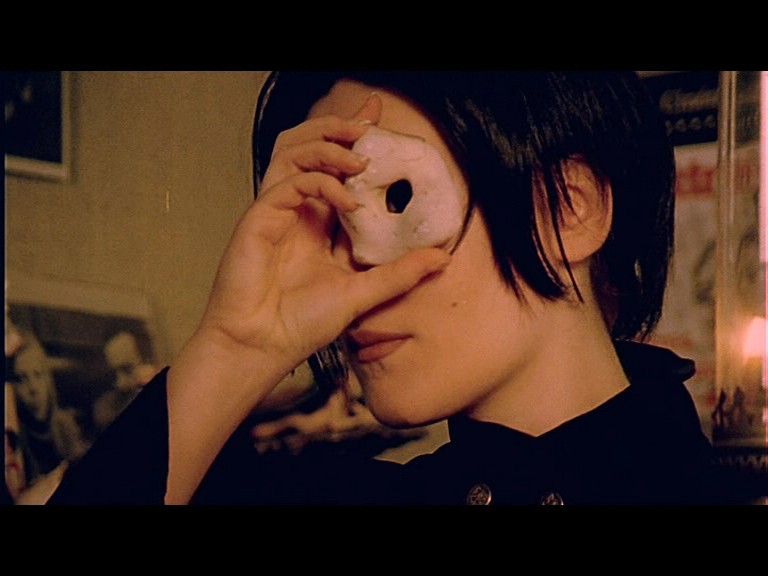
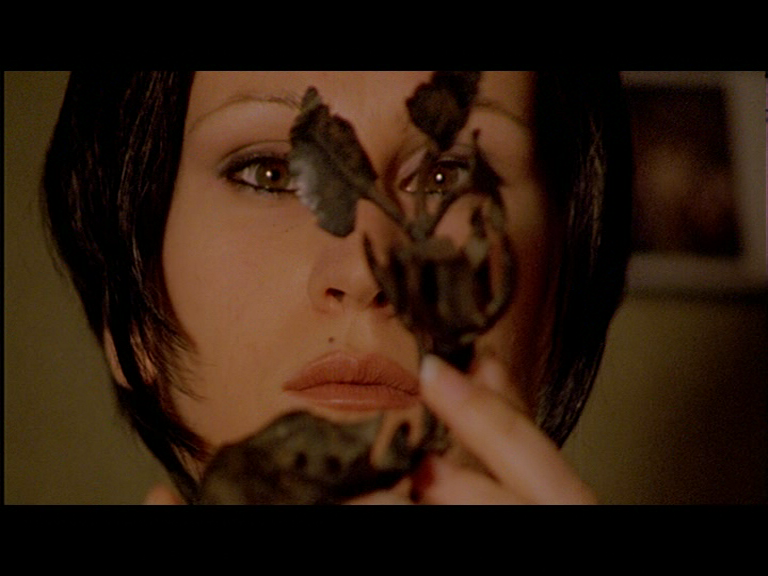
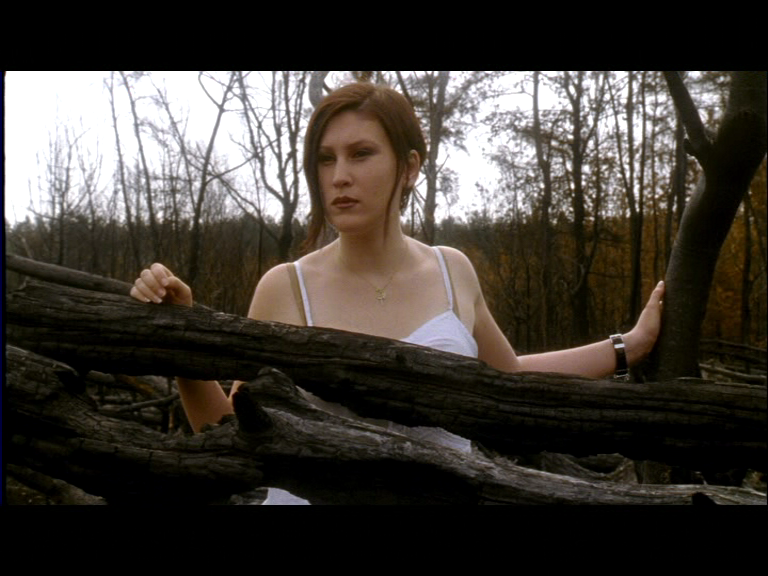
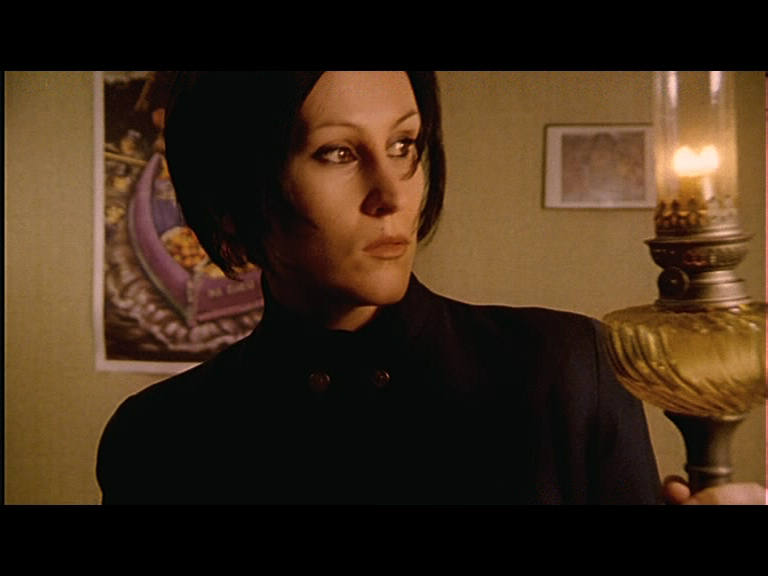
Stills From Jean Rollin's La Nuit Des Horloges


I am greatly anticipating getting to see Jean Rollin's reportedly final film La Nuit Des Horloges, which unfortunately has still yet to get any kind of firm US or UK release date on DVD that I know of.

The film is currently playing at French Festivals and judging from the online reviews I have read it sounds like a wonderful career summation from the mighty Rollin.

While looking up some pictures yesterday on Photobucket I came across a series of a few dozen or so stills from the film so I wanted to provide the link as well as a few favorites here.

Ovidie has a wonderfully unique screen presence and she looks ideal for a Rollin film in these images. To view the complete set as well as some great recent photos of Jean, please visit this link.

Thanks to the person who captured these frames and posted them.

A Project Worth Taking On

Rollin
Just over twelve years ago, courtesy of Video Watchdog #31, I fell in love with the cinema of French director Jean Rollin. Since discovering his work, his films have been a real passion of mine. I've been lucky collecting Rollin over the last dozen years as I have managed to get everything from the Laserdisc version of The Living Dead Girl, to the rare CD collection of his soundtracks, to the amazing limited edition autographed Virgins and Vampires book to almost all of the import Encore Box sets of his films.
I've been frustrated by the surprising lack of Rollin related sites online and have wanted to do something special for him since starting Moon in the Gutter a year and a half ago.
So coming in mid to late August will be a new project dedicated to the career of this most distinctive filmmaker, entitled Fascination: The Jean Rollin Experience. It will be set up like my Nastassja Kinski blog where I will be writing on all aspects of each one of his films including the soundtracks, promotional materials, as well as his actors and collaborators. I'm looking at this new endeavour as a rather epic term paper and will be drawing extensively from the wonderful Virgins and Vampires book (I have signed copy 294 out of 300!) as well as the exhaustive supplements on the Encore releases and will of course credit anything I use. The goal is, simply put, to create the most informative and visually exciting Jean Rollin spot on the web.
Help will be appreciated and credited so if anyone as any rare Rollin materials they would like to share please email me and let me know. I will be finishing up collecting the available Encore DVDs soon but will still be missing some of his short films, his French books and most of the films he did under the pseudonyms of Robert Xavier and Michel Gentil, so any help down the road will be much appreciated.
This new project will not affect Moon in the Gutter or Nostalgia Kinky but I will be either putting both How The Web Was Woven and Harry Moseby Confidential on temporary hiatus or will severely limit the posting. Harry Moseby will be the least affected of the two as it is mostly visual and it has a much bigger fanbase.
Fascination will begin in a few weeks and I must admit that I am excited about it. I hope it proves to be an informative and entertaining site for fans and that it might even convert some doubters.

Welcome to Fascination: The Jean Rollin Experience


I was first introduced to the remarkable cinematic world of Jean Rollin in the early part of 1996, thanks to a cover story in Issue 31 of Video Watchdog. I was 23 years old. Soon after I discovered the phenomenal book Immoral Tales by Cathal Tohill and Pete Tombs, which contains one of the still most fascinating and insightful articles on the work of Rollin ever published.
My first experience actually watching a Jean Rollin film was an unforgettable one, and it set in motion a love affair with his distinctive brand of film making that continues to this day. I was lucky that my first film of Rollin’s was one of his best, the extraordinary Requiem For a Vampire, and even though the version I saw was cut and compromised and titled Caged Versions (yes, this was the Something Weird Video VHS), I was still completely hypnotized and enthralled by Rollin’s style and the way that he photographed and framed his actors...and even more importantly the space around them.
Throughout the mid to late nineties I began seeing more of more of Rollin’s work, mostly in poor quality dupes from companies like VSOM and Video Screams. No matter the quality though, films like Shiver of the Vampires, The Demoniacs, Fascination and The Living Dead Girl blew me away. They were poetic, erotic, audacious and simply unlike anything else I had ever seen.
It wasn’t just the films I fell in love with but also the actors Rollin worked with again and again (including the unforgettable Castel Twins, Joelle Coeur and especially Brigitte Lahaie). I also fell in love with the very idea of Jean Rollin…a filmmaker who refused to compromise or stray from his singular vision no matter how many people and critics he would alienate along the way.
The last few years have been a very good time to be a Rollin fan, first with the Redemption DVDs and then with the amazing Encore box-sets…not to mention the return of Rollin as a filmmaker with such distinguished works a Two Orphan Vampires, Fiancee of Dracula and most recently The Transfigured Night. While Rollin has prospered on the home video market, I have felt that he has remained surprisingly under-represented online which is why I am starting this tribute to him.
So what exactly will this site be? Anyone who is familiar with my Nastassja Kinski site will recognize the format. I will go film by film in chronological order and will be offering my own reviews, articles on figures in front of and behind the camera, occasional outside critical reactions, and other notes related to the works. I will be quoting from the out of print book Virgins and Vampires as well as the exhaustive supplements from the Encore releases to create a commentary track of sorts as well. I will also be making this as visually pleasing as possible with many exclusive screenshots and wallpapers.
What this will not be is a theoretical look at possible various psychological workings of Jean Rollin’s cinema. If this was being offered as a college course it would be listed under the film history category and not film theory…there are other far more astute viewers who can offer these kinds of viewpoints so I won't bother. Honestly, heavy film theory doesn’t interest me much…nor is it something I claim to be any good at. I think approaching these films in the more factual and historical manner I am going to is more than appropriate.
I suspect this will site be a bit slow going as work, school, my personal life and my other writing at Moon in the Gutter and Nostalgia Kinky will continue, but I promise to get through all of Rollin’s major works (and hopefully some of the more hidden pieces). I hope it proves an interesting trip and thanks in advance to the people who will choose to travel along with me. My first post, on Rollin's 1958 short Les Amours Jaunes, will appear soon.

...

Fascination: The Jean Rollin Experience Launches

Rollin 1

I'm very pleased to announce that my Jean Rollin project, Fascination, has begun. I have just posted my look at his first short, 1958's Les Amours Jaunes and invite everyone interested over to check it out. I appreciate all the emails I have gotten over the past few weeks in regards to the blog and I hope it proves an enjoyable one.

Also, I am looking to build a link list of friends and fans at Fascination, so if you have a site that you would like linked there just drop me an email or leave your address in the comments section.

I have just started a second undergraduate degree program (History) so posting might be a little slow going but I promise to get through Rollin's entire career. Thanks again to everyone for the support over there and of course here at Moon in the Gutter.

Wallpaper (Les Pays Loins)

The Cinema of Jean Rollin: Les Pays Loins (1965)


Between 1958’s Les Amours Jaunes and 1965’s Les Pays Loins, Jean Rollin would shoot two short films (Ciel de Cuivre and Un Cheval Pour Deux) and would begin work on a feature (L’itineraire Marin) that would never be completed. I have unfortunately not seen the two completed shorts, which is why I am skipping ahead in our story to the rather remarkable Les Pays Loins, a sixteen minute work that shows Rollin stylistically and thematically gearing up for his famed feature films that would begin rolling out just a few years later.

Les Pays Loins (The Distant Lands) got its start, title wise, as an unpublished novel Rollin had completed in the early sixties. He recalled to Peter Blumenstock in Virgins and Vampires that the book failed to find a release due to the fact that the publisher, Eric Lasfeld, had died before it got to the printing stages. A frustrated Rollin turned his attention back to the idea of filmmaking and began shooting Les Pays Loins. Since Rollin admitted the short “just used the title” of his unpublished book to Blumenstock, and that it had “nothing to do with (the) novel” which he recalled “was basically written as an essay.", it is hard to say what thematic elements the book and unfinished film share.

Two facts are well worth pointing out though in regards to Rollin in this period. One is his increasing distancing from the French New Wave that had proved so popular in the late fifties and early sixties. Rollin mentioned to Blumenstock that he had come in contact with most of the movement’s shining lights at the Henri Langlois Cinematteque but he stated that The New Wave “was not exactly my cup of tea.” So, Les Pays Loins can be looked upon as yet another major artistic step in Rollin separating himself from the popular and acclaimed cinema of the time.


The second item worth noting in regards to Les Pays Loins is the fact that Rollin had shot a documentary on Spain’s controversial dictator Generallisimo Francisco Franco just a year before in 1964. This work, entitled Vivre En Espagne (Life in Spain) showed clearly Rollin’s position as a member of the left, something he admitted to Blumenstock. It is this attitude that fuels Les Pays Loins, a film that slyly confronts many of the racist attitudes in France prevalent in the mid sixties especially towards the Algerian people.


The shot on 35 MM Les Pays Loins is a challenging work and an accomplished one that stylistically shows how much Rollin had developed as a filmmaker in the seven years since Les Amours Jaunes. A professional piece of filmmaking highlighted by Rollin’s remarkable sense of space (something that would he would use expertly in all of his films to come), Les Pays Loins is a lovely looking black and white production that is at times mysterious, moving and never less than intriguing.


Focusing on one of the major thematic obsessions relevant in many of his greatest films, that of isolation and the idea of being lost, Les Pays Loins tells the story of a French couple seemingly trapped in a strange city surrounded by people they can’t understand. It would be a storyline Rollin would return to later in such works a Night of the Hunted and Lost in New York, and a subject that would haunt many of his works ranging from Requiem For a Vampire to Two Orphan Vampires. Few filmmakers can capture the feeling of wandering loss like Rollin and Les Pays Loins seems to be ground zero for this striking pattern that connects many of Rollin's greatest works.


Rollin states in the booklet accompanying Encore’s release of The Demoniaques that filming on Les Pays Loins took place on “Saturdays and Sundays” at “the old Belleville District”, and watching the film today it is hard to imagine anyone capturing the fading and at times destroyed area any better that Rollin does here. From the opening frames on we are treated to an astonishing snapshot of what this district, that doesn’t exist anymore, looked like in the mid sixties and Rollin doesn’t shy away from presenting the most beautiful sections to the most run down. Les Pays Loins is a remarkably sensitive piece of work, one that simultaneously highlights the loss of the community as well as its obviously beautiful aspects.


Recalling his small crew in The Demoniaques booklet, Rollin states that his friend Pascal Fardoulis played the main actor while “Alain-Yves Beaujour was working as assistant…and Jean-Denis Bonan (was) the script girl.” He also recalled the set would be filled at different times with colleagues and friends including the singer Ben Zimet, the writer Clement Lepidis (who would bring his son Roger) and Rollin’s future literary collaborator Nicolas Devil. One gets the idea that the filming of Les Pays Loins was a collaborative effort made by a group of friends, artists and family members, all held together by the vision of Jean Rollin and a shared passion for cinema. Rollin would state in the Encore booklet that “At that time, we could all believe in the cinema” and it is that thought that controls every adventurous frame of Les Pays Loins, a well thought out and adult work that is as celebratory as it is lamenting.


The IMDB lists the cinematographers of Les Pays Loins as Gerard de Battista and Georges Delauney, but the Encore booklet contradicts this and lists Gilbert Gibdourney as the man responsible for the film’s striking look. My guess is that the look was achieved though a combination of several efforts with the veteran Delauney (listed as technical consultant) offering suggestions on how to accomplish the rather complex ideas in regards to lighting and framing Rollin was attempting. On Encore's Audio Commentary for the film, Rollin states it was in fact Battista who performed most of the cinematography, and he praises the look of the film he helped to accomplish.


Joining Fardoulis (who would later appear in Rollin’s second feature The Nude Vampire before his untimely death) are the mysterious and lovely Julie (who Rollin in the Encore booklet admits everyone on the set was infatuated with but who has since fell very much from view) and in a smaller role is Ben Zimet, an actor who would later feature in Rollin’s The Demoniaques as well as Lars Von Trier’s Europa. The cast member who has had the most credits though is Bernard Papineau, a talented actor who has worked with Claude Chabrol several times and would appear in Rollin’s Night of the Hunted and The Runaways in 1981. Tragically the young actress who appeared in the apartment scene (actually Rollin's father's apartment) named Nadine Ninio died shortly after the film wrapped due to a drug overdose.


Rollin recalls on Encore's commentary that his film that centered on a "strange universe" where "everyone speaks different languages" failed to find any sort of distribution in the mid sixties, and wasn't seen by the public until a retrospective four decades later. Encore's excellent The Demoniaques box set marked the first time the film had been available for the general public and, along with the audio commentary, it also includes a photo gallery. The short film also appears as an extra on Redemption's import Lost in New York disc as well as their Region One The Iron Rose DVD, although I have heard certain copies of this disc have a glitch at the end.


Finally the film includes a fantastic jazz based score that is simultaneously catchy and haunting. I have not been able to determine who composed and performed the remarkable music as neither the Encore liner notes mention it nor does the IMDB.

Jean Rollin's Les Pays Loins at Fascination

I have just posted a long look at Jean Rollin's fascinating 1965 short film Les Pays Loins at Fascination: The Jean Rollin Experience for those interested. This brings me up to his first feature film, The Rape of the Vampire, which I will begin looking at soon. Thanks to the people who have visited and continue to visit my youngest side project...the support has been much appreciated.

Jean Rollin Trailers: Le Viol Du Vampire (The Rape of the Vampire)

Here is the French Trailer for Rollin's first feature film, Le Viol Du Vampire (The Rape of the Vampire).

Jean Rollin Home Video Designs: Le Viol Du Vampire (The Rape of the Vampire)


Jean Rollin Posters: Le Viol Du Vampire (The Rape of the Vampire)


The stunning original posters for The Rape of the Vampire designed by Phillipe Druillet.

Jean Rollin Wallpapers: Le Viol Du Vampire (Set One)


Jean Rollin: The Collaborators (Ariane Sapriel)


I was hoping to do a full post on the incredibly lovely Ariane Sapriel, a beguiling French actress who makes a big impression in Rollin's first feature The Rape of the Vampire. Unfortunately I have been able to find out next to nothing about this lovely and very striking woman with incredibly hypnotic eyes.
She has only two films listed to her credit at IMDB (this one and Alain Robbe Grillet's legendary Trans Europe Express) and this magazine cover advertising Rollin's film is the only image I could find of her online (courtesy of Germany's eBay).


A huge thank you to the fabulous blog Zines for the better scan of this cover!

Otherwise I can't find anything. Rollin mentions on the essential commentary on Encore's set of Le Viol Du Vampire that he remembers her as quite "charming" but as a bit of an "outsider". He also recalls how Ursulle Pauly delighted in hitting her for real in one of the film's most vicious moments, a story that probably says a lot as to why Sapriel never worked for Rollin again (and apparently never shot another film period).

Still, I find her quite captivating and regret that I can't find any more information on her. Surrounded by quite an extraordinary cast of characters in Rape of the Vampire, she really stands out and gives an extremely brave and effective performance.

Jean Rollin Wallpapers: Le Viol Du Vampire (Set Two)


Jean Rollin: The Collaborators (Ursule Pauly)


(One of several images of Pauly that appears in the supplemental material on Encore's essential Le Viol Du Vampire set).

Outside of a couple of little tidbits on Encore's audio commentary for The Rape of the Vampire, Jean Rollin has very little to say about actress Ursule Pauly even though she would work again with him on his second feature, La Vampire Nue.
Pauly is a very captivating figure in Rollin's debut film and she would be one of the only members of the cast who would have several other further credits on her resume after wrapping the production.
Pauly, who I have been unable to find any real background information on, made her debut in a very small role in the 1968 biker flick The Wild Racers, a hard to come by film starring Fabien and the always splendid Mimsy Farmer. Rollin's film marks Pauly's second production and she's very memorable in a fairly large role. One of the first great beauties Rollin would shoot in his career, Pauly has a refreshingly natural quality about her and the camera absolutely loves her.
After shooting La Vampire Nue for Rollin in 1970, Pauly became a fairly in demand actress in French exploitation and shot several memorable productions in the next year. First up is Claude d'Anna's La Morte Trouble (Death Disturbs), which reportedly features one of Pauly's largest roles although I can't verify this as I haven't seen it. Next up is perhaps Pauly's most famous work outside of the Rollin films, Bruno Gantillon's very Rollin like Girl Slaves of Morgana Le Fey (a film which also features Rape of the Vampire's Solange Pradel). Pauly's role isn't all that substantial in this production but she again proves very memorable and the film, currently available on a splendid special edition DVD from Mondo Macabre, is well worth tracking down.

Seemingly poised on what looked to be a successful career, Pauly apparently only shot two more productions before falling out of view. These are Jacques Scandelari's striking La Philosophie dans le boudoir (Beyond Love and Evil), which I saw years ago and wish I had a copy of, and Jean-Francoise Davy's La Débauche ou les amours buissonières (Dirty Lovers), a film which features Jess Franco regular Alice Arno.
No other credits are listed for Pauly and Rollin doesn't mention her in any of the materials I have. Any other information on what happened to this beguiling actress would be much appreciated.

Notes on the Theatrical Screenings of Le Viol Du Vampire


(One of several images of the initial theatrical showings of Le Viol Du Vampire available on the supplements of Encores beautiful box set).

To say that the initial theatrical showing of The Rape of the Vampire caused a scandal in France is a major understatement. Released in 1968, one of the most turbulent years in the countries history, at the height of the most ferocious student riots and around the time of the infamous closing of Henri Langlois' famed Cinematheque Francaise, Le Viol Du Vampire was either looked upon as an ultimate act of revolution or a total disgrace. I thought gathering a few key quotes on these initial engagements from some essential Rollin sources would help put the film in perspective.

"We organized a premire in the film theater of the Musee de l'homme. A big crowd gathered and more than a hundred persons had to stay outside. The screening enduced nothing but bursts of of laughter from the audience."
-Jean Rollin, Le Viol du Vampire Encore Booklet-

"The lights go down and the opening credits roll. Le Viol du Vampire...someone in the cinema laughs out loud. Someone tells them to shut up. More voices. More comments."
-Cathal Tohill, Pete Tombs, Immoral Tales-

"Hidden in the projection room, I was suffering in silence and feeling very hurt."
-Jean Rollin, Le Viol du Vampire Encore Booklet-

"There was a huge scandal, which hasn't been forgotten...After that film came out I was stunned by the hostile, even aggressive response, which followed me for years no matter what I did."
-Jean Rollin, Virgins and Vampires-

"Suddenly the door to the auditorium flies open. Lights flood in, drowning the black and white images on the screen. There's a whiff of something acrid. Tear gas."
-Cathal Tohill, Pete Tombs, Immoral Tales-

"Because it was May 1968, a time of free spirits and audacity, I believed that something this crazy would be seen in a favorable light...the reverse happened."
-Jean Rollin, Virgins and Vampires-

"Then the noise of Police sirens and the clatter of stones deflected off shields...Le Viol du Vampire was one of only two new films that opened that week in Paris. Audiences flocked to see it. The spirit of insurrection was in the air. People were looking for something new and startling...they certainly found it."
-Cathal Tohill, Pete Tombs, Immoral Tales-

"The film was released in four cinemas...it was a huge scandal...people were hissing, roaring that they had been made a fool of."
-Jean Rollin, Le Viol du Vampire Encore Booklet-

"Not sure whether to laugh, scream, or ask for their money back, the crowd howled out their disapproval. And it wasn't just vocal: shoes, fruit and empty cans all found their way towards the screen...and before three weeks were out, more than forty five thousand people had been to join the riot."
-Cathal Tohill, Pete Tombs, Immoral Tales-

"Some members of the audience waited for me the whole evening just to give me a hammering. I was astounded by such reactions."
-Jean Rollin, Le Viol du Vampire Encore Booklet-

"All the newspapers sent reviewers to see the film. They all hated it. The effects on Rollin's subsequent career were long lasting...the events of May 68 cast a long shadow, and it was many years before sympathetic viewers began to latch on to what Rollin was really trying to do."
-Cathal Tohill, Pete Tombs, Immoral Tales-

"Honestly I don't care (about the stereotyping as a director of erotic vampire films). Some people Say I'm a genius, other consider me the greatest moron who ever stepped behind a camera."
-Jean Rollin to Peter Blumenstock in Video Watchdog #31 and Virgins and Vampires-

Jean Rollin Wallpaper: Le Viol Du Vampire (Final Set)


Jean Rollin: The Collaborators (Francois Tusques)

Easily one of the most unforgettable aspects of Jean Rollin’s first feature film Le Viol Du Vampire (The Rape of the Vampire) is its extraordinary score courtesy of famed Parisian Jazz Musician Francois Tusques. Swirling free-jazz, bits of classical romanticism and more than a trace of Avant-garde minimalism fill Tusques’ score, and it is indeed an unforgettable work that matches Rollin’s iconic imagery from beginning to end.
Born in Paris in 1938, Tusques began to make waves on the French music scene in the early to mid sixties as one of the key practitioners of the Free Jazz movement. Working with such famed and acclaimed French musicians like Bernard Vitet, Beb Guérin, Michel Portal, and François Jeanneau, Tusques quickly became known as one of the key French players of the day, and his albums Free Jazz and Le Nouveau Jazz are widely considered two of the most important French Jazz albums of the sixties.
Writing on his important collaboration with American drummer Sunny Murray in 1968 at the height of the student protests, TransAtlantic Magazine States that Tusque’s “infectiously repetitious pianism” blended in “perfectly with Murray’s pulsing washes of sound” and the two helped form a potent and haunting soundtrack to that most turbulent year in France.
Tusques was an ideal choice to compose the music for Rollin’s wild first feature, a work that very much resembles one of the unrestrained improvised pieces Tusque might have been playing in the period. Interviewed on Encore’s box set of Le Viol Du Vampire, Tusque recalls very little of the making of the film but he seems to have good feelings concerning both it and Rollin…he also seems quite thrilled with his cameo with his band that comes late in the film.
“The Apex of his ‘Out’ Recordings” (TransAtlantic) Intercommunal Music landed in 1971 and is widely considered his key work…an exhilarating suite broken up into several pieces that solidified his position as one of the great modern French players…a role that he continues to play to this day.
Unfortunately Tusque has recorded very little for the screen, with Le Viol Du Vampire marking his only notable soundtrack. He scored a short Bernadette Lafont film in 1968 and has since only worked sporadically in documentary work, a fact that makes his remarkable soundtrack for Le Viol Du Vampire one of the great cinematic one hit wonders.
Tusque’s soundtrack album for Le Viol Du Vampire has been released on CD according to Encore’s DVD set but I have been unable to track it down. Pity as I am sure it would reflect what TransAtlantic summed up about the remarkable Francois Tusque’s career…that it is indeed “a joyous revolution”.

Moon in the Gutter (Month By Month)

BLOG CREATED, EDITED and WRITTEN BY JEREMY RICHEY: Began in DEC 2006. The written content of all posts (excepting quotes from reviews, books, other publications) COPYRIGHT JEREMY RICHEY.