I AM CURRENTLY WORKING ON EXPANDING AND REVISING SOME OF THE BEST PIECES FROM MOON IN THE GUTTER AT MY OFFICIAL SITE, NOSTALGIA KINKY. THIS NEW PROJECT CAN BE ACCESSED BY CLICKING THE PICTURE BELOW.
For the past couple of weeks I have been looking at James Toback's EXPOSED at my Nastassja Kinski blog. My posts about it have been making me think on several of his other films and I thought I would write a bit on one that premiered ten years ago this month. TWO GIRLS AND A GUY (1997) is perhaps the ultimate James Toback film. It isn't his best, FINGERS (1978) holds that position and I am not even sure it his second best as his more recent WHEN WILL I BE LOVED (2004) is a searing and important work. Still no film projects Toback's sexual and spiritual politics better than TWO GIRLS AND A GUY and it remains one of the nineties most interesting if problematic features.
"I have lied about nothing except sexual fidelity." -Blake Allen, TWO GIRLS AND A GUY-
TWO GIRLS AND A GUY tells a pretty simple story. The two girls of the title, Heather Graham and Natasha Gregson Wagner, meet outside of a locked apartment where they are each awaiting for their boyfriends to return from a trip. They quickly find out that their boyfriends are actually the same guy, self obsessed actor Blake Allen (Robert Downey Jr. in a career best performance) and they break into his apartment and wait to confront him on his infidelity. He returns and attempts to make them understand his lies and deceits. While TWO GIRLS AND A GUY takes place almost entirely in Downey's apartment, it never feels overly stagy which is quite a remarkable feet on Toback's part. His direction of the film is very assured and unfussy. The problem with TWO GIRLS AND A GUY is mostly in Toback's script which is a at times brilliant but often feels unapproachable and ultimately unrealistic. As kinetic and convincing Robert Downey Jr. is in the part of the ego-maniacal Blake Allen, there is never a moment in the film where I truly believe that the two girls not only come to understand his motivations for cheating on them but also come to accept them. TWO GIRLS AND A GUY's script is maybe too confessional and has perhaps one too many excuses. Since Toback often describes his work as autobiographical, TWO GIRLS AND A GUY often feels too one-sided. I never really feel I come to understand the two girls of the title, and at times I don't buy them as fully rounded and developed characters. It is easy for Blake to play and sing YOU DON'T KNOW ME in the hopes that it somehow explains away a life of lies and deceit, but ultimately I can never get past the fact that this guy has been caught in something horrendous and the film gives him too much of an easy route out. Toback's other best films don't offer simple solutions. There isn't an easy explainable way out for Keitel in FINGERS or Kinski in EXPOSED. His scripts for those films were unapologetic in how much they put their lead characters through. TWO GIRLS AND A GUY is different, it feels too easy. I can buy perhaps the forgiveness and sympathy the two come to have for Blake, but I can't accept the understanding and condoning. At the center of Toback's film is Downey's performance. It is a raging, arrogant and overwhelming performance that he hasn't equaled since. Without Downey, Toback's script would have completely fallen apart but Downey is so good in this role that you almost accept the impossible thing Toback is asking you to. The casting of the two girls is a little more questionable. Natasha Gregson Wagner, one of Natalie Wood's daughters, is a good actress but I think Toback's film was a little much for her at this point in her career. While she had many films under her belt, she had never been in anything quite as heavy and intense as this film. It also hurts that Toback's script asks her character to go through an arc that would probably never happen. It isn't a bad performance but her inexperience shows, perhaps that is what Toback was going for but it doesn't entirely work as he hasn't given the character enough life. Heather Graham is more of a complicated issue. An often maligned actress, Graham is capable of doing fine work, as anyone who has seen DRUGSTORE COWBOY or BOOGIE NIGHTS can attest to. The problem with her here is that she comes across as so strong at the beginning, that I can't give into her motivations towards the end. Again, I blame this more on Toback's script than I do Graham. The girls in the film just don't have the life and draw that Downey does and it makes the work falter. The film does has some of the most memorable moments in Toback's canon. A startling scene with Downey falling apart in front of a mirror, the ferociously moving sex scene between him and Graham and the final shot of the film that is one of the most memorable of the nineties. There is a lot to love in TWO GIRLS AND A GUY even if it is far from a perfect film. I saw TWO GIRLS AND A GUY in Lousiville during the early spring of 1998 in its original NC17 cut. I was, with some reservations, really impressed with it. It is a film I like revisiting, although I find that reviewing just add to my frustrations that the film could have been even more than it finally is. It is an interesting film that points out that we all have little, and at times dangerous, acts we play with people. It reminds me that the song, YOU DON'T KNOW ME, that repeats throughout the film is true for anybody who lives and loves. It is something Toback has been reminding us of for more than thirty years now in his always remarkable, and sometimes frustrating, career.
Considering the guy looked like he was on the point of total self destruction just over five years ago, there is something positively triumphant about the performance of Robert Downey Jr. in Iron Man. I know I am a little late to the party here on Iron Man but I had to post how impressed I was by the film and specifically Robert’s performance as Tony Stark. While the film falters a bit in the final climatic section, I can’t remember the last time I enjoyed a summer blockbuster so much. Jon Favreau’s direction is really spirited and manages to find a nice balance between the thrilling older comic book adaptations I grew up with like Richard Donner’s Superman and the more modern CGI fueled films that typically just find alienating. Iron Man is a real winner on nearly all counts. Featuring possibly the best cast of the year including Downey, a menacing and bald Jeff Bridges, Terrence Howard, the voice of Paul Bettany and a radiant Gwyneth Paltrow, Favreau’s film is a rare special effects spectacle that also works as a human drama. I felt really invested in the characters here and that’s something that rarely happens in these types of films anymore. Of course the film is a special effects feast and I found them to also be above the norm, with them only faltering slightly in a climatic fight sequence that plays out as the picture's weakest point. Otherwise though they are really thrilling and I totally believed that was Robert Downey Jr. in that Iron suit and not just a faceless design that originated on someone’s computer monitor. For all the films virtues, including some really sharp and thought provoking commentary on the ramifications of weapons manufacturing, the major selling point of the film is indeed the work of Robert Downey Jr. One of the finest American actors we have, Downey delivers one of his best performances as Stark and he looks the model of good health. I found it quite a moving experience watching Downey in this film and this performance, combined with his scene stealing work in David Fincher’s Zodiac, marks one of the most successful and much welcomed comebacks in quite a while. I’m not all that familiar with the comic book Iron Man so I can’t really comment as to how faithful the film is but it worked extraordinarily well for me and I hope they deliver more films in the series. The film’s final defiant moment alone (in which Black Sabbath’s own “Iron Man” is used to great effect) made me want to stand up and cheer, even if it was as much for Robert Downey Jr. himself as for Jon Favreau’s smart, exciting and invigorating film.
Twenty-one year old Jack Jericho has a way about him. A teacher and wordsmith with a talent for charming seemingly any woman he meets, Jack’s ability with the opposite sex helps cloud the many failures in his personal life, such as his inability to truly connect with anyone other than on a sexual basis. Like a ticking time bomb destined to eventually implode, Jack Jericho suddenly finds himself feeling something very real when he meets young red-head Randy Jensen, the one girl who has the ability to tell him no.
Of the many great, and near-great, films in writer and director James Toback’s canon, 1987’s The Pick-Up Artist is perhaps the easiest to overlook. Running a slim 75 minutes without credits and reeking of studio interference, The Pick-Up Artist still feels frustratingly incomplete but for at least half its running time it is one of Toback’s great films, a funny and frenetic work propelled by a startling performance by a young Robert Downey Jr., an actor made for Toback’s ongoing portraits of damaged male psyches.
Released a near decade after Toback’s remarkable debut feature Fingers and the follow-up film to 1983’s highly underrated Exposed,The Pick-Up Artist fits in nicely with the writer and directors clearly autobiographical works and can be viewed as a light (if penetrating) companion piece to 1997’s Two Girls and a Guy, a striking film also starring Downey. The collaborations between Toback and Downey are among the most noteworthy, if unnoticed, in modern American cinema and the two make a brilliant and bruising team. With this in mind, view The Pick-Up Artist as the troubling Chapter one of what has turned into a remarkable story.
Shot beautifully by legendary Gordon Willis in New York and Atlantic City in the spring of 1987, The Pick-Up Artist manages to be both of its time and separate from it. One can imagine the studio, 20th Century Fox in this case, pulling their hair out due to Toback’s inability and unwillingness to make the quirky brat pack teen comedy they most likely envisioned The Pick-Up Artist to be. You can also feel what was probably a real struggle for Toback as well watching the film, as his hard R-rated vision has obviously been compromised into a PG-13 film. For all of its charms, and there are many of them, The Pick-Up Artist is a film marred by a real struggle between an artist with an extremely personal vision and men only interested in the money, and that conflict really damages what should have been a really masterful film.
Working with one of the best casts he ever had at his disposal, Toback had a real shot at a genuine breakthrough film with The Pick-Up Artist. Toback needed a strong supporting cast to balance against Downey’s astonishing scene devouring performance, one of the first great ones in a fascinating career filled with them. Particularly memorable are Dennis Hopper as Randy’s deep in debt and pretty much always hammered father Flash and the great Danny Aiello as Jack’s smooth-talking mentor Phil. Future Sopranos stars Tony Sirico, Tony Cucci and Lorraine Bracco are on hand for small but memorable roles, and the prolific Mildred Dunnock makes a final film appearance as Jack’s aging mother. Other memorable faces include a young Vanessa Williams in a funny failed pick-up bit and SNL alumni Victoria Jackson in a successful one. Also be on the look out for the much missed Victor Argo and Joe Spinell in small roles as well.
One has to wonder what the impact of casting Molly Ringwald in the role of Randy had on the way the studio viewed and handled The Pick-Up Artist. Toback has a knack for casting actors against type in his films, check out wonderful Neve Campbell’s startling turn in When Will I Be Loved, and his instincts about Ringwald were right. She’s quite good in the film and her Randy Jensen stands as one of her most memorable roles, but audiences weren’t ready to see her in Toback’s universe. This was after all just a year after Pretty in Pink, so the temptation for the studio to try and force a brat-pack stamp on the film probably wasn’t a surprising one. Ringwald’s career began to falter after The Pick-Up Artist’s failure with both the public and critics, which is a real shame as she shows herself as a real sharp and intelligent actress here.
Robert Downey Jr. owns The Pick-Up Artist though and it is no surprise that he would go onto be one of Toback’s main go-to actors. From the first moments in the film, where the live-wire Downey practices his pick up lines in front of a mirror (an image Toback and Downey would return to oh so memorably in Two Girls and a Guy) to the film’s final moments where Jack seems momentarily destroyed, Downey is simply mesmerizing. It’s one of those hold your breath performances that is such a real pleasure to watch. While 1987’s Less Than Zero might have done more for Robert Downey Jr’s career, The Pick-Up Artist is the unpolished gem that really got everything rolling for the mega-talented young man.
The Pick-Up Artist, with its many memorable shots of New York set to Toback’s typical fifties soundtrack (although The Beastie Boys make a memorable soundtrack appearance as well), finally falls apart in its last section. Everything from the weak finale to the obviously re-dubbed dialogue (no doubt due to the studio wanting a PG-13) does an unbelievable amount of damage to what had been a really fascinating work. The Pick-Up Artist is finally as fractured as its title character, but one wonders what it would have ultimately been like had Toback been left the fuck alone.
The Pick-Up Artist had a solid opening weekend but the critical blasting (Roger Ebert especially crucified the film with a brutal half star rating) took its toll and it failed to make back its budget of 15 million. A bruised James Toback wouldn’t make another feature for a decade, but Two Girls and a Guy marked a real resurgence for the really gifted artist, and I am so glad Robert Downey Jr. was the actor that helped with that notable comeback.
The Pick-Up Artist might be too compromised for some viewers, and it is ultimately an easy film to pick apart, but to my eyes there is something really great about this beat-up little film. For Robert Downey's Jr.'s magnificent and strangely haunting performance alone, I will take it over most of the 'great' films from 1987 you care to name.
For another look at The Pick-Up Artist, may I recommend this terrific piece by Brad Stevens, the extremely well-regarded author of the essential Abel Ferrara: The Moral Vision.
I am out of town right now for my birthday, and wasn't planning on writing this weekend, but I did want to post a couple of quick thoughts on Iron Man 2 since I was so over the moon about the first film...a masterful work that has become one of my favorite movies from the past several years. First up, Iron Man 2 is not the film the first one was but I didn't expect it to be. Comparisons aside, Iron Man 2 is quite a splendid follow-up that trades in much of the emotion and character development of the first film for some truly astonishing action sequences...sequences that all manage to feel incredibly modern without losing the grittiness that separated the first film from the majority of the comic-book superhero adaptations of the past decade. While I greatly enjoyed the quite explosive (and strikingly seamless) effects found throughout the new adventures of Tony Stark and crew I was mostly taken, like I was in the first chapter, with the performances. Particularly watching Robert Downey Jr. and Mickey Rourke, two favorites who couldn't even even get insured in the recent past, square off in the summer's biggest film was especially sweet. My favorite scene of the film is indeed the moment Rourke and Downey meet and all I could do was marvel at two such powerhouse actors and icons sharing the screen together. Other cast members give Iron Man 2 a charge as well although none are used quite as good as Rourke and Downey. Scarlett Johansson is breathtaking and spectacular as Black Widow Natalie Rushman, but she is ultimately underused and frankly needs her own film. I also couldn't shake the memory of the absolutely perfect Terrence Howard from the first film even though the always brilliant Don Cheadle does as good of a job as possible replacing him. The rest of the cast, an impressive mixture of talent ranging from Gwyneth Paltrow (still the perfect Pepper Potts) to Sam Rockwell (a great obnoxious villain) all deliver great work with only Samuel Jackson being mostly wasted as Nick Fury, although I suspect this has more to do with Iron Man 2's place as a transition piece more than anything else. Despite some issues I greatly enjoyed Iron Man 2 and I suspect it will be, quality-wise, miles above most of the Summer Blockbusters that are coming our way. While I wish the film had been longer and as rich as the first chapter, director Jon Favreau has brought us another work that is smarter, sharper and more flat out entertaining than most of the CGI driven productions that are a dime a dozen at this point. It's also more sly and subversive, as ultimately Tony Stark is a much more complex and flawed character than most modern commercial American films allow, and I suspect that repeated viewings of Iron Man 2 will make it even more rewarding. For now, just enjoy seeing it on the big-screen. I saw it in Imax and I won't be shaking the shots of Robert Downey Jr. and Mickey Rourke reminding us what real Kings of Cool look like anytime soon.
Eddie Dodd is having trouble looking in the mirror these days. Once a dedicated activist and civil-rights attorney who believed in change and progression through the sixties and seventies, Dodd has spent the best part of the eighties defending drug-dealers and pushers in exchange for whatever cash he can get, and he only sees a shadow of what he used to be each time he catches his reflection. With only a ponytail he refuses to cut connecting him to his youth, Dodd finds a shot at redemption when an idealistic young law student interns at his office and brings him a case that will either change or end his life.
A searing work from 1989 fuelled by a magnificent performance by James Woods, True Believer is one of the great under-the-radar American films from the last few decades. Directed with flair and intelligence by Joseph Ruben from an absolutely killer script from Wesley Strick, True Believer is a stirring film that has haunted me since I first saw it as a teen more than twenty years ago.
True Believer had its origins in a series of articles Pulitzer-Prize nominated journalist K.W. Lee had written on a controversial 1973 San Francisco Chinatown gangland killing. Lee’s writing and the notoriety surrounding the event eventually led to the release of a prisoner on San Quintin’s Death Row, and it inspired the young screenwriter Strick to fashion a passionate and inspired fictionalized screenplay set in nineteen-eighties New York.
New York born and Berkely graduate Wesley Strick was just past his 36th birthday when True Believer briefly played theaters in February of 1989. It was the first major script that the former Rock-Journalist had seen brought to the screen and it would land him an Edgar Award nomination. It also remains the crowning achievement of his career, as none of his subsequent work (as a screen-writer and script-doctor) has come close to matching its intelligence, style and depth. While True Believer’s storyline had been inspired by that Chinatown slaying from the early seventies, Strick’s inspiration for the burned-out and disillusioned Eddie Dodd was Tony Serra, the famed lawyer who had successfully gotten the acquittal for wrongly accused Chol Soo Lee in the case. Strick’s highly fictionalized version of Serra was a man who had lost his way through the eighties, a dreamer who had been eaten up by a system that simply just didn’t give a damn the way that he had. An actor of limitless talent had to be brought on board to play Eddie Dodd for True Believer, otherwise the film wouldn’t have worked. Lucky for Strick and director Ruben, that very special actor was available in 1988 when the film was shot mostly on location in New York City.
James Woods had been delivering knock-out work since the mid seventies on stage and screen. His career seemed close to exploding in 1986 due to his unbelievably intense Oscar-nominated performance in Oliver Stone’s Salvador, but the films that followed that masterful work had been mostly disappointing. The film that proceeded True Believer, 1988’s The Boost, had gotten Woods back on the right track though and it led the way to, what I think, is his career best performance as Eddie Dodd.
Joining Woods for True Believer in the pivotal role as legal clerk Roger Baron was Robert Downey Jr., one of the most gifted actors that had came out of the eighties. Downey, like Woods, was also suffering a bit of a dry-creative run when he shot True Believer in 1988, but he delivers a typically hypnotic and engaging performance as Baron and elevates what could have been a stock-character in lesser hands.
As far as the film's director went, Joseph Ruben probably seemed an unlikely choice to bring Strick's script for True Believer to life but he turned out to be an inspired choice as well. The New York born filmmaker had been working, mostly in exploitation films, since the seventies and had delivered a future cult-classic in 1987 with The Stepfather. True Believer is Rubin’s best work as a director though, and he manages to make it work as both first-class entertainment, as well as an incredibly provocative indictment of a generation that had sold out its beliefs and values for a luxury swimming pool in their backyard. Everything from his framing to his ability to hold a shot when it needed to be held in True Believer marked Rubin as major-talent in the making. It’s a shame he hasn't been given a script of such quality since.
The late eighties were a tricky time in American cinema. Lightweight crowd pleasing films like Rain Man and Driving Miss Daisy were crowding theaters and picking up awards, but it was a slew of cynical and thought-provoking works like True Believer, Running on Empty and Tequila Sunrise that were really telling the story of the day, each focusing in their own specific way on the failings of the eighties as an answer to the strives made in the sixties and seventies (culturally, politically and cinematically).
I first saw True Believer when I was a junior in High School and it had a pretty profound effect on me and I don’t think I have let a year slip by without giving it another look. Certainly one thing that I found so inspiring about the film was Wood’s haunting performance, Roger Ebert spent nearly the entirety of his original three-star review of the film praising it. Technically the film is quite dazzling as well if not at all showy (watch the still breathtaking and wonderfully edited sequence where Dodd and Baron recreate the murder they are investigating), but there was something in the film’s spirit that really moved me more than anything else. It was something about being a teen in the eighties suffering through Reagan, AIDS, The Religious-Right and conformity all the while with the knowledge that the liberal attitudes of the late sixties and seventies were so close and yet so far away. True Believer is one of those pivotal films from the eighties that is working against the decade…it’s not flashy, it doesn’t owe anything to MTV, and it has a real individualistic spirit that goes against the complacent nature of so many films of the time. Brad Fiedel’s score and James Woods' haircut are about the only things that place True Believer as a 'typical eighties film'. It’s a raging, if subtle, work that is a simultaneous throwback and flash-forward.
Not surprisingly True Believer failed when it hit theaters that cold winter of ’89. While it captivated a number of critics who were exhausted with the increasingly sappy and condescending turn American film had made in the mid-eighties audiences didn’t turn out for True Believer upon its release, and it’s never really gotten the fan-base it deserves. Woods astonishing performance alone should have guaranteed a cult around this film but it’s just never happened.
True Believer has always, thankfully, been a fairly easy film to see thanks to home video (and it even inspired a short-lived series called Eddie Dodd starring Treat Williams) and it is currently available on a bare-bones widescreen DVD from Columbia.
Joseph Ruben’s daring and expertly realized film remains one of my favorites from the eighties, and I hope some more folks might seek it out for the first time or give it another look. Re-watching the film recently I was struck with a certain sadness that I, like Eddie Dodd, didn’t fulfill a lot of my early promise, but as the end credits rolled and Lou Reed’s stunning “Busload of Faith” kicked in I was at least happy that I haven’t sold out my core beliefs and attitudes as I am nearing my fortieth year on the planet. True Believer, like Reed's song that was written for it, is just as relevant today as it was more than two decades ago...a reminder that everything, and nothing, has changed.
BLOG CREATED, EDITED and WRITTEN BY JEREMY RICHEY: Began in DEC 2006. The written content of all posts (excepting quotes from reviews, books, other publications) COPYRIGHT JEREMY RICHEY.


.jpg)

 Toback's other best films don't offer simple solutions. There isn't an easy explainable way out for Keitel in FINGERS or Kinski in EXPOSED. His scripts for those films were unapologetic in how much they put their lead characters through. TWO GIRLS AND A GUY is different, it feels too easy. I can buy perhaps the forgiveness and sympathy the two come to have for Blake, but I can't accept the understanding and condoning.


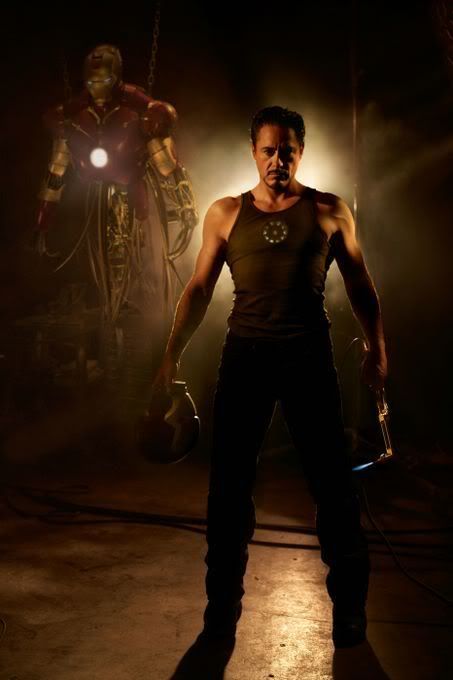
 I’m not all that familiar with the comic book Iron Man so I can’t really comment as to how faithful the film is but it worked extraordinarily well for me and I hope they deliver more films in the series. The film’s final defiant moment alone (in which Black Sabbath’s own “Iron Man” is used to great effect) made me want to stand up and cheer, even if it was as much for Robert Downey Jr. himself as for Jon Favreau’s smart, exciting and invigorating film.


